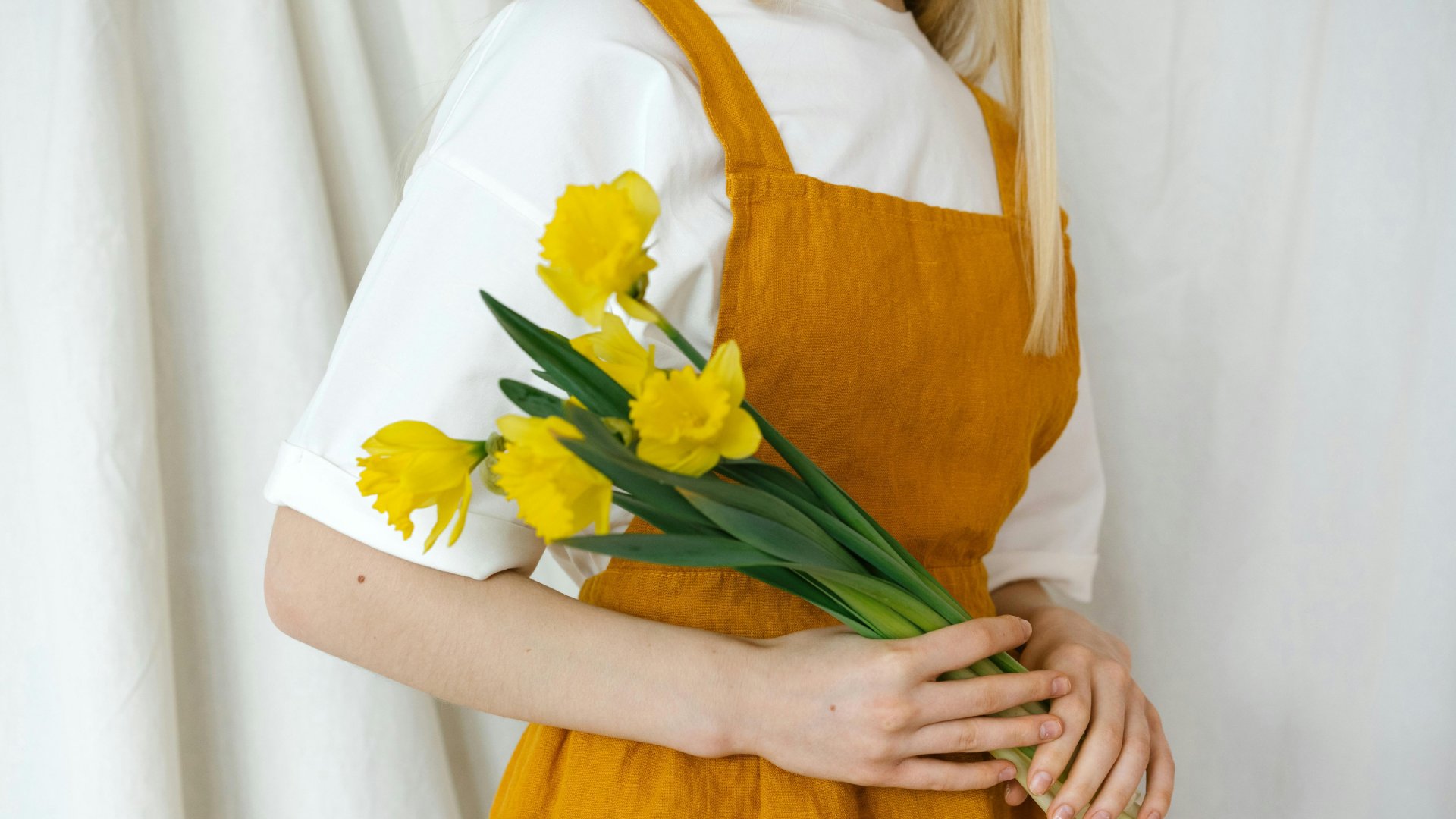
Long relegated to the kitchen or workshops, the apron is now making its way onto the catwalks and into our wardrobes. A new fashion item or a conservative nod? This trend, somewhere between workwear and the "tradwife" aesthetic, raises questions as much as it inspires.
From domestic symbol to fashion accessory
Historically, the apron served a very practical purpose: protecting clothes from stains and dirt. In the 1960s, it symbolized the "diligent housewife," the mistress of her home. With the rise of high-performance washing machines, it gradually disappeared from homes. Today, it's making a comeback, but transformed. At Miu Miu, for example, it's integrated into chic silhouettes, layered over structured outfits, and repurposed from its utilitarian function.
It must be said that fashion loves to subvert conventions. Jeans, designed in the 19th century for miners and factory workers, have become a universal staple. Cargo pants, military jackets, barn jackets, and even Dr. Martens-style lace-up boots have followed the same path: born for work, adopted for style. Today, a newcomer joins this large family of reimagined workwear: the apron. On the catwalk, the apron was no longer simply a practical accessory, but a bold style statement.
@xiaolongbby I was actually pretty pleased with the collections from this year's SS26 fashion week! styling aprons in this video bc you know I love an open back. #aprons #commedesgarcons #miumiu #pfw ♬ original sound - shuang
Between retro aesthetics and societal debate
It's impossible to ignore the cultural context in which this trend is emerging. For some observers, the return of the apron echoes the "tradwife" movement circulating on social media. Influencers there present an idealized vision of the housewife, blending conservative codes with ultra-contemporary imagery. In this climate, the apron can be perceived either as a playful, fashion-forward wink or as a more loaded symbol, harking back to traditional representations of the female role.
Social media is seizing upon it
As is often the case, content creators quickly embraced the trend. And the comments range from admiration to surprise: many applaud the boldness, others express their gratitude for the inspiration. The looks are certainly creative, but so are the criticisms. Under some videos, one can read remarks like: "Does wearing an apron to work in a supermarket make you a fashion icon?"
@tophcam I loved the Miu Miu SS26 show and Ms. Prada's references to workwear (particularly roles fulfilled by women) throughout the late 19th and 20th centuries. Billowy boiler suits, leather aprons, layered collared shirts, and belts with nods to the Chatelaine all tipped their hats to the butchers, nurses, executive assistants, factory workers, homemakers, and more of the last 150 years. Great casting with @cortisastar, Richard E Grant, and some of my faves: Milla Jovovich, Liu Wen, and Xiao Wen Ju to name a few! Here's my reinterpretation 🙂 Jeans @weekendmaxmara (Poshmark) Short sleeve '87 @perryellis for @bloomingdales South China Seas (eBay) Long sleeve '08 @jcpenney (thrifted) Leather jacket '90s @gap (thrifted) Apron vintage @williamssonoma (Whatnot) Shoes @chacofootwear (Poshmark) Glasses vintage from @friendsnyc Bag '06 @bananarepublic (Poshmark) #miumiuss26 #springsummer2026 #runwayinspired #miumiu ♬ Blue Moon - Zara Larsson
A trend that belongs to you
The apron, 2026 style, is neither an obligation nor a fixed statement. It's a canvas for expression. Like jeans in their day, it changes status as soon as it changes context. It all depends on how you integrate it into your style. You can see it as a retro nod, a conceptual piece, a tribute to utilitarian clothing, or simply an original accessory that structures a silhouette. Your body, your style, your intention: that's what gives meaning to the garment.
Ultimately, fashion always questions symbols. The apron is no exception. Between nostalgia, subversion, and creativity, it opens a dialogue. And if this garment sparks so much discussion, it's perhaps precisely because it touches on something deeply cultural. It's up to you to decide what it says when you wear it.