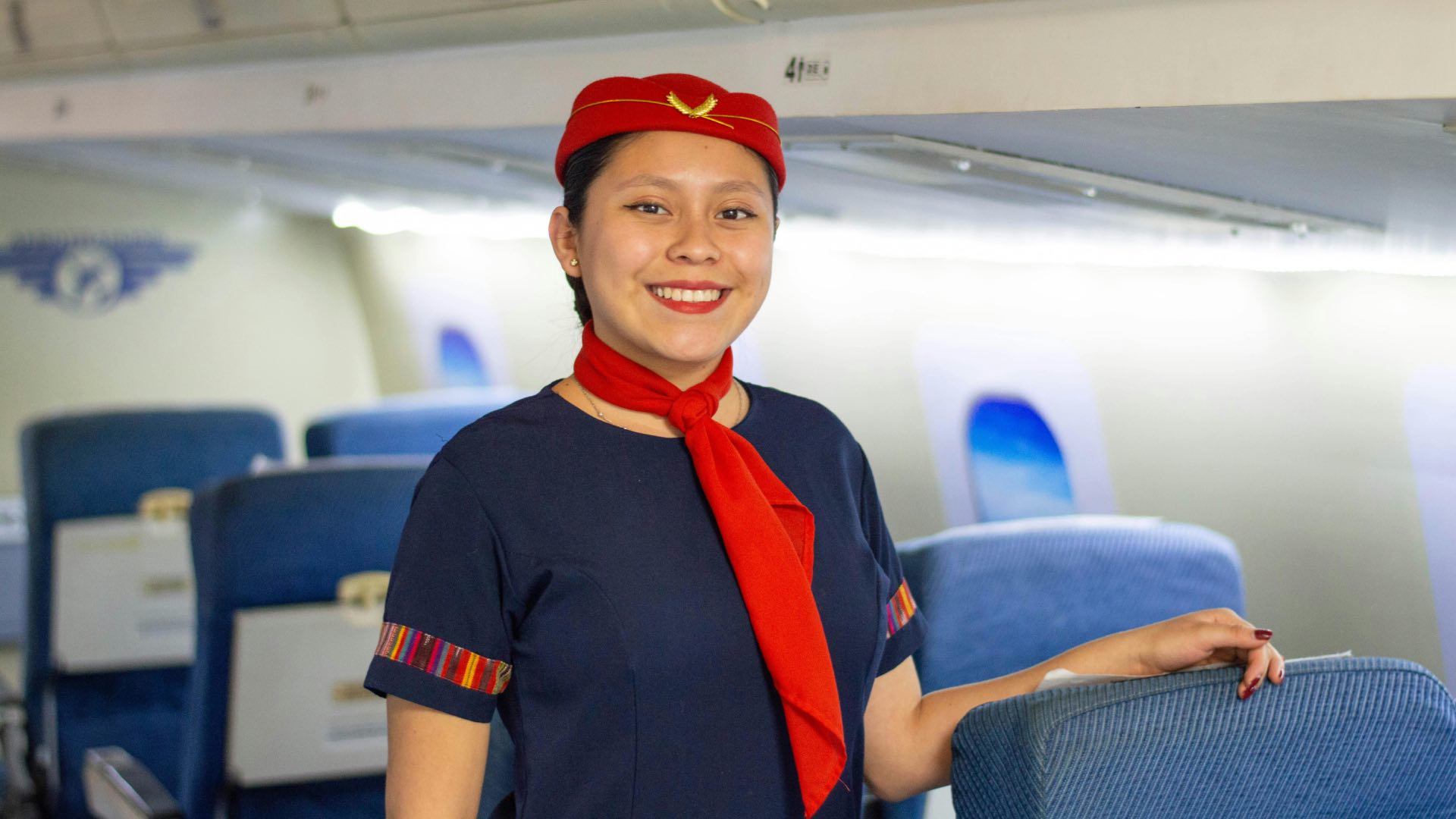
On board an airplane, passengers often notice the impeccable uniform or professional smile of the flight attendants, but many of their daily actions go unnoticed. These movements and habits, far from being arbitrary, respond to needs of safety, preparation, or efficiency in a highly constrained environment.
A specific position during takeoff and landing
You may have seen crew members sitting with their hands hidden or motionless on their thighs during takeoff or landing. This posture is part of a safety protocol called the brace position, which aims to reduce the risk of injury in the event of a sudden impact or severe turbulence.
The gesture may seem strange to a relaxed passenger, but it is taught in safety training and is part of standard procedures before a flight becomes a potential emergency situation.
A "hello" that is not insignificant
When passengers board, the flight attendants always greet them with a smile and a welcome. This gesture of politeness also serves a much more strategic purpose : to identify intoxicated or distressed individuals before final boarding.
By simply saying “hello,” the staff can quickly assess the passenger’s verbal responsiveness, eye contact, physical stability, and overall behavior. This allows them to report any potential problems to the flight crew before the situation becomes unmanageable once the aircraft is in flight.
Signs for discreet communication
Flight attendants often use subtle signals to communicate with each other—such as clasping their hands behind their backs or slightly tilting their heads—to convey information silently without interrupting passengers. These gestures can indicate that a service is ready, that a colleague needs assistance, or that an operational detail requires attention, all while avoiding any disruption to the cabin atmosphere.
How they scrutinize the cabin as soon as they board
Some observations show that as soon as passengers board, cabin crew read subtle information into their behavior. For example, they assess whether a person seems nervous, willing to cooperate, or already stressed, simply through their body language and the way they walk down the aisle. These observations are intended to anticipate potential needs for assistance or to defuse tension. The "hello" mentioned earlier is, in fact, an integral part of this discreet assessment.
Gestures during safety demonstrations
Safety demonstrations, whether live or via video, are part of the pre-flight ritual. Behind their apparent routine, each gesture — such as showing the seatbelt, the emergency exit, or the use of the oxygen mask — is meticulously rehearsed so that the message is clear and creates the appropriate reflex in case of an emergency.
Small gestures that enhance comfort
In addition to safety-related actions, certain micro-habits help manage staff energy and efficiency. For example, a flight attendant might clasp her hands behind her back while awaiting instructions or carefully adjust her posture to prevent muscle fatigue on a long-haul flight. These adjustments may seem insignificant, but they help maintain alertness throughout the shift.
A discreet but constant vigilance
Many of these small movements—a glance at the overhead compartments, a head tilt toward an area of the cabin, or even a barely perceptible response to a colleague—are part of constant vigilance. They ensure that everything runs smoothly, that passengers are taken care of, and that safety rules are followed without disrupting the tranquility of the flight.
In short, behind the impeccable smiles and fluid movements of the flight attendants lies a veritable ballet of micro-gestures and meticulous observations. Every movement, however discreet, serves a precise purpose: ensuring safety, anticipating passengers' needs, and maintaining the smooth running of the flight. So, the next time you look up from your book or screen, you can observe these gestures with fresh eyes and appreciate the discipline and attentiveness they embody.