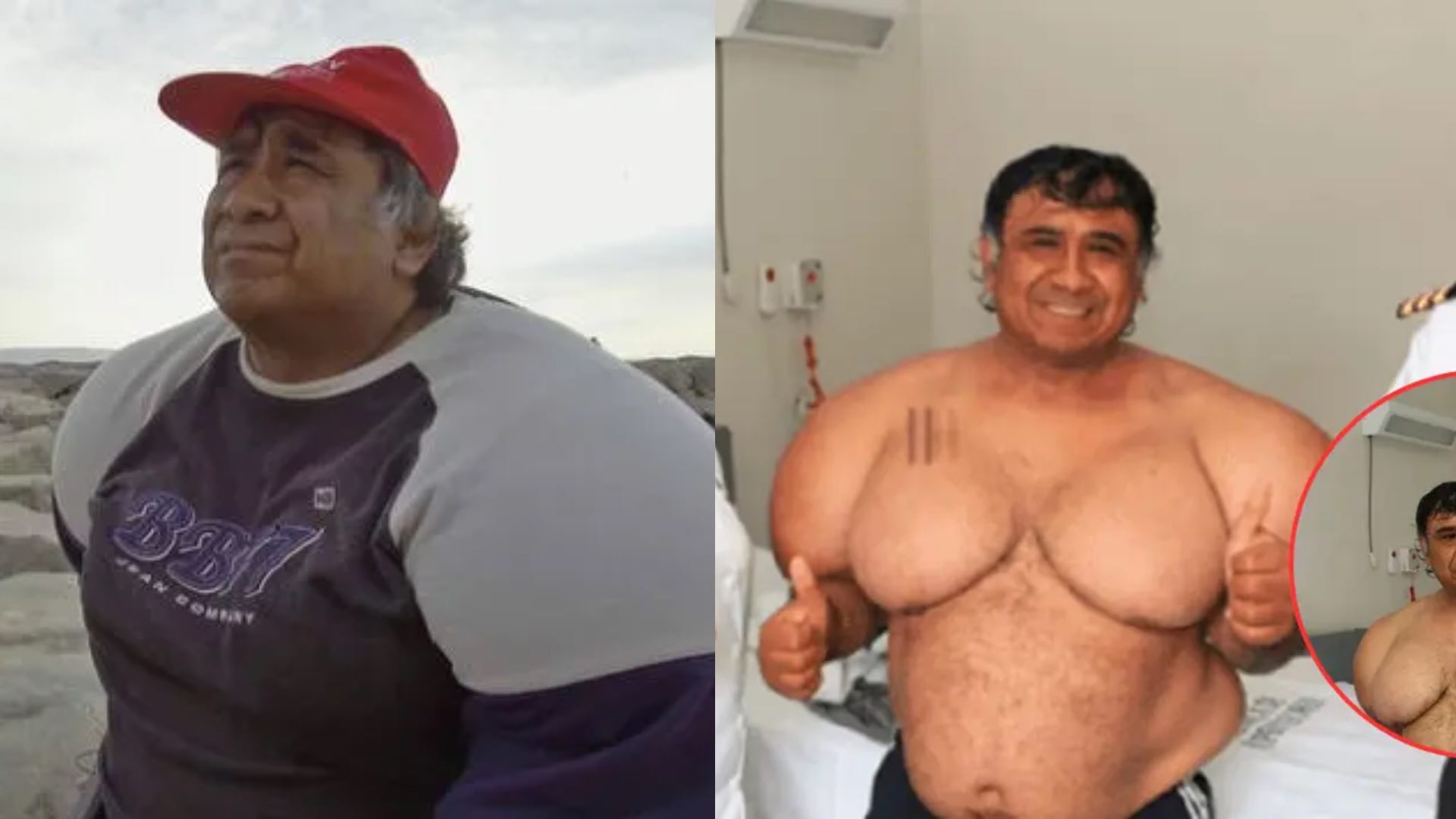
Alejandro "Willy" Ramos, a former professional Peruvian diver, saw his life change drastically in 2013 during an accident off the coast of Pisco, Peru. An emergency ascent from a depth of 30 meters caused severe decompression sickness, leaving his torso and arms swollen with persistent nitrogen bubbles.
The fatal accident that marks a turning point
While diving to collect shellfish, Willy's oxygen hose was severed by a passing boat, forcing him to surface abruptly without respecting decompression stops. The nitrogen dissolved in his blood then formed massive bubbles in his chest and arms, causing extreme swelling (biceps measuring 62-72 cm in circumference) and deep tissue damage.
Discomfort in the chambers: an exceptional medical case
This decompression sickness, or "chamber sickness," occurs during rapid pressure changes, typical of deep diving. In Willy's case, the bubbles became embedded in his flesh, making direct surgical removal impossible. Doctors describe him as a "unique case worldwide," even investigating other rare diseases in parallel, while joint pain and reduced mobility prevent him from returning to his profession.
Hyperbaric treatments: slow and costly progress
Only hyperbaric chambers, administering pure oxygen under pressure, partially dissolve the bubbles: 30% are eliminated after dozens of sessions, with at least 100 more needed. Without adequate social security coverage, Willy survives on minimal aid, his body still bearing the scars 12 years later.
Stares and isolation: the psychological ordeal
“People stop and stare at me like I’m some kind of strange animal, they call me a monster,” he told the BBC in 2018, describing his depression and anxiety in the face of the surrounding pity. This social handicap, added to his physical suffering, transformed a man considered robust into an isolated figure. His story commands respect: that of a man who, despite his suffering, refuses to fade into silence and transforms his ordeal into a message of prevention and resilience.
The story of Alejandro "Willy" Ramos transcends a simple news item: it highlights the extreme risks of diving, often unknown to the general public, as well as the human, medical, and social consequences of an accident that shatters a life. Twelve years after the incident, Willy continues to fight not only against the physical aftereffects of severe decompression sickness, but also against the judgment of others, sometimes more painful than the illness itself.