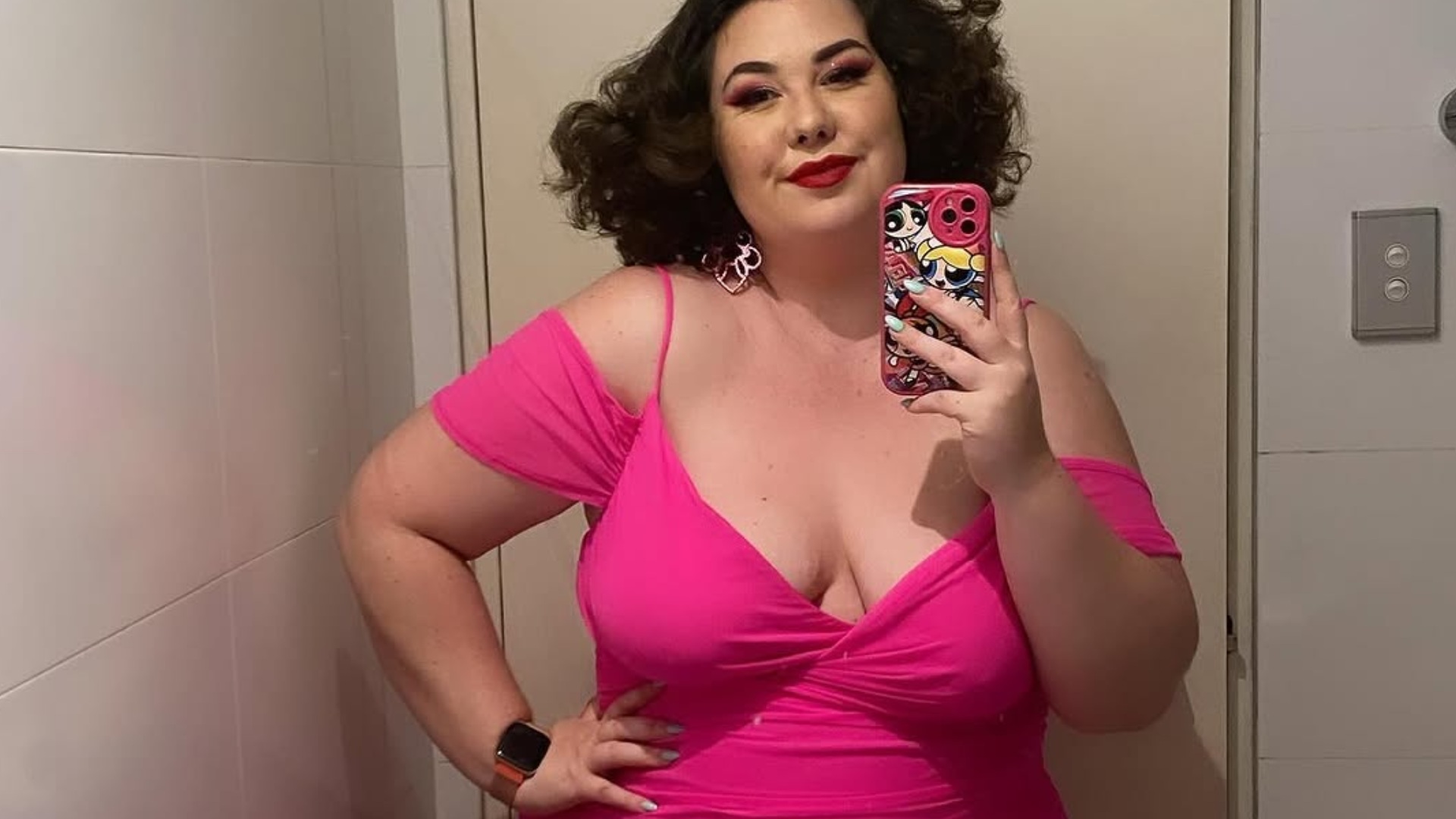
Long, slender legs, a lithe figure, a toned body, a doll-like face, a fixed smile. In the collective imagination, cabaret stars are clearly defined by feathers and frills. Those long known as revue dancers embrace beauty standards where the audacious Jean Harlot tramples them underfoot. The main protagonist of a burlesque cabaret, she proves that this art is not solely based on precise measurements.
The cabaret, a world still closed to curvy figures
Cabaret is an artistic discipline where the body takes center stage, observed, admired, applauded. It's a tool of the trade, a key element of the show. The dancers, who sway their legs to the rhythm of the cancan and flutter their wings in acrobatic choreography, are physical clones, with only slight variations in skin tone. These women, who enliven formal dinner parties, are pure products of societal norms. They embody an ideal of beauty and fulfill a waking dream. Slender waists, hourglass figures , flat stomachs, graceful postures… they seem to have stepped straight out of a music box.
Classic cabaret doesn't recognize the variable nature of anatomy and relies on rigid standards for its casting. One only needs to attend a performance to understand the selection criteria, which are as uncompromising as those on a Fashion Week runway. For many, cabaret remains a fantasy factory where volume is only appropriate for costumes and nowhere else.
Burlesque cabaret is more relaxed, less restrained, but above all, it offers a wider field of expression to those whose generosity is etched into their very being. More committed, even almost militant, it gives a chance to artists who refuse to be pigeonholed. In this parallel world, Jean Harlot is a minor local star. An unclassifiable cabaret dancer who performs in Australian venues, she lets feathers cascade down her love handles and celebrates a particularly expressive, voluptuous body. Enough to make the cheeks of the audience and society as a whole blush.
View this post on Instagram
A curvy dancer featured in a cabaret show caused a sensation.
A mask adorned with gilts over the eyes, an astral diadem wrapped around her head, and lingerie underneath that's enough to make you swoon, Jean Harlot embarks on a modern striptease, almost transcendent thanks to the movements and the music. A bodysuit with a stark collar, a fringed dress with a feverish aesthetic, a shimmering ensemble that cuts short the suspense… the dancer, with her assertive gestures and comical expressions, delivers a sensual performance more real than life.
In fact, it's not the costumes that adorn her figure, but rather the other way around. Her silhouette is pure grace and sensuality. The young woman, who describes herself as a "muscular artist" and a "Wandannian" in reference to the badass Marvel character, makes her body an art form, a living sculpture. There's no need for sculpted abs, slender legs, and toned arms to perform these provocative poses. Burlesque cabaret relies primarily on the power of performance, not on physical attributes.
On stage, she doesn't try to hide her curves or conceal them beneath glitter. On the contrary, she celebrates them, highlights them, and imbues them with a rare narrative power. Every movement, every sway of her hips, every glance directed at the audience seems to say that femininity is measured neither by waist size nor by conformity to dictates. It is felt, interpreted, and embraced.
View this post on Instagram
When the stage becomes a space for reconciliation with oneself
Beyond the artistic performance, Jean Harlot's journey also tells a different story: the possibility of reconnecting with one's body in a world that constantly comments on, corrects, or constrains it. In a society where curvy figures are still too often associated with invisibility or discretion, appearing on stage almost naked is a profoundly subversive act.
Burlesque cabaret is precisely a place of emancipation. Here, the body is not dissected through the prism of its supposed "imperfections." It becomes language, a playground, an instrument of expression. Forms are no longer perceived as flaws to be smoothed over, but as living lines that contribute to the stage performance.
Cabaret dancer Jean Harlot ultimately recounts a personal reconquest. It's the story of a woman who chooses to no longer negotiate with societal expectations and who transforms what some would consider "outside the norm" into a genuine aesthetic strength.