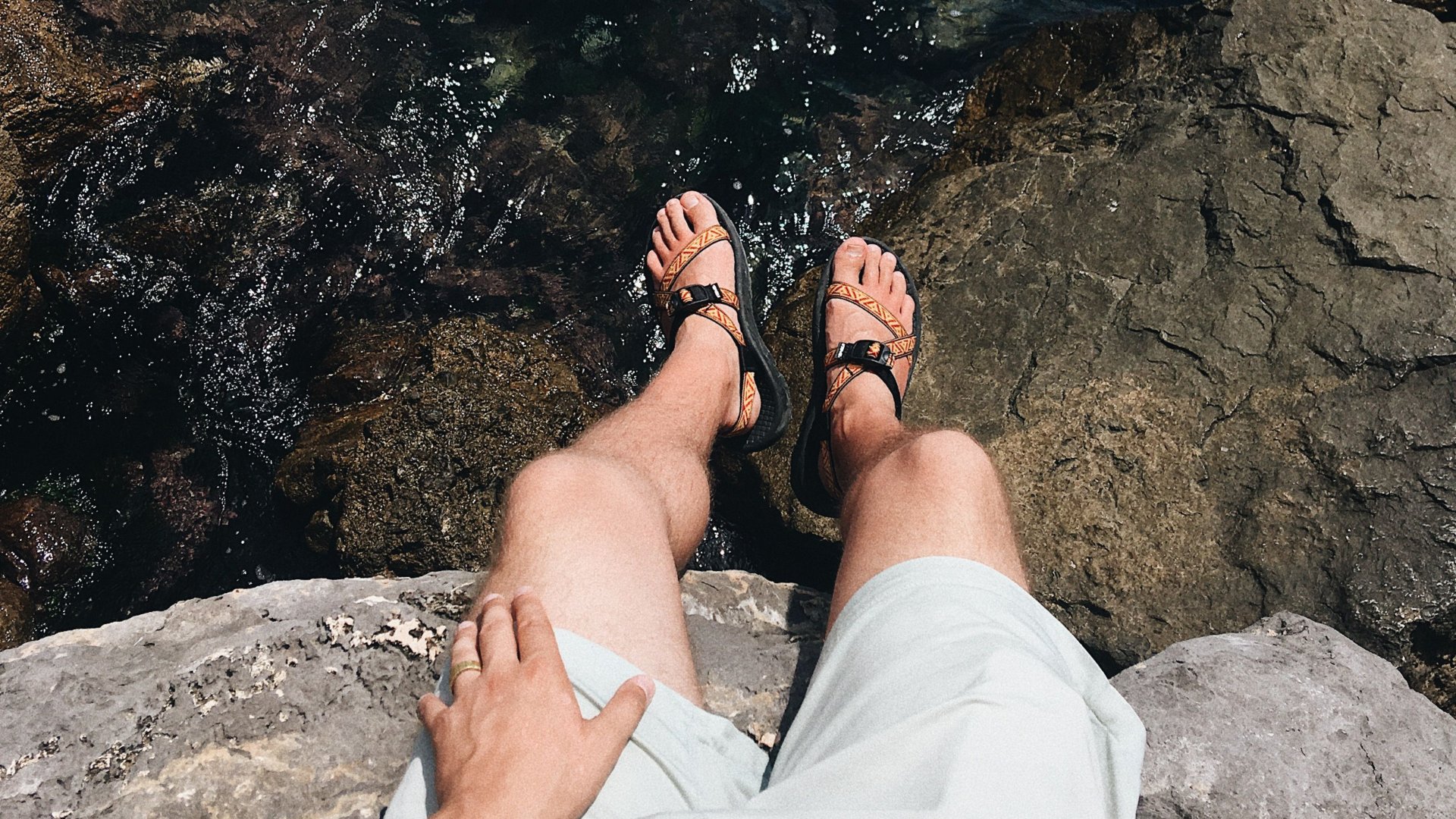
During the summer, sandals jostle for space on the asphalt and cobblestone streets, swept by sand. Yet these open shoes, which allow the feet to breathe, are still rare among men, who remain faithful to their steadfast sneakers. A style icon for women, sandals are a fashion killer, even an intolerable faux pas, for men. Why such a difference in treatment?
The men's sandal, the unloved shoe
Today, women wear ties instead of jeweled necklaces and trade wrap dresses for tuxedos with shoulder pads worthy of a businessman's wardrobe. Men, for their part, replace their formal briefcases with more sophisticated bags and don't hesitate to show their midriffs through cropped tops. Gender is disappearing from wardrobes, giving way to self-expression and personality. However, some fashion items are resisting this fight for a unisex style. Sandals, for example, remain a "feminine privilege."
In the heart of summer, men keep their sneakers firmly on their feet and prefer to sweat with every step rather than complete their light outfits with a simple pair of sandals. Their toes, compressed under the rigidity of the leather and deprived of both light and air, suffer daily torture. This type of footwear, which allows one to feel the sea breeze and gives the illusion of wearing nothing at all, is not universally popular among men.
Presented as a style enhancer, a missing piece in women's fashion, sandals cause discomfort when they leave manicured feet. Considered unfashionable on men, they are the common denominator of gray-haired tourists and Hawaiian shirt enthusiasts. At least, that's the most widespread mental association. If men are averse to sandals, it's not out of modesty, nor because of the calloused or hairy appearance of their feet. It's more a matter of image.
A discreet reflection of social norms
Historically, sandals have been the antithesis of loafers, high-quality brogues, and polished Oxfords. They embody the laid-back spirit of holidays, sunbathing days, and strolls with an unbuttoned shirt or a suntan on full display. While Roman warriors proudly sport sandals on marble statues, as they were an integral part of their uniform, this type of footwear is now often associated with mediocrity, or even financial hardship.
“Sandals are associated with popular culture in the collective imagination; they’re synonymous with camping trips rather than Cannes,” explains Alain Quemin, professor of sociology at the Institute for European Studies, to HuffPost . Wearing sandals in the city would therefore be tantamount to betraying this golden reputation and telling the world, “I’m broke.” And neither sweltering weather nor designer labels would offer any excuse. The tolerance threshold is considered zero. For men, style has long been a social performance, an opportunity to assert their professional status. And sandals seem hardly compatible with a fitted blazer and pleated trousers. Hence this collective aversion to this otherwise promising pair of shoes.
In fact, in some companies, sandals are forbidden for men because they are considered “too casual.” Conversely, for women, this type of footwear, which reveals skin and offers a glimpse into a frequently fantasized area, poses no problem. “Women’s feet are more easily exposed, even in a formal setting like the workplace,” the expert continues.
A fear of ridicule in the background
Women have a sandal style for every occasion: wedges, gold buckles, or slightly elevated heels. These shoes complete the harmony of a look or enhance the elegance of an outfit. They approach them as a "finishing touch," while men see them as a "burden on their feet" or even an attempt at "self-sabotage." They feel a sense of shame simply seeing one of their colleagues strolling around in gladiator sandals. If they deny themselves this summer pleasure, it's because they fear being seen as a "boomer," a tourist with no sense of style, or a summer camp counselor.
These shoes are talkative and seem to silently say, “I don’t know how to dress” or “I have no taste.” As the sociologist explains, men’s sandals are full of clichés. They almost have a caricatured quality and carry a pejorative connotation. Many include them in the starter pack of the German tourist, who wears his sandals with extra socks to keep out gravel. And men, even if they are more receptive to self-deprecation, are concerned about their appearance and don’t want to look outdated.
A shoe that is trying to make its way into men's fashion
While sandals struggle to find their way into men's wardrobes, where they tan up to their ankles to maintain a semblance of dignity in society, some men defy expectations and challenge preconceived notions. In fact, making desirable what was once ridiculed has almost become a collective movement. Low-rise jeans that reveal underwear, platform sneakers, neon tops, and micro shorts are enjoying their moment in the sun, after having been subjected to the worst possible criticism. These items, once condemned and accused of ruining one's figure, are now flying off the shelves.
Sandals are also experiencing a resurgence in popularity in men's fashion. Worn by city dwellers who sport sweaters around their necks and have a sophisticated wardrobe, but with a perfectly executed nonchalance, they're even the hallmark of "cool guys."
Perhaps men's sandals are ultimately suffering from the same phenomenon as many other items before them: they were ridiculed until the day they became desirable. Running shoes worn in the city, men's bags, and baggy trousers have all experienced the same fate.