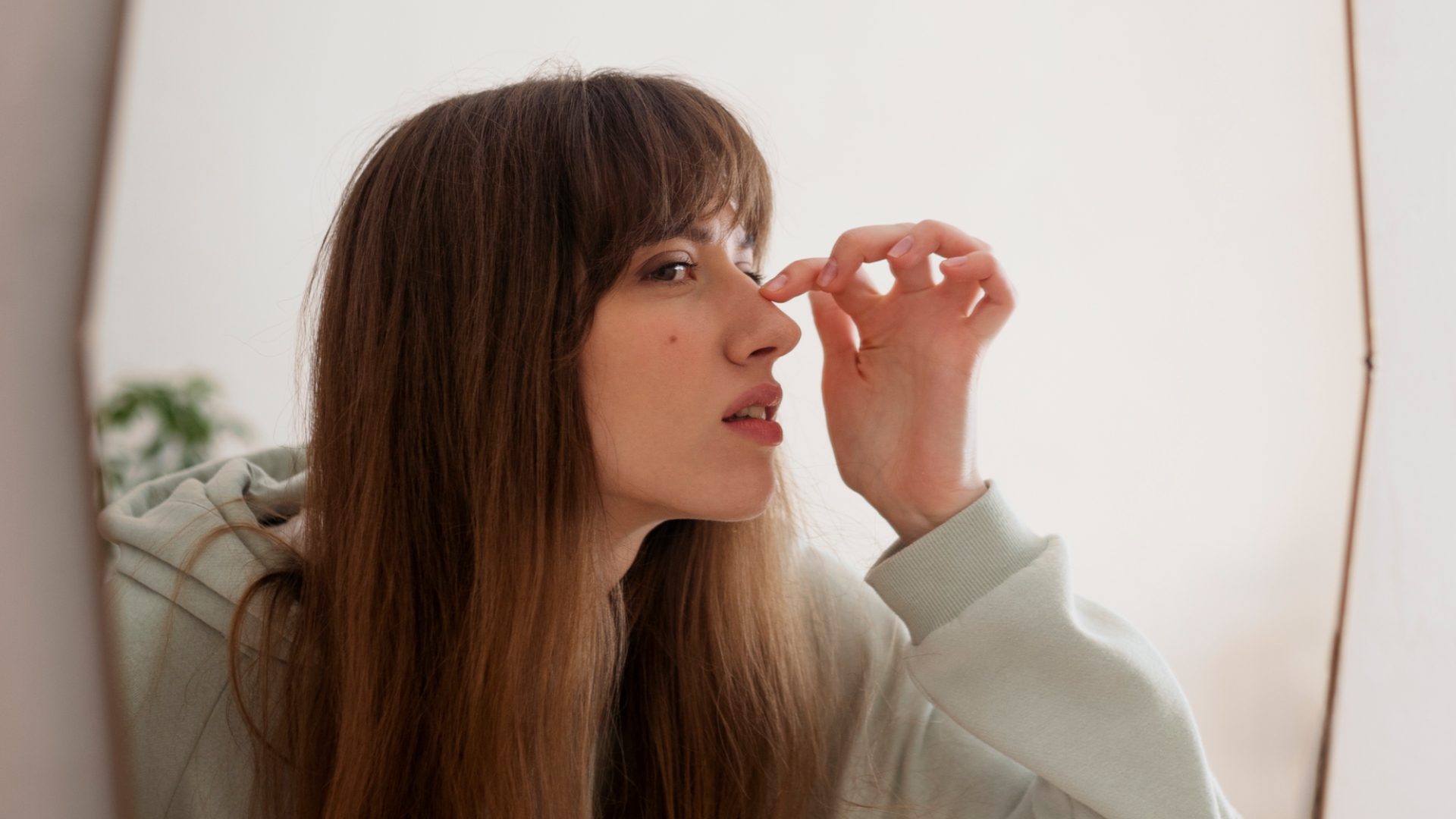
You may have already declined an invitation to the beach, asked to be placed in the background of a photo, or hesitated before saying "yes" to a new adventure. Behind these small acts of denial often lies a complicated relationship with your body. And more specifically, with those areas that you judge, sometimes too harshly, as imperfect.
Ordinary complexes that influence far more than we think
Body image issues are a part of the human experience, but they are far from trivial. In a world saturated with retouched images, idealized figures, and constant comparisons, it becomes easy to believe that your body should be different to be acceptable. A nose deemed "too prominent," a stomach that doesn't fit the standards, arms that are best hidden under long sleeves: these concerns are widely shared.
An IFOP study already revealed that more than half of French women reported living with at least one body complex . And this figure doesn't tell the whole story. Because these feelings aren't confined to what you see in the mirror. They permeate your daily life, influencing how you dress, your leisure activities, your relationships with others, and sometimes even your career ambitions. You might find yourself ruling out high-profile jobs, avoiding certain sports, or holding back from romantic relationships, simply because you feel you don't conform to the ideal of a "beautiful body."
When aesthetic standards become a mental burden
While insecurities affect everyone, the pressure to conform to beauty standards remains particularly intense for women. For generations, the female body has been scrutinized, commented on, and corrected. It is expected to be thin but not too thin, natural but controlled, attractive without being deemed excessive. The result? A constant feeling of needing to improve, smooth, and conceal.
This constant scrutiny creates a real mental burden related to aesthetics. You can spend considerable time thinking about what your arms say about you, how your stomach looks under clothing, or the angle from which your face will be perceived. Some then choose makeup, fashion, intensive exercise, or more radical transformations, not for pleasure, but in an attempt to finally feel legitimate.
Body positivity: changing perspective without denying the difficulties
This is precisely where the body positivity movement comes in. Contrary to popular belief, it's not about demanding unconditional love for your body at every moment. Rather, it's about recognizing that your insecurities didn't arise in a vacuum, but within a specific social context, marked by restrictive and often unrealistic norms.
Body positivity encourages you to see your body as an ally rather than a project to be corrected. It encourages you to accept that beauty is multifaceted, fluid, and personal. Public figures like Stephanie Yeboah contribute to this transformation by showcasing powerful, vibrant, and desirable bodies that defy traditional standards. Their visibility paves the way for a fairer and more diverse representation.
Towards a more collective bodily freedom
However, this reconciliation cannot rest solely on individual shoulders. It requires broader change: education that values body diversity from childhood, more responsible media, and a profound questioning of gender stereotypes. By normalizing all bodies, we prevent simple insecurities from becoming lasting barriers.
In short, your nose, your stomach, your arms aren't problems to be solved. They're parts of you, imbued with stories, sensations, and strength. Learning to look at them with more tenderness, to talk about them without embarrassment, even to smile at them, is already a step towards reclaiming your power. Letting go of the myth of the "perfect body" opens the door to a freer life, and above all, one more aligned with who you truly are.