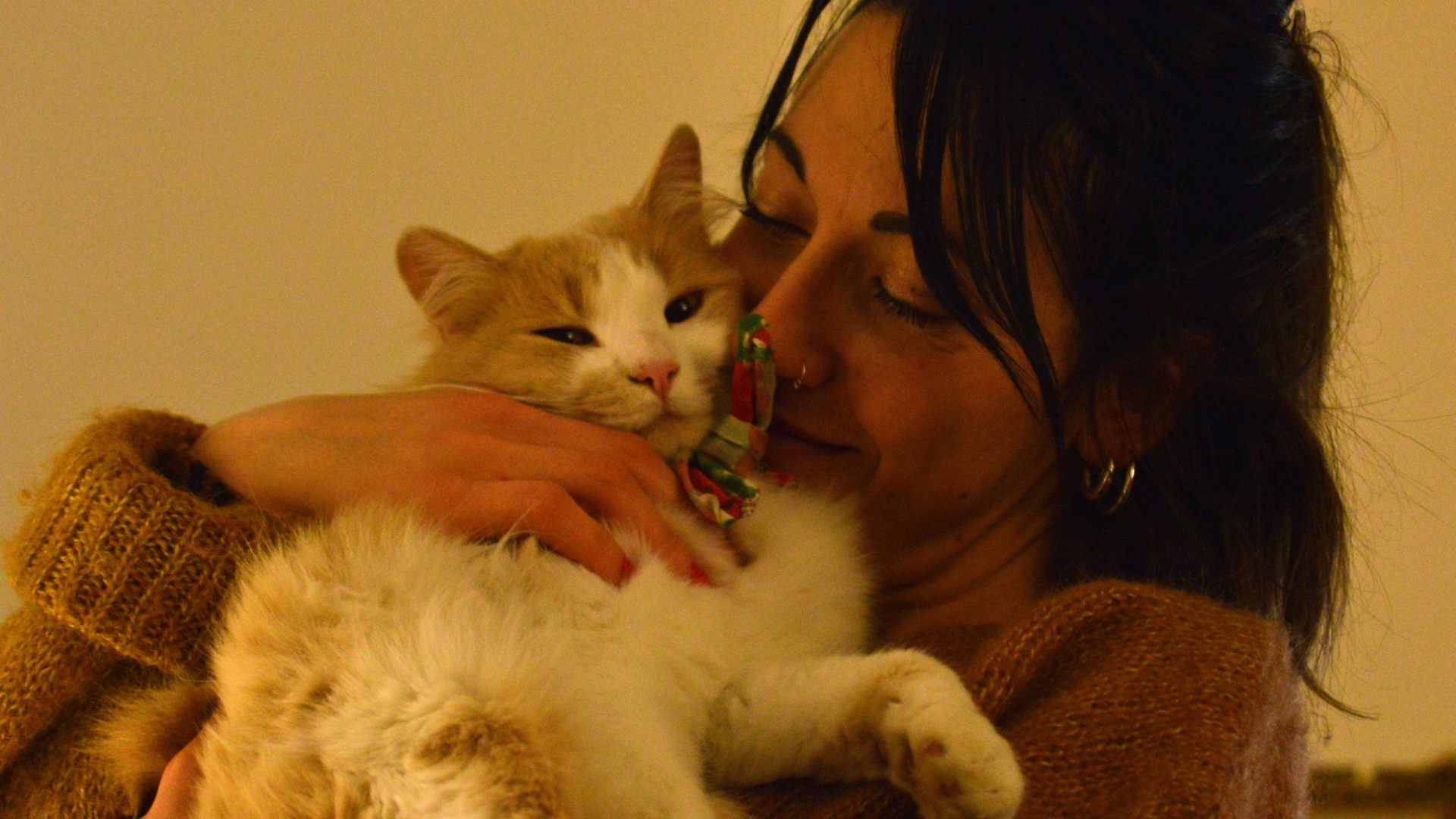
You talk to him, you compliment him, and you declare your love… but your cat probably doesn't understand a word of it. Felines communicate primarily with their bodies, their gaze, and their posture. By learning to speak this subtle language, you can show him your affection in a way he truly understands.
Cats mostly communicate with their bodies.
Unlike humans, cats don't primarily rely on sounds to communicate. Their true language is conveyed through posture, tail position, ear orientation, and even the way they move. These signals allow them to express a wide range of emotions: relaxation, curiosity, trust… or, conversely, discomfort and stress.
Feline behavior specialists explain that this body language is essential in interactions between cats. It also plays a central role in the bond between a cat and the person who shares its life. By learning to observe these small details, you can better understand your companion and create a more harmonious and reassuring connection for them.
The slow blink of the eyes, a true feline "I love you"
Among the most fascinating gestures in cat language is the famous slow blink. When a cat looks at you and then gently closes its eyelids, it's not a sign of boredom. On the contrary: this behavior is generally associated with a state of relaxation and trust.
Researchers at the University of Sussex have even studied this phenomenon . Their work showed that cats are more likely to approach people who mimic this slow blink. In the experiments conducted, cats reacted more positively when humans blinked gently and then slightly looked away, an attitude perceived as non-threatening. In short, if your cat gives you this peaceful look, you can respond in kind. In their language, it's a form of affection.
Getting down to his level changes everything
The way you position yourself in space also influences how your cat perceives you. To a small animal, a standing human can seem very imposing. Even if your intention is affectionate, your stature can unintentionally appear intimidating.
Experts recommend crouching or sitting when you want to interact with your cat. This posture reduces the distance and makes the interaction calmer and more natural. In this position, your cat often feels freer to approach you on its own. And for felines, this freedom of choice is particularly important.
Let your cat decide when to make contact
In feline communication, initiative plays a key role. Many cats prefer to decide for themselves when they want attention. That's why it's not uncommon for a cat to rub against your legs, hand, or face. This gesture isn't simply a request for petting.
By rubbing his head or body against you, he also deposits pheromones produced by glands around his face. This is a way of marking familiar territory… and signaling that you are part of his trusted world. Responding to this gesture with gentle, calm caresses can reinforce this feeling of security.
Simple gestures that really speak to cats
Saying "I love you" to your cat requires neither words nor grand gestures. A few simple actions are often enough:
- blink slowly while looking at him
- adopt calm and predictable movements
- put yourself on his level
- let him come to you at his own pace
These small gestures respect the way cats interpret social interactions.
Ultimately, loving a cat is about entering its world rather than imposing our own. And when this silent language develops between you, the bond can become surprisingly deep, tender, and intimate.