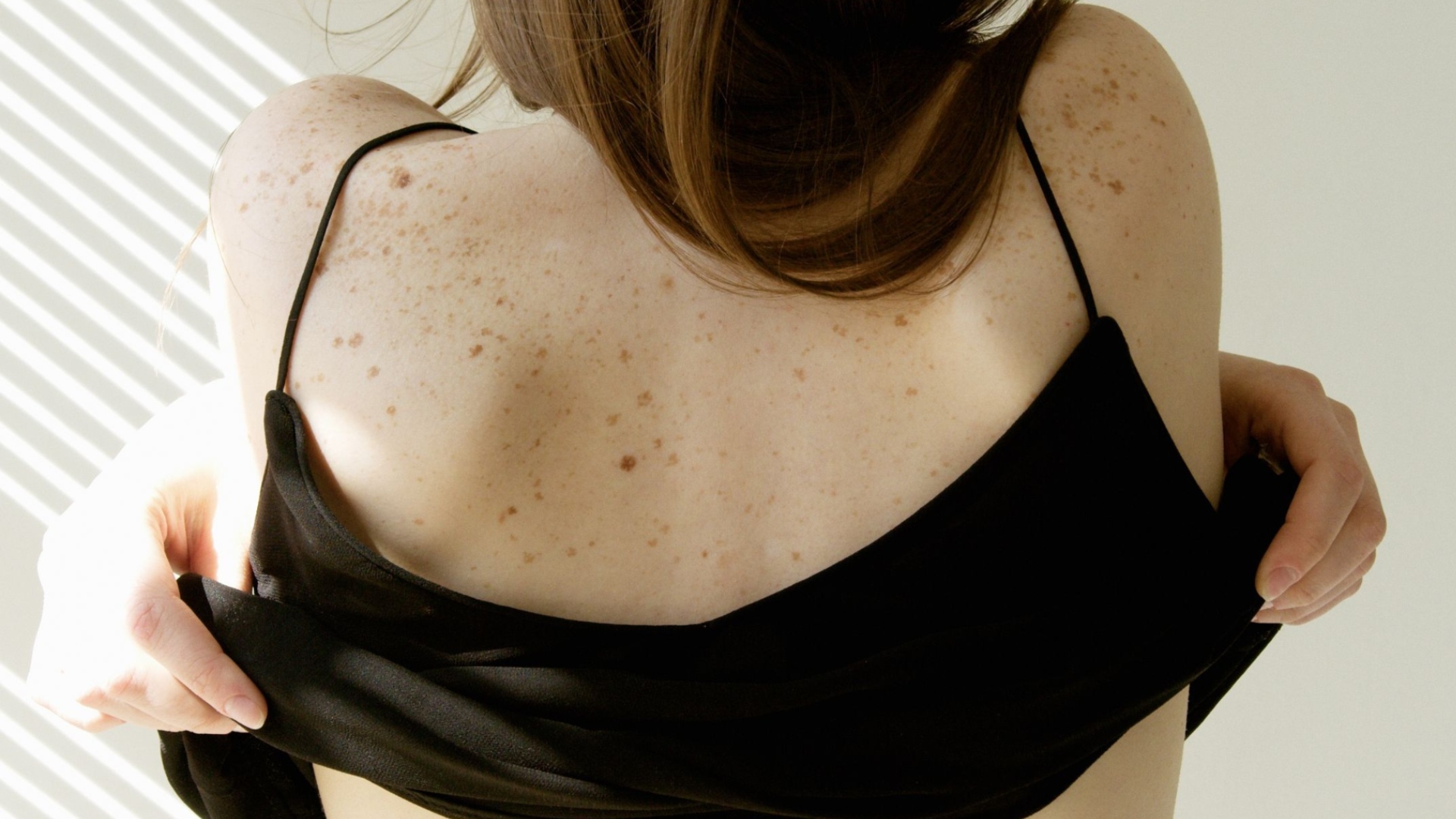
Moles decorate the skin and sometimes form a veritable brownish constellation across the body. According to a karmic theory circulating on TikTok, they are the physical legacy of our past lives. According to internet users with esoteric beliefs, moles are therefore not only subjects of dermatological study, but also a map of kisses from our former partner—the one whose name and face we no longer remember.
Beauty marks, the imprint of past kisses
Examined under a microscope by dermatologists, moles are tiny clusters of melanin. They adorn the skin like a print on fabric. These small, integrated ornaments are visual details that their owners often overlook in their own reflection. However, those who believe in "signs of destiny" and follow modern-day witches online believe they are not there by chance. For those receptive to karma, numerology, and cosmic energy, moles hold a hidden message that needs to be interpreted.
These are code names to decipher, a spiritual language in their own right. In Chinese astrology, moles are not simply pieces of pigment that could turn into tumors. They are essential clues for tracing the destiny of the person who bears them. Ultimately, for those with a completely different mindset , moles are much more than just health indicators to monitor. They tell a story, a story of the future, but also of the past.
Beyond revealing our personality, our mental weaknesses, and our greatest qualities, moles could also be vestiges of a distant life. Timeless memories that have survived our reincarnation. And in this highly mystical interpretation of the body, they would be the imprint of a partner's lips from another time and place. So, if you have moles on your neck or other well-documented erogenous zones , your soulmate from that time was certainly very demonstrative and a little hungry. If you have a concentration of brown spots on your shoulder or near your hands, they must have been a great romantic, a Romeo alter ego.
A romantic-mystical theory straight from TikTok
These beauty marks, believed to be a sweet expression of love, are regaining importance on the skin. On social media, the breeding ground for this unverified spiritual theory, women proudly display their beauty marks, which have become true markers of affection. They feel almost lucky to have encountered a replica of "Prince Charming" in a parallel universe and enjoy imagining scenarios worthy of a romantic comedy.
Women who share this beauty mark on the back of their hand quite logically deduce that they were the excellent company of a gentleman. The kind of courteous man who would lend his jacket to his sweetheart, even if it meant shivering, and carry her in his arms to spare her the pain of his own high heels. Others, like @ eva.petrido , who have numerous beauty marks, believe that their former partner must have been obsessed with physical contact and particularly comfortable with it.
Those with a more ironic sense of humor, however, are taking this theory in stride. The user @alysaaintbroke, for example, proudly displayed her beauty marks on her neck, a sensual area not only conducive to shivers but also the starting point for all sorts of erotic fantasies. According to her, there's no doubt about it: "he was starving."
@alysaaintbroke More freckles more the love ig #moletheory ♬ origineel geluid - kenji
Turning a skin peculiarity into a declaration of love
While this theory may seem utterly ludicrous to pragmatists and those devoted to the occult sciences, it at least has the merit of transforming a complex into aesthetic poetry. It allows us to take a fresh look at these beauty marks, sometimes disliked.
In a society that values flawless skin, many women have already tried to erase their beauty marks with a tinted pen. Content creator @kinleynotmac, however, finds a kind of psychological comfort in this theory. "Understanding the meaning of beauty marks made me hate mine a little less," she captioned her post.
Beauty marks are no longer seen as mere marks on the skin, but as karmic evidence of an outpouring of affection. They are no longer hidden under sleeves or covered with foundation; instead, they are displayed like lucky charms.