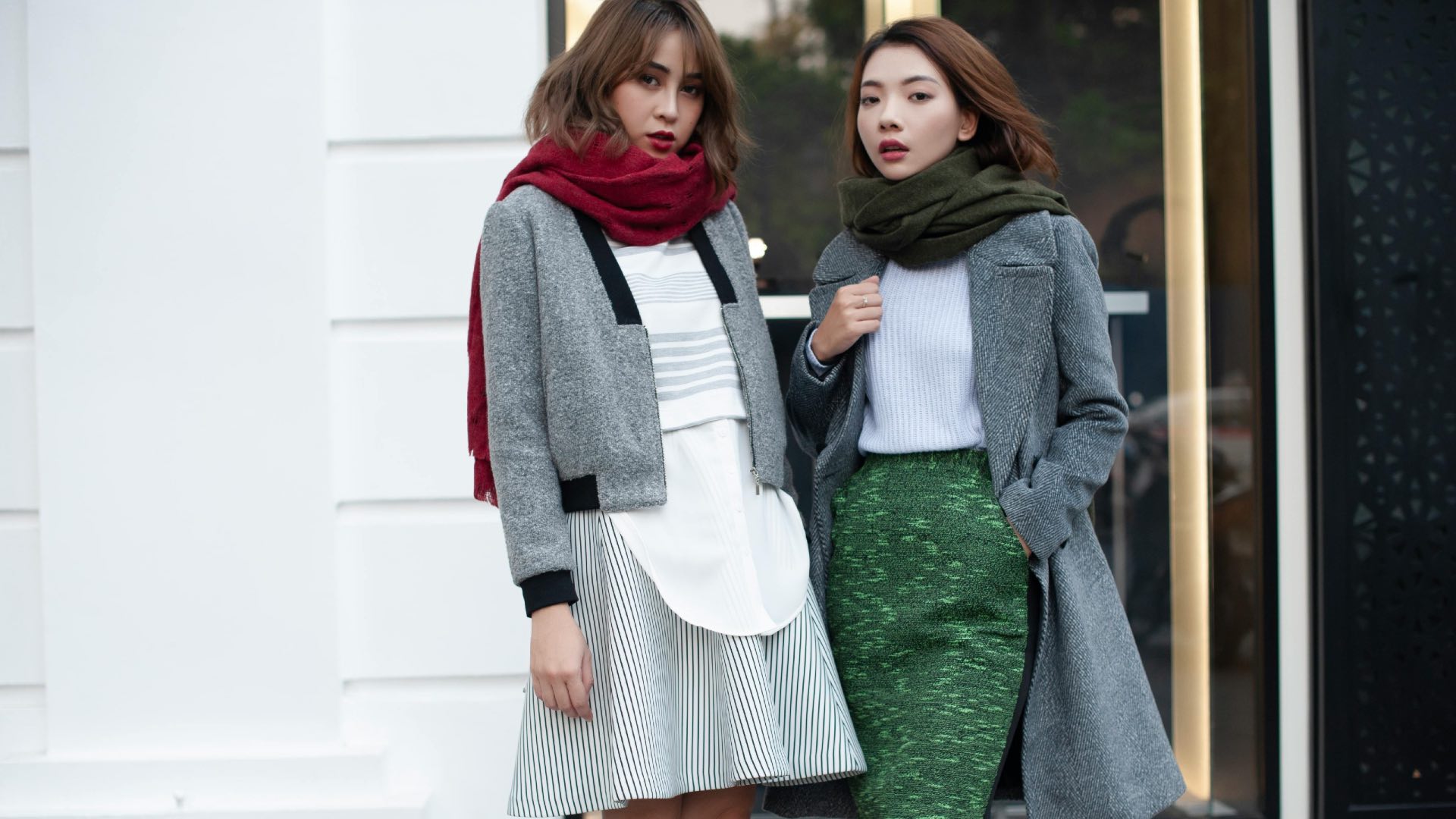
What if your scarf revealed more about you than you thought? On TikTok, Instagram, and Pinterest, an unexpected debate is stirring up fashion fans: the way you tie your scarf is supposedly a generational clue. A simple accessory yesterday, it's now become a tiny detail scrutinized under a microscope.
From protection against the cold to a stylistic signature
Originally, the scarf had a very clear mission: to keep you warm. Practical, enveloping, reassuring. Over the years, it has moved beyond mere function to fully embrace the realm of style. On the catwalks and on social media, it has become a key element in any outfit, just like a structured bag or a statement pair of boots. It can add dynamism to a minimalist coat or give character to a very simple ensemble. In short, it speaks volumes. And according to some content creators, it even speaks volumes about your generation.
@yohan_fashiontips Millennial or Gen Z? How do you wear your scarf?#scarf #menfashion #menfashiontips #menstyle #menstyletips ♬ APT Sped up - its_Leyla (ᴇɴ⁃🐈⬛)
Knots considered "old school"
Some techniques, long considered "efficient and elegant", are now perceived as "outdated" by a part of Gen Z.
- The fold in half, with the ends slipped into the loop, for example. Ultra-practical for blocking the cold, it is now seen as "strict", almost "too prim".
- Wrapped tightly twice around the neck? It evokes pragmatism more than stylistic audacity.
- As for the tube scarf, very popular in the 2010s, it has become, in the eyes of some internet users, a symbol of a bygone era.
On TikTok, these choices are sometimes associated with an image of a "tired millennial." A somewhat simplistic label, admittedly, but revealing of how quickly the codes are evolving.
The codes favored by Gen Z
Conversely, younger generations value a "more instinctive" approach, sometimes deliberately "casual".
- Asymmetry reigns supreme: a single loop around the neck, one side longer than the other, a deceptively casual but carefully considered effect.
- The "babushka" look, with the scarf worn on the head and tied under the chin or behind the neck, boldly revisits a retro aesthetic.
- The improvised balaclava, where the scarf almost becomes a hood, blends functionality and urban style.
- The bandana style, tied cowboy-style with a triangular scarf, adds character to a minimalist outfit.
These choices reflect a desire to break down overly rigid lines, to prioritize movement, creativity, and personal expression.
Materials and colors: subtle clues
The knotting is not the only detail observed. The materials and prints also play their part.
- Chunky knitwear, very cozy, can evoke a more classic style, especially when combined with a long, structured coat.
- Fluid textures, such as silk or fine knits, are considered more contemporary because they offer more freedom in draping.
In terms of color, neutral tones and traditional checks are timeless… but can be interpreted as "more mature". Conversely, bright hues, tie-dye, or modernized vintage patterns instantly inject a more contemporary energy.
A tiny detail that became a generational marker
Why all the attention for a simple scarf? Because fashion functions like a coded language. In the age of social media, micro-details become signals. The way you tie a scarf adds to a growing list of clues supposedly revealing your age or your relationship to trends.
However, it's important to remember one key point: this is simply a cultural analysis, not a universal rule. Your style is your own. If you love your tightly tied knot because it keeps you warm and reassuring, that's perfectly fine. If you prefer a bolder, asymmetrical drape, that's equally valid.
In short, fashion evolves, codes change, and generations interact. Today, your scarf might be seen as a generational marker. Tomorrow, it might be the shape of your glasses or the cut of your coat. Beyond viral trends, elegance remains a matter of attitude and comfort. Your age isn't defined by an accessory. Your style is a space for free expression, and it doesn't need to be justified.