On social media, fitness photos often give the impression of "perfectly sculpted" bodies. Some content creators are now seeking to show a more nuanced reality. This is the case with fitness influencer Emily Barker, who recently shared a message on Instagram reminding people that the images seen in news feeds don't always reflect the reality of the body in everyday life.
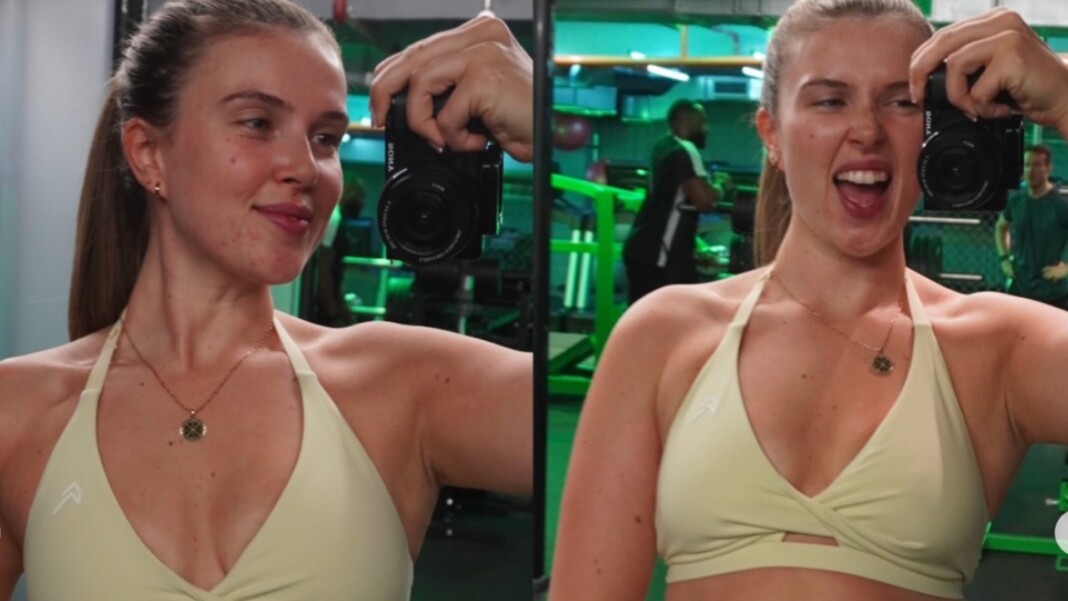
A comparison between two images of the same body
In a post that went viral, Emily Barker shows two versions of herself: a posed photo, typical of the images seen in fitness content, and another taken in a more natural pose. She accompanies these images with a clear message: "The gym body you expect to see scrolling through your feed vs the version you see when you look back in the mirror."
In other words, the body we see when scrolling through social media often corresponds to a specific posture, angle, or staging, whereas the body we observe in the mirror on a daily basis is simply the one in its natural position.


View this post on Instagram
Images often created for social media
Social media experts regularly point out that much online content relies on poses, specific angles, carefully crafted lighting, and sometimes retouching. These elements can transform the perception of a body in a photo.
According to several analyses of Instagram usage , the staging of images plays a central role in how users present their appearance and lifestyle online. In the case of fitness, posture can drastically alter the body's appearance: contracting the abdominal muscles, arching the back, or adjusting the hip position can accentuate muscles or smooth out certain areas. It is precisely this contrast that Emily Barker wanted to highlight.
A message against constant comparison
In her message, Emily Barker primarily encourages internet users to take a step back from the images they see online. She writes, in particular: "If you're scrolling through your Instagram wishing and wondering why your body doesn't look like all the girls you're seeing on your feed… it's because they're not showing you the full version of themselves ."
In other words, the photos posted often depict a carefully posed version of the body, not the natural appearance we see most of the time. This observation connects to a broader debate about the impact of social media on body image.
Social media and body image
Several studies have examined the link between social media use and body image. A scientific review published in the journal Body Image highlights that "repeated exposure to idealized body images on social media can contribute to social comparisons and body dissatisfaction in some users."


Other research also shows that comparison with images posted by other users is one of the most common mechanisms on these platforms. In this context, some content creators choose to post more realistic images in order to showcase the natural variations of the body.
"Your relaxed version is still the true version of you."
In the rest of her message, Emily Barker emphasizes that the body in its natural posture is the one we see most of the time. She writes: "Your relaxed version of you is the you that you see 99% of the time, and it's no less worthy than the version that you pose for a picture with."
She also encourages people not to analyze every detail of their bodies, especially their stomachs, reminding them that they perform essential functions and that it's normal for their appearance to vary depending on posture. This message is part of a broader trend on social media, where some influencers seek to highlight the differences between posed photos and more natural moments.
With this post, Emily Barker reminds us that the fitness images shared on social media often represent only a single, carefully posed moment. The body visible in these photos is not necessarily the one we see every day. Her message encourages us to put comparisons into perspective and recognize that the body's natural variations—when relaxed, sitting, or in motion—are part of everyone's reality.