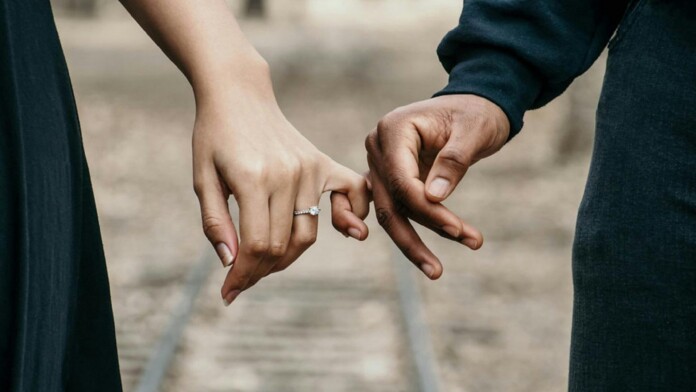
Quick Response
Women's physical attraction to the male body varies considerably from individual to individual, but certain areas come up frequently: hands, forearms, eyes, smile and shoulders are among the most frequently cited.
This attraction is explained by a mixture of biological, psychological and cultural factors that differ from person to person.
At The Body Optimist, we believe that authentic attraction goes far beyond imposed standards and primarily reflects a unique personal connection.
Attraction beyond standards: a body-positive perspective on the male body
Deconstructing male beauty standards
Traditional media often convey a very restrictive image of the desirable male body. Sculpted abs, an imposing physique, a chiseled jaw: these criteria represent only a tiny part of reality.


Ma Grande Taille has long championed the idea that body positivity applies to all bodies, including male bodies.
Genuine attraction does not follow a standardized manual.
What behavioral studies reveal
Psychological research suggests that physical attraction is multifactorial:
- Facial symmetry – unconsciously associated with genetic health
- Facial expressiveness – the smile and the gaze create an emotional connection
- Gestures and posture – convey information about self-confidence
- Voice and intonation contribute as much to attraction as physical appearance.
Self-acceptance plays a crucial role in how others perceive us. A man who is comfortable in his own skin exudes a different energy than one who constantly strives to conform to external standards.
Areas of the male body that most often attract attention
The upper body
Certain parts of the male body regularly come up in discussions about attraction:
| Area | Why she is attractive | What she mentions |
| The hands | Expressive, active in everyday life | Skill, potential tenderness |
| The forearms | Often visible, natural musculature | Functional strength, authenticity |
| The shoulders | They frame the silhouette | Protection, physical presence |
| The back | Often overlooked but highly appreciated | Power, vulnerability when discovered |
The face and its expressiveness
The face remains the most scrutinized area during initial interactions:
- Eye contact – creates an immediate connection and reveals attention to the other person
- A smile – an indicator of kindness and openness
- A beard or the absence of one – preferences vary enormously among women.
- Expression lines – contrary to popular belief – add character.
The less conventional areas
Attraction isn't limited to expected areas. Many women mention less obvious body parts:


- The nape of the neck – an intimate area rarely exposed
- The wrists – delicacy and vulnerability
- The voice – technically not a part of the body, but inseparable from attraction
- Natural scent – pheromones play a scientifically documented role
Why are some areas more attractive than others?
Biological factors
Our brain is programmed to detect certain signals:
- Health indicators – clear skin , bright eyes, upright posture
- Signs of fertility – even unconscious ones – influence attraction.
- Genetic compatibility – some studies suggest that body odor reveals immune information
These mechanisms operate in the background, without our awareness.
Cultural and personal influence
Culture profoundly shapes our preferences:
- Media exposure – the bodies we regularly see become references
- Past experiences – first impressions shape our future preferences
- Social context – what is valued in our environment influences our tastes
- Personal evolution – preferences change with age and maturity
At Ma-grande-taille.com, we observe that readers who embrace body positivity often develop more diverse and personal criteria of attraction.
The role of self-confidence
Self-acceptance transforms body perception:
A man who fully accepts his physique, whatever his body type, exudes an attractive authenticity.
This confidence cannot be artificially manufactured. It arises from an inner process that women intuitively perceive.


Plus-size women who have made this journey towards accepting their own bodies often report an evolution in their criteria for attraction. They place less importance on standards and more value on authenticity.
The diversity of attractions: celebrating individual preferences
Every attraction is valid
There is no hierarchy in preferences. Some women prefer:
- Slim, slender bodies – associated with agility and lightness
- Rounder, softer bodies – synonymous with warmth and comfort
- Muscular bodies – perceived as protective
- Ordinary bodies – reassuring and accessible
The inclusivity advocated by The Body Optimist naturally extends to this diversity of attractions.
Beyond the physical
Physical attraction is rarely the sole criterion:
- Emotional intelligence amplifies existing physical attraction
- Humor – transforms the perception of the body
- Kindness makes physical features more attractive.
- Shared values – create lasting attraction
Psychological research confirms that attraction evolves with getting to know the other person. An initially neutral face can become beautiful after meaningful interactions.
Self-acceptance as the foundation of mutual attraction
The link between trust and desirability
People who accept their bodies attract in a different way. This self-acceptance creates:


- A more assertive presence
- A noticeable positive energy
- Authenticity in interactions
- A capacity to receive and give desire
How body positivity transforms perception
Embracing body positivity changes the way we look at others. We become more sensitive to the uniqueness of each body rather than its conformity to standards.
This shift in perspective significantly enriches relationships and emotional life. It allows us to discover attraction where conventional criteria would have failed to detect anything.
Conclusion
Women's physical attraction to the male body doesn't follow any universal rules. The areas that attract them vary according to individuals, cultures, and personal experiences. What remains constant is the importance of authenticity and self-confidence in the perception of attraction.
Hands, eyes, shoulders, or a smile can all become areas of intense attraction depending on the person wearing them and the person looking at them.
Body positivity invites us to celebrate this diversity rather than reducing it to restrictive standards.
To continue exploring these topics with an inclusive and caring approach, Ma Grande Taille regularly offers content that celebrates all bodies and all forms of attraction.
FAQ
Are there really parts of the body that are universally attractive in men?
No, preferences vary enormously from one woman to another. Some trends come up frequently, such as attraction to hands or eyes, but no area is universally preferred.


Why are male forearms often mentioned as attractive?
The forearms are a visible area on a daily basis that reveals natural and functional musculature. They symbolize action and skill without the artificiality of muscles trained in a gym.
Can physical attraction change over time in a relationship?
Absolutely. Attraction transforms with getting to know the other person. Areas that were initially neutral can become very attractive thanks to the memories and emotions associated with them.
How does Ma Grande Taille address issues of sexuality and attraction?
The Body Optimist addresses these topics from the perspective of body positivity and inclusivity. The goal is to celebrate the diversity of bodies and attractions without imposing standards.
Does self-confidence really influence the attraction one inspires?
Yes, it's one of the most documented factors. A person who is comfortable with their body radiates an energy that changes how others perceive their physique.
Are physical preferences innate or acquired?
It's a mixture of both. Certain biological mechanisms influence attraction, but culture, education, and personal experiences play an equally important role.
Why is a smile so often cited as an attractive feature?
A smile is a powerful social indicator. It communicates kindness, openness, and joy. These positive signals immediately create a connection conducive to attraction.