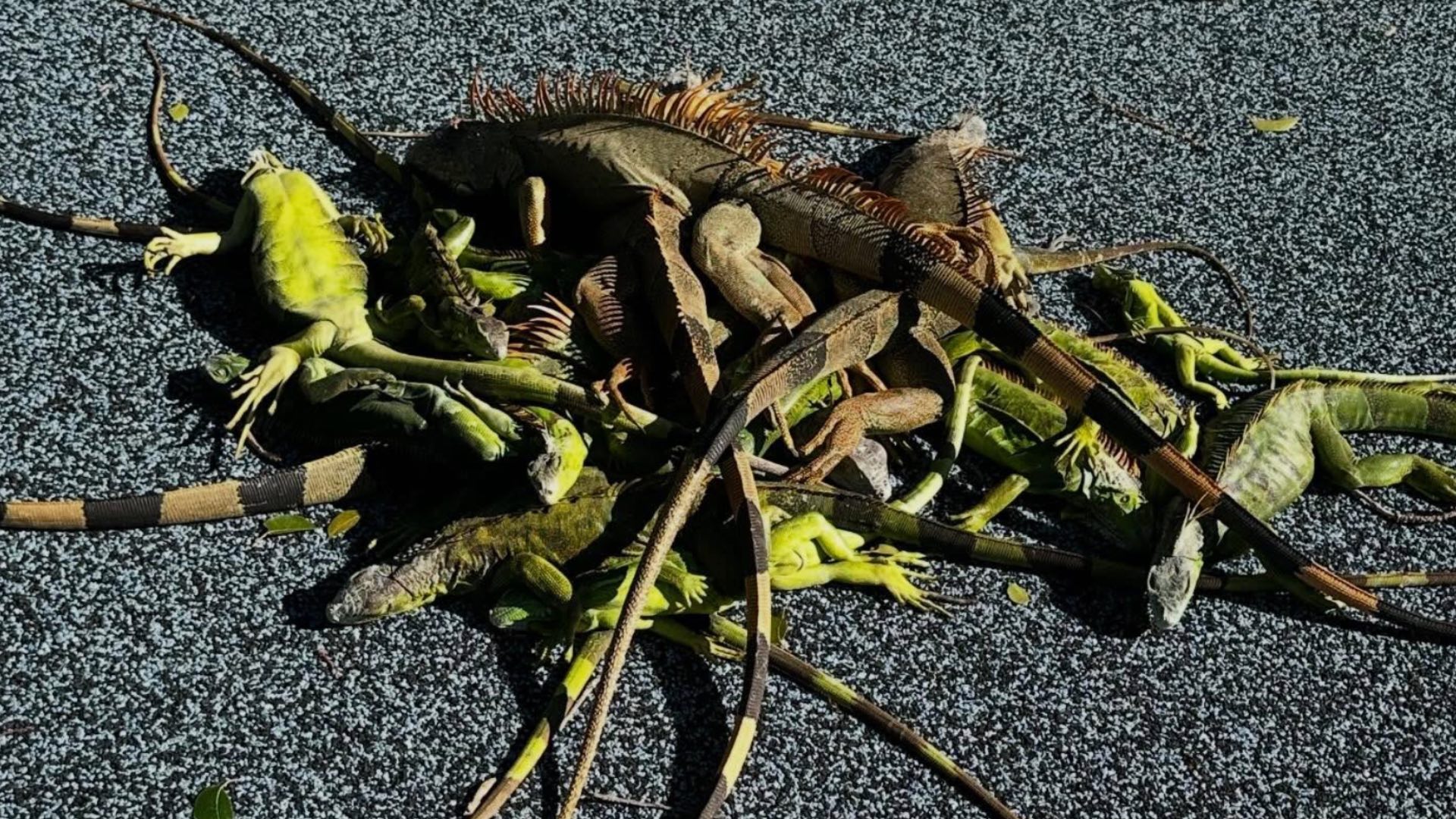
Florida, renowned for its sunshine and mild climate, recently witnessed a scene worthy of a horror film: iguanas falling from trees as if it were raining. This surprising phenomenon is linked to an exceptional cold snap and the unique biological characteristics of these reptiles.
A sunny state facing unusual cold
The Sunshine State is better known for its beaches and palm trees than for its frigid temperatures. Yet, in recent days, some regions have recorded exceptionally low temperatures, well below seasonal norms. In Orlando, the thermometer even dipped to around -4°C, a rare occurrence for this part of the country. This sudden drop in temperature has triggered a chain reaction among local wildlife, particularly green iguanas.
Why do iguanas fall from trees?
Iguanas are cold-blooded reptiles, meaning they rely entirely on the outside temperature to activate their muscles and maintain their vital functions. When cold weather sets in, their metabolism slows considerably. They then enter a state of lethargy, close to total immobility.
Perched in the trees to bask in the sun, these iguanas suddenly lose their ability to cling to branches when the temperature drops too quickly. As a result, they fall to the ground, frozen, creating the impression of a veritable "iguana rain." A spectacle as astonishing as it is disconcerting for the locals.
View this post on Instagram
A temporary stillness, not a deadly rain
It is important to clarify that these falls do not always mean the animal's death. In many cases, iguanas are simply paralyzed by the cold. Once temperatures rise, some gradually regain their mobility and can move on as if nothing had happened. This reaction is therefore primarily a physiological response to intense heat stress, and not a systematically fatal phenomenon.
A rare phenomenon, but one that has already been observed.
While this "iguana rain" was impressive in its scale, it's not the first time it has occurred in Florida. Similar episodes have been observed during previous cold spells, but rarely with such low temperatures or such poor visibility in urban areas.
Faced with this exceptional situation, wildlife protection services set up collection centers. Residents were asked to report or bring in any motionless iguanas found in their yards, streets, or public spaces. Several thousand animals were recovered. Due to their unprotected status, some iguanas were unfortunately euthanized "in accordance with Florida regulations," while others were cared for according to local protocols.
View this post on Instagram
In short, this event serves as a reminder of a fundamental truth: extreme climate variations can have surprising, sometimes spectacular, effects on ecosystems and the species that inhabit them. This "iguana rain" is not merely a "viral curiosity," but also an illustration of the impact of climate on living things—and a reminder that the balance between species, climate, and humans remains as fragile as it is fascinating.