
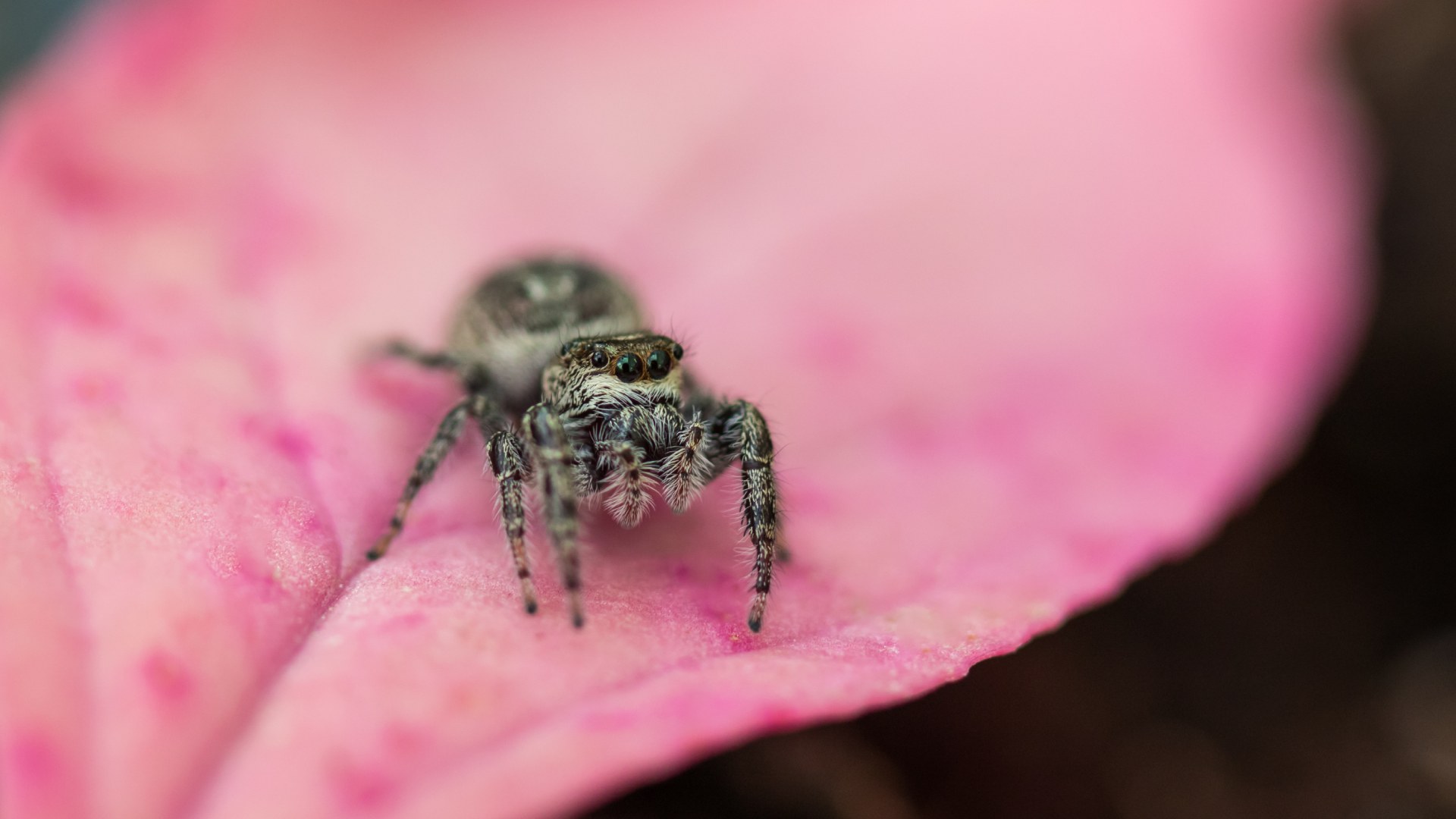
You've probably heard this rumor: we supposedly swallow up to eight spiders a year while sleeping, with our mouths open and unconscious. It's a chilling thought, but rest assured: this myth is completely false. Science offers a much more reassuring version of reality.
A rumor born to test our credulity
This myth dates back to the 1990s and owes much to the creativity of a journalist, Lisa Birgit Holst. In 1993, she published an article in PC Professional magazine listing "absurd facts," aiming to demonstrate how readily internet users share improbable information without verification. Among them was the idea that we swallow spiders in our sleep. No real statistics, no scientific studies: just a deliberately absurd example.
And yet, the message spread like wildfire. Chain emails, forums, then social media… the little anecdote became a "truth" in the collective imagination. From the scientists' perspective, no evidence has ever been found to support this scenario. On the contrary, all observations refute it.
Spiders flee from humans… even at night
From a biological standpoint, the idea is almost impossible. Spiders are creatures highly sensitive to their environment. The slightest movement, heat, or human breath immediately alerts them to potential danger. Their bodies are covered in sensory hairs capable of detecting vibrations and sounds, making them excellent intrusion detectors. An open mouth while sleeping, therefore, represents not an opportunity, but a signal to flee.
Furthermore, their natural behavior contradicts this myth. Primarily active at night, they hunt tiny insects like flies and mosquitoes. Approaching a sleeping human face would be pointless: there's no reason to risk your life only to fall into the mouth of a sleeper. And if, by some improbable turn of events, a spider were to touch your face, your reflex would be immediate: even in deep sleep, unusual contact usually triggers instant awakening.
The experts are categorical.
Rod Crawford, curator at the Burke Museum of Natural History in Seattle and a spider expert, sums it up perfectly: "Spiders do not intentionally approach a sleeping person." Scientific American and numerous other science media outlets confirm the consensus: the idea is purely fictional and biologically unrealistic.
Why does this myth persist?
The success of this rumor stems from a simple mechanism: it plays on our instinctive fears. Who hasn't shuddered at the thought of a small animal crawling on them while they sleep? Our brains retain shocking or disgusting information better, a reflex inherited from evolution to protect us from danger.
Furthermore, in the digital age, intriguing or frightening content circulates much faster than scientific facts. The myth of the swallowed spiders has all the ingredients to go viral: sleep, a feared animal, and a supposed "hidden truth." Behind this anecdote lies a valuable lesson: verify your sources and remain critical of sensationalist information.
In short, sleep soundly, really, because no scientific study supports this idea. Spiders naturally flee from humans and have no reason to crawl into your mouth during the night. So, the next time someone mentions these famous eight annual spiders, you can confidently reply: it's an urban legend.

moi je me suis réveiller une nuit par le passé avec une araignée dans la bouche et je l est écraser entre mes lèvres alors ces possible mais très rare ces arrivée 1 fois en 49 ans.