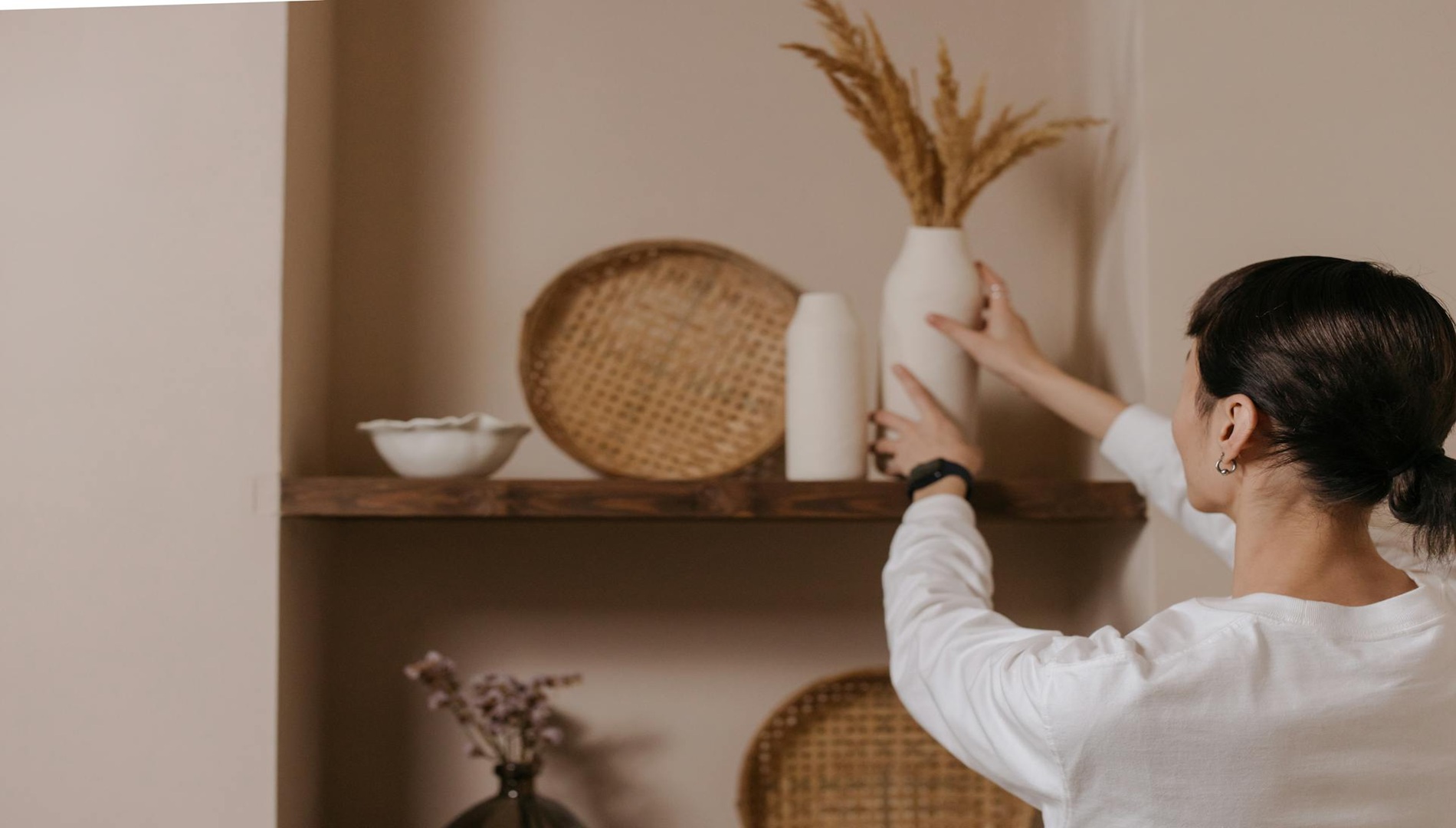
Transforming a living space into a warm and functional interior remains one of the most stimulating challenges of daily life. Interior design blends creativity, pragmatism, and attention to detail.
Each room tells a story, reflects a personality, and meets specific needs. Whether you're starting from scratch or simply want to refresh an existing atmosphere, the possibilities are endless.
Together we will explore the best ways to decorate and furnish your home with intelligence and style.
According to a study published by IFOP in 2023, 67% of French people say they pay more importance to their interior decoration since the post-Covid period.
This trend illustrates how the home has become a space in its own right, serving as a refuge, an office, and a place for socializing.
We spend more time at home, we invest more in it — emotionally as well as financially.
The foundations of successful interior design
Before choosing a paint color or a new sofa, interior design begins with careful consideration of how the space will be used. A living room must meet the actual habits of its occupants.
We think about circulation, natural light, acoustics — parameters often neglected in favor of aesthetics alone.
We recommend always starting with a scale plan, even an approximate one. Drawing the space on paper — or using applications like Planner 5D or RoomSketcher — allows you to anticipate costly mistakes.
Placing a piece of furniture that is too large in a narrow living room will disrupt the flow of movement and the overall harmony of the room.
The three-zone rule applies to almost every room: a functional zone, a rest zone, and an aesthetic zone . In a living room, this translates into the workspace or television area, the sofa area, and the decorative display—plants, shelves, collectibles.
This tripartite organization structures the space without making it rigid.
For people who live in spacious interiors, the question of balance between large areas and small details is crucial. Too much emptiness creates a cold feeling. Conversely, cluttering a space disrupts serenity.
We recommend playing with elements that have a strong visual impact: a large bookcase, an imposing painting, a generous rug that anchors the furniture.
Choosing a coherent decorative style for your home
Decorative style is the backbone of any home design project. Scandinavian, industrial, bohemian, minimalist, Japanese—trends come and go and blend together. But beyond fashion, it's your own personal taste that should guide your choices. A successful interior is first and foremost one that reflects you.
Scandinavian style, popularized by brands like IKEA and designers like Arne Jacobsen , emphasizes functionality, clarity, and natural materials. Light wood, off-white, and soft textures dominate.
This style is particularly suitable for spaces where natural light is limited, as it amplifies the ambient brightness.
The industrial style, on the other hand, plays on the contrast between raw materials — concrete, metal, exposed brick — and elements of comfort. Born in the New York lofts of the 1970s, it has become popular in contemporary interiors.
The combination of black metal and dark wood creates a strong, mature atmosphere that is both understated and distinctive.
The Japandi movement, a portmanteau of "Japanese" and "Scandinavian," has experienced a surge in popularity since 2020. It combines Japanese minimalism with Nordic warmth . It features neutral tones, low lines, a preference for natural materials, and an anti-cluttering philosophy.
This style speaks to all those who seek serenity at home, regardless of the configuration of their space.
Colors and finishes: the art of creating an atmosphere
Color is the most accessible and transformative tool in interior design . A simple coat of paint can metamorphose a room in a few hours. But choosing a shade is not something to be done on a whim.
Brightness, room orientation, and total surface area significantly influence color perception.
Warm tones—ochre, terracotta, sand, rust—create a reassuring atmosphere. They work particularly well in living spaces and bedrooms facing north. Cool shades—slate blue, sage green, pearl gray—instill a calm and contemporary feel.
Choosing a palette of two to three complementary shades is usually enough to unify an interior without making it monotonous.
Flooring deserves as much attention as walls. Solid wood parquet flooring remains timeless and enhances the property's value. Large-format tiles create a pleasing visual continuity in open-plan spaces.
Polished concrete, long reserved for trendy lofts, is now finding its way into homes of all sizes. The key to a harmonious result is consistency between the finishes and the chosen furniture .
We emphasize the value of wallpaper as a staging tool. A wall adorned with a botanical, geometric, or trompe-l'œil pattern becomes a true architectural element.
Large rooms with high ceilings can accommodate generous patterns. In smaller spaces, a discreet pattern or textured material is enough to create depth without making the space feel heavy.
Furniture and storage: functionality and aesthetics in balance
Intelligent interior design relies on well-proportioned furniture and thoughtful storage solutions. The trend towards "DIY" and modular furniture has exploded in recent years.
Consumers want pieces that adapt to their lifestyles, not the other way around.
For large rooms or spacious houses, large-scale furniture is perfectly suited. A generous corner sofa, a dining table for eight guests, an imposing wardrobe — these pieces structure the space and give it presence.
It is not about filling space for the sake of filling space, but about offering furniture that is consistent with the actual dimensions of the room.
Conversely, in more confined spaces, multifunctional furniture becomes a valuable ally.
A bed with built-in drawers, a convertible coffee table, well-positioned wall shelves — all these solutions maximize every available square meter.
French designer Philippe Starck has largely contributed to popularizing this vision of furniture that is both practical and aesthetically pleasing.
The question of storage is universal. Whether you live in a Parisian studio or in a country house with a cellar and attic, organizing your storage spaces considerably improves daily comfort.
We are thinking in particular of open systems that display objects as decorative accessories — books, ceramics, plants — and of closed spaces that conceal what we prefer not to see.
Natural and artificial light: enhancing every space
Light is undoubtedly the most underestimated parameter in interior design . Yet, it conditions everything: mood, perception of volumes, the warmth of a space.
A well-lit interior can appear much larger than it actually is.
Natural light must be preserved at all costs. Light linen or voile curtains, strategically placed mirrors, glass partitions where possible — all these devices maximize the penetration of daylight.
We advise against obstructing windows with excessively tall furniture or excessively thick curtains.
For artificial light, the golden rule is stratification. Three levels of complementary lighting are distinguished: general lighting (ceiling lights, recessed spotlights), ambient lighting (floor lamps, wall lights) and functional lighting (reading lamps, kitchen under-cabinet lighting).
Combining these three levels allows the atmosphere to be modulated according to the time of day.
Warm spectrum LED bulbs (2700K to 3000K) create a golden light, similar to candlelight. They are ideal for living rooms and bedrooms.
In workspaces or kitchens, cooler light (4000K) promotes concentration and precision. Choosing the right color temperature is just as important as choosing the light fixture itself.
Plants and natural elements: breathe life into your decor
Incorporating nature into interior design is a trend that shows no signs of slowing down. The biophilic design movement, theorized in the 1980s by the American biologist Edward O. Wilson, posits that humans have an instinctive need for connection with nature.
This theory has profoundly influenced contemporary architecture and decoration.
Houseplants are the most direct way to bring this living element into your home. A ficus lyrata, a monstera deliciosa, or a philodendron —these large-leaved plants create a strong visual presence and fit into many decorating styles.
In generous spaces, one can consider real indoor trees that fill in the blind corners.
Beyond plants, natural materials bring an irreplaceable organic warmth . Raw wood, natural stone, rattan, linen, jute — these materials anchor the interior in a gentle temporality, far removed from the cold artificiality of plastics and synthetic materials.
A solid oak table, a wicker basket, an organic cotton cushion: every detail counts.
We also appreciate water as a decorative element. A designer aquarium, an indoor fountain, or simply a transparent vase filled with pebbles and water — these installations bring movement and a soothing sound.
For large reception rooms, a living wall can become a true art installation and a topic of conversation.
Open-plan living spaces: the trend for free-form layouts
The open-plan layout — or open space — has largely reshaped our approach to designing the interior of a house . The kitchen, living room, and dining room merge into a single living space.
This model promotes interaction, child supervision, and conviviality. However, it presents specific decorative challenges.
In an open space, zones are delineated by visual tools rather than walls. A rug defines the seating area.
A central island separates the kitchen from the dining area. A bookcase or low cabinet creates a symbolic boundary without obstructing the view. These subtle dividers maintain a sense of flow while organizing the space.
The consistency of materials and colors is even more critical in this type of configuration. If each area adopts a radically different style , the whole appears disjointed and confusing.
We recommend choosing a common palette and developing styles harmoniously, varying intensities rather than aesthetic orientations.
Acoustics is an often overlooked challenge in open-plan layouts. Without walls to absorb sound, reverberation can become problematic. Heavy curtains, thick carpets, fabric-covered acoustic panels , or bookshelves filled with books can all help reduce echo.
For large families or people who work from home, this aspect deserves special attention.
Wall decoration and artwork: personalizing your interior
Walls represent a considerable surface for expression in any home decorating project. Beyond paint, wall decorations tell a story, create an identity, and give character to a neutral space.
The gallery wall — also called gallery wall — consists of grouping several frames of various sizes into a coherent composition.
This process allows for the blending of personal photographs, designer posters, and reproductions of artworks into a unique display. Artists like Jean-Michel Basquiat or Frida Kahlo are often cited as aesthetic references in this type of eclectic composition.
Sculptures, ceramics, and three-dimensional objects complement the wall decor. A floating shelf displaying a few carefully chosen pieces creates more impact than a cluttered collection.
The odd number rule — grouping objects in threes or fives — is a classic interior design technique that always works.
We encourage direct acquisition from emerging artists, particularly through platforms like Singulart or local art markets.
Supporting contemporary creation while furnishing your home with unique pieces: it's an approach that is both ethical and aesthetically enriching.
And for large spaces, an XXL format painting can become the unifying element of an entire room .
2025-2026 Trends in Interior Design and Decoration
The interior design and decoration sector is constantly evolving.
The trends for 2025-2026 are emerging around a few major themes that we have identified: a return to noble materials, chromatic sobriety, and ecological commitment.
Quiet luxury — or understated luxury — is emerging as the dominant philosophy. Out with ostentatious logos and garish colors.
Make way for high-quality materials, clean lines and palettes of beige, caramel and cream .
This movement, which originated in fashion, has naturally migrated to the world of decoration.
Eco-design is gaining ground in furniture and upholstery choices. Furniture made from FSC-certified wood, VOC-free paints, textiles made from recycled fibers — these options are becoming mainstream.
Brands like Vitra , Hay , and Fermob are increasingly incorporating these criteria into their collections. We welcome this development, which reconciles high aesthetic standards with environmental responsibility.
Finally, so-called "adaptable" layouts are becoming a practical necessity. Furniture that grows with the family, spaces that can be modified according to current needs — these solutions respond to constantly evolving lifestyles.
For homes with large spaces, this flexibility allows for exploring different configurations without constant investment.
Customize each room according to its specific needs
Each room in a house has its own logic and constraints. Personalizing the interior design room by room is the most effective approach to achieving a coherent and satisfying result in the long term.
The bedroom is a sanctuary of rest. Soothing colors, soft textiles, and a minimalist layout are favored. A bed adapted to one's body shape , quality mattresses, blackout curtains—these choices directly impact the quality of sleep.
For generously sized bedrooms, a reading nook or an integrated dressing table enriches the space without weighing it down.
The kitchen combines functionality and conviviality. The ergonomics of the worktops, the height of the backsplashes and the accessibility of the storage deserve careful consideration.
A professional interior designer can help anticipate design flaws. The trend towards open-plan kitchens reinforces the importance of the design of cabinet fronts and visible appliances.
The bathroom is transformed into a true wellness space. Spa bath, walk-in shower, high-end faucets, backlit mirror — the available equipment allows you to create an almost hotel-like atmosphere at home .
For spacious bathrooms, a double sink on a wall-mounted unit brings a touch of elegant symmetry and everyday practicality.
We conclude by reminding you that the best interior is one that meets your real needs , reflects your personality, and evolves with you. Decorating is not an end in itself, but a means to improve your daily life at home.
Every choice, every detail, every texture contributes to building a space where it is truly good to live — regardless of the size of the home or the number of its inhabitants.