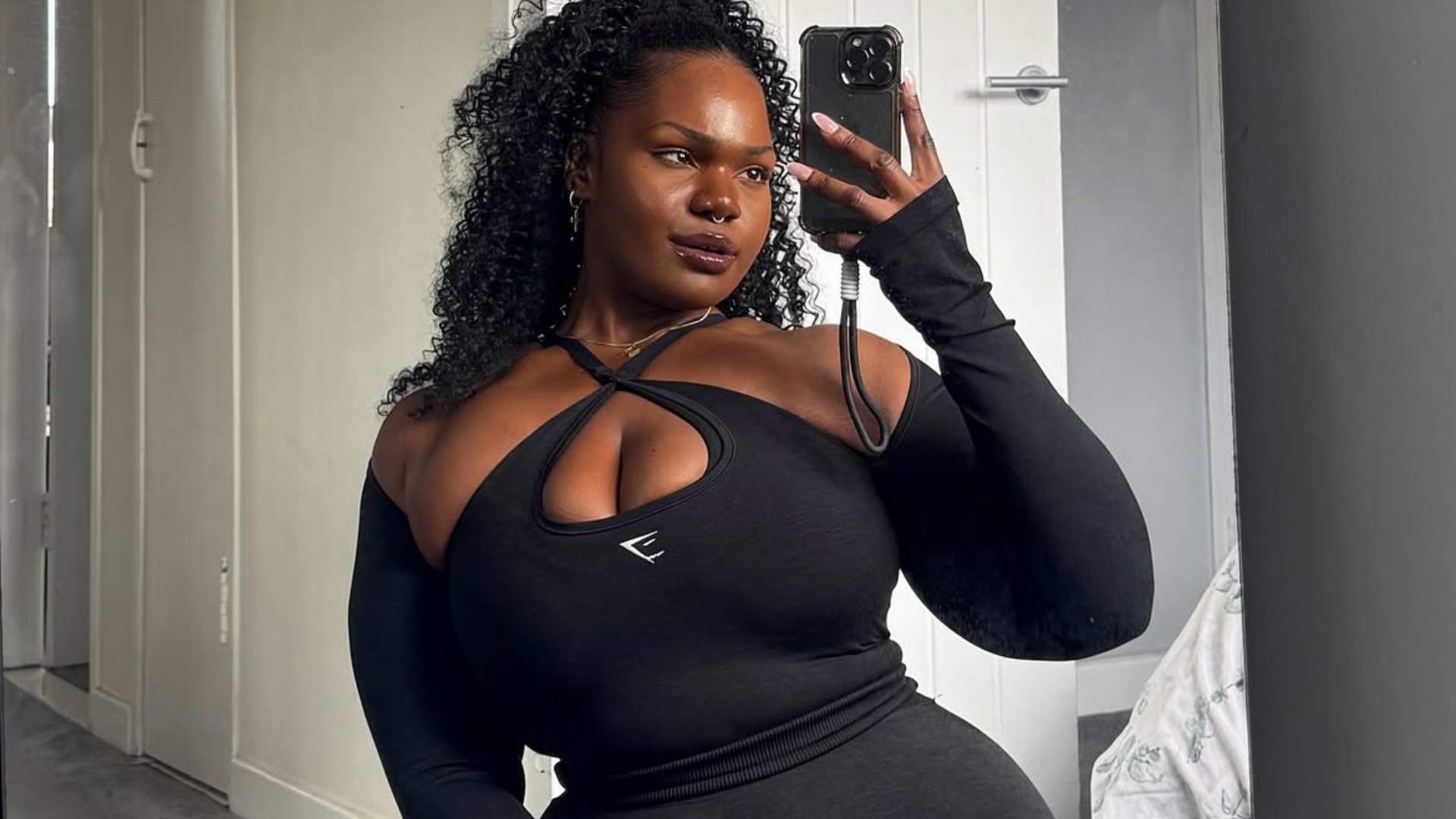
According to some men, women should be content with a few core exercises on a foam mat, exercise in moderation, and carefully avoid the free weights area, which is clearly reserved for men. To those who are disgusted by the sight of women lifting dumbbells and undertaking Herculean routines, this bodybuilder responds with her massive shoulders and pumped arms.
A show of strength that shatters the myth of the weak woman
On social media, as soon as women show off their sculpted physiques thanks to weightlifting and share their intimidating workouts with heavy weights, men cry foul. They worry about their femininity and believe that women are becoming less attractive, thus reducing their chances of winning hearts. They then call for muscular modesty so that women remain athletic and don't overshadow them with their imposing physiques. They don't want men to feel inferior, but rather to maintain a semblance of credibility in case of danger.
In the prevailing aesthetic ideal, a woman shouldn't have excessive muscle mass but rather tone , slim, and sculpt herself by doing leg circles, bodyweight lunges, and small arm movements with dumbbells that weigh less than the brains of her haters—barely a few grams. However, @kechynara refuses to let these thinness standards dictate her gym routine.
The content creator, who shatters the stereotype of the frail and defenseless woman with a single shrug, spends her time honing her physique. She exercises not to lose weight but to lift it, constantly testing the limits of her strength. We see her in action, pulling an entire stack of weights on the lat pulldown, visibly suffering during a fully loaded leg day, and spreading her arms like a bird with its wings.
View this post on Instagram
Lifting weights so the haters will think twice before speaking.
This woman, a blend of Lara Croft, Wonder Woman, and She-Hulk, shares her athletic journey online in a kind of rite of passage. Beyond providing a powerful example of female strength, she also carries weighty messages. "I celebrate myself because many versions of myself have fought for this peace and confidence," she proclaims in a post brimming with compassion.
Ultimately, her workouts are more about reconnecting with herself, acts of self-love, than extracurricular activities. “The gym is my therapy,” she says in another post. And even if she seems to be suffering terribly on screen, she leaves with a light heart and her self-esteem boosted.
Far from having the physique featured in the advertising campaigns of these gym temples, she doesn't try to imitate the girls in the windows. In fact, she has reached the peak of confidence. When she's not boosting her ego, she defies criticism by flexing her muscles and striking poses reminiscent of Greek gods. The dumbbells she lifts with a defiant look are formidable weapons against her detractors.
Behind this prohibition lies the fear of muscular women.
If muscular women elicit such strong reactions, it's not simply a matter of taste or aesthetics. For centuries, physical strength was almost a biological privilege reserved for men. Seeing a woman lift heavier weights than some men thus challenges a hierarchy long considered natural.
In the comments sections of these videos, the criticisms always follow the same pattern. Internet users claim that these female athletes "look like men," that they "lose their femininity," or that they'll never find a partner. As if athletic activity must, above all, remain compatible with the male gaze. Behind these remarks often lies the same idea: a woman can be athletic, provided she doesn't become stronger than those watching her.
Through her videos, @kechynara ultimately reminds us of an obvious truth: barbells have never had a gender. A loaded barbell doesn't require an ID card or chromosomes before being lifted. It simply rewards hard work, consistency, and discipline. The more women allow themselves to occupy this space, the more they dismantle the idea that their bodies should be discreet, light, or fragile to be accepted.
Ultimately, the real weight this athlete lifts may not be the one inscribed on the weight plates. It's decades of stereotypes that associated strength with men and delicacy with women. With each repetition, she proves that a woman doesn't need to appear weak to be feminine, nor apologize for being strong to be fully herself.