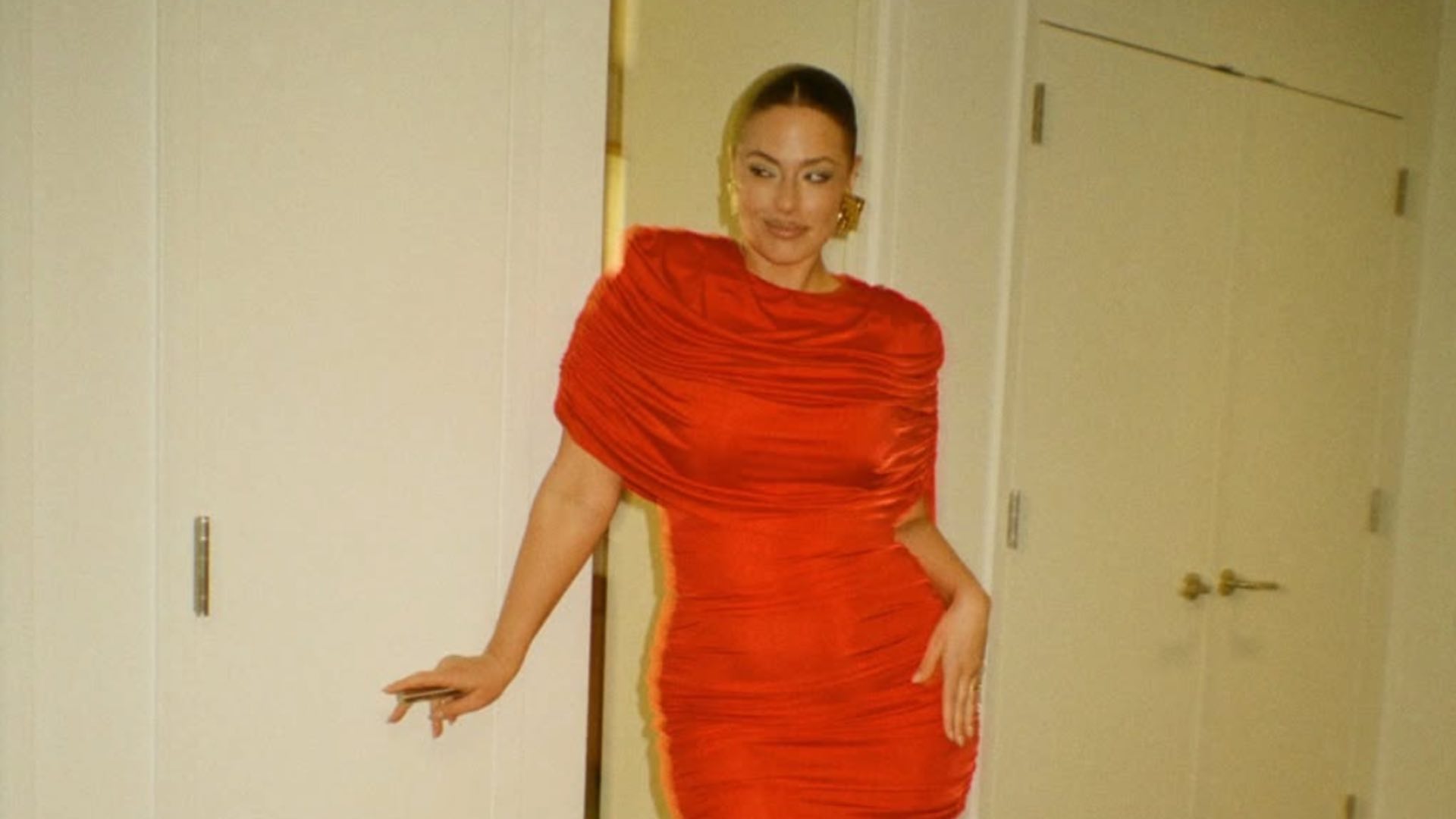
Women's bodies continue to be commented on, analyzed, and judged—even when it comes to international fashion icons. The recent wave of criticism targeting Ashley Graham proves this: despite the progress of the body positivity movement, fatphobia remains deeply ingrained in our minds.
Ashley Graham, a pioneer of more inclusive fashion
For over a decade, Ashley Graham has established herself as one of the leading faces of body diversity in fashion. In 2016, she made history by becoming the first plus-size model to grace the cover of the Sports Illustrated Swimsuit Issue. A powerful symbol in an industry long dominated by ultra-thin figures.
On the catwalks, during Fashion Weeks, and on the red carpet, she champions a simple yet powerful idea: all body types have their place. Curvy figures, generous hips, a defined stomach, rounded arms—nothing should be hidden or corrected. Her message is clear: beauty isn't about size, it's about presence. And over the years, she has spoken out extensively about self-acceptance, the pressure to conform to beauty standards, and the need to represent the diversity of bodies. A committed voice in a world where image still reigns supreme.
View this post on Instagram
An avalanche of comments about her physique
Recently, photos of the model sparked a wave of reactions on social media. Some internet users judged her "excessive curves," while others ridiculed certain parts of her body.
This type of remark falls under the category of what is known as fat shaming: mockery or discrimination based on weight. This phenomenon is documented by numerous social science studies, which show that people perceived as "overweight" are more exposed to public judgment – and women in particular.
However, according to the World Health Organization, weight-related stigma can have significant psychological consequences: anxiety, depression, and decreased self-esteem. The problem, therefore, is not limited to a few inappropriate comments. It concerns mental health and the fundamental respect for individuals.
Persistent fatphobia in fashion
While body diversity is certainly making progress in some advertising campaigns and on a few catwalks, dominant standards remain powerful. In recent years, several observers have noted a marked resurgence of extreme thinness in certain spheres of fashion, fueled by aesthetic trends and discussions surrounding weight-loss treatments.
In this context, Ashley Graham's visibility takes on a particular dimension. She embodies an alternative to restrictive norms and reminds us that curvy, sculpted, voluptuous, or powerful bodies are not a "trend," but a reality. Other modeling figures, such as Laetitia Casta, have also spoken about the evolution of standards and the pressure exerted on models over the decades. Fashion changes, but the demands remain.
When criticism also comes from women
A striking element of this episode: some of the negative comments came from other women. This observation raises questions: are thinness standards so deeply ingrained that they sometimes fuel comparison and rivalry, at the expense of solidarity? Fatphobia isn't solely the work of malicious individuals. It's embedded in a cultural system that values certain body shapes and renders others invisible. Deconstructing these systems requires time, awareness, and a genuine collective will.
View this post on Instagram
A debate that goes beyond the podiums
The issue isn't just about fashion. In many countries, organizations are denouncing weight-based discrimination in employment, healthcare, and the media. A 2019 study published in The Lancet Public Health highlighted that "weight stigma can harm overall health, regardless of body mass index." The researchers urged a distinction between "public health and moral judgment."
Ultimately, by continuing to pose, walk the runway, and speak out, Ashley Graham reminds us that no body shape should be a subject of ridicule. Her body is not a public debate: it's hers. While standards are evolving, the reactions provoked by so-called "non-standard" figures prove that there's still a long way to go. Every statement, every assertive representation, therefore contributes to expanding the space. And to reinforcing a fundamental truth: your body, in all its uniqueness, deserves respect and visibility.