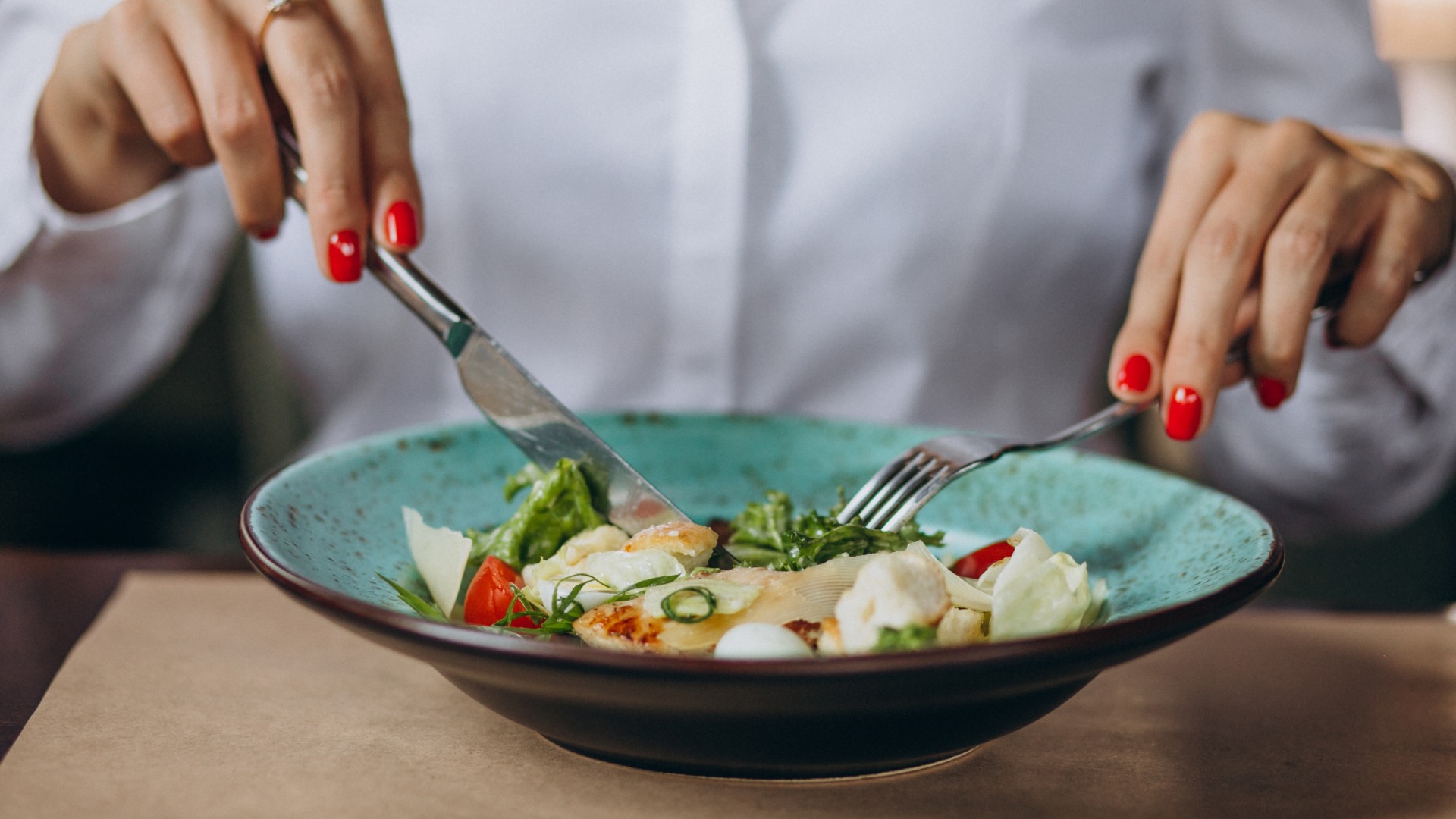
At mealtimes, we often grab the first plate we see without paying much attention to its appearance. This is especially true when living in furnished accommodation and having to make do with mismatched dishes provided by the landlord. Yet, the color of the plate influences our appetite and our feeling of fullness.
We eat with our mouths, but also with our eyes.
When we enjoy a meal , our taste buds delight, but all five senses are engaged. There's a reason the expression "to bite off more than you can chew" exists. Naturally, a beautifully presented lasagna is more appetizing than a plate of flageolet beans, crudely strewn about by the cafeteria cook. However, visual appeal isn't the only factor. The color of the plate itself is also important.
Dishes, depending on their shape and color, can either increase or decrease our appetite. It's purely psychological. Yet, it's a factor we often take lightly. Generally, we choose a plate at random from the cupboard, without really paying attention to its appearance. We sometimes make exceptions when we have guests and bring out our bluestone set or our Scandinavian-style dinnerware. However, we underestimate the effects on our eating habits.
However, a meal served on a flat green ceramic plate won't taste the same if it's placed in a terracotta bowl. In one bowl, crumbs will be left, while in the other, people will ask for seconds. Several studies have examined this phenomenon and noted a clear difference in eating behavior depending on the type of plate.
These colors that boost the appetite
In traditional restaurants, food is presented in the center of a white plate precisely to avoid overwhelming the eye and to emphasize the color of the ingredients. In this neutral hue, the plate remains a simple serving piece. However, at home, plates are rarely pristine white, especially if they're a gift from Grandma or a flea market find.
However, some colors can literally make our mouths water and cause us to eat more than our stomachs need. Researchers tested this on about fifty participants aged 18 to 30. The result: the average total energy intake was significantly higher with red plates than with white plates. This is rather paradoxical since red usually evokes prohibition or danger.
Those that reduce hunger without anyone noticing
In coffee shops and other bistro-style or contemporary establishments, the plates accompanying our meals are generally dressed in cool tones. The same chromatic credo applies to the shelves of home decor stores. Beyond earthenware plates, which evoke the illusion of a souvenir from Italy, turquoise and midnight blue plates are ubiquitous. This is hardly surprising, as they are naturally calming.
Unlike warm tones, the colors opposite them on the palette have less of an impact on appetite. The same mechanism applies to the color of food. We are instinctively more drawn to fries or melted cheddar cheese than to spinach or broccoli. And if most fast-food chains opt for colors that tend toward red, it's because there's a reason behind it.
Does it also influence taste?
According to another complementary study , published in the journal Food Quality and Preference, the color of our plate also influences our palate. Two groups of participants took part in the test: one very open to new flavors and the other rather selective in their diet. The goal? To dispel suspicions of food neophobia, or the aversion to new foods.
The children, divided into two groups, tasted salt and vinegar crisps served in three different colored bowls: red, white, and blue. The quantity was exactly the same each time. After each tasting, they had to say whether the crisps seemed more or less salty, how intense the flavor was, and whether they found the snack appetizing. Between each bowl, they took a short break to rinse their mouths with water, allowing them to start again with neutral sensations.
A surprising result: the color of the bowl influenced the perception of the "pickiest" children. They found the chips saltier in the red and blue bowls than in the white bowl. For the "less fussy" children, however, the color had no effect on their taste perception.
Ultimately, the idea isn't to swap your red dishes for all-blue plates to ration your portions or comply with diet pressures. These fascinating studies primarily demonstrate that the color of our plates isn't so insignificant. This should encourage us to practice mindful eating.