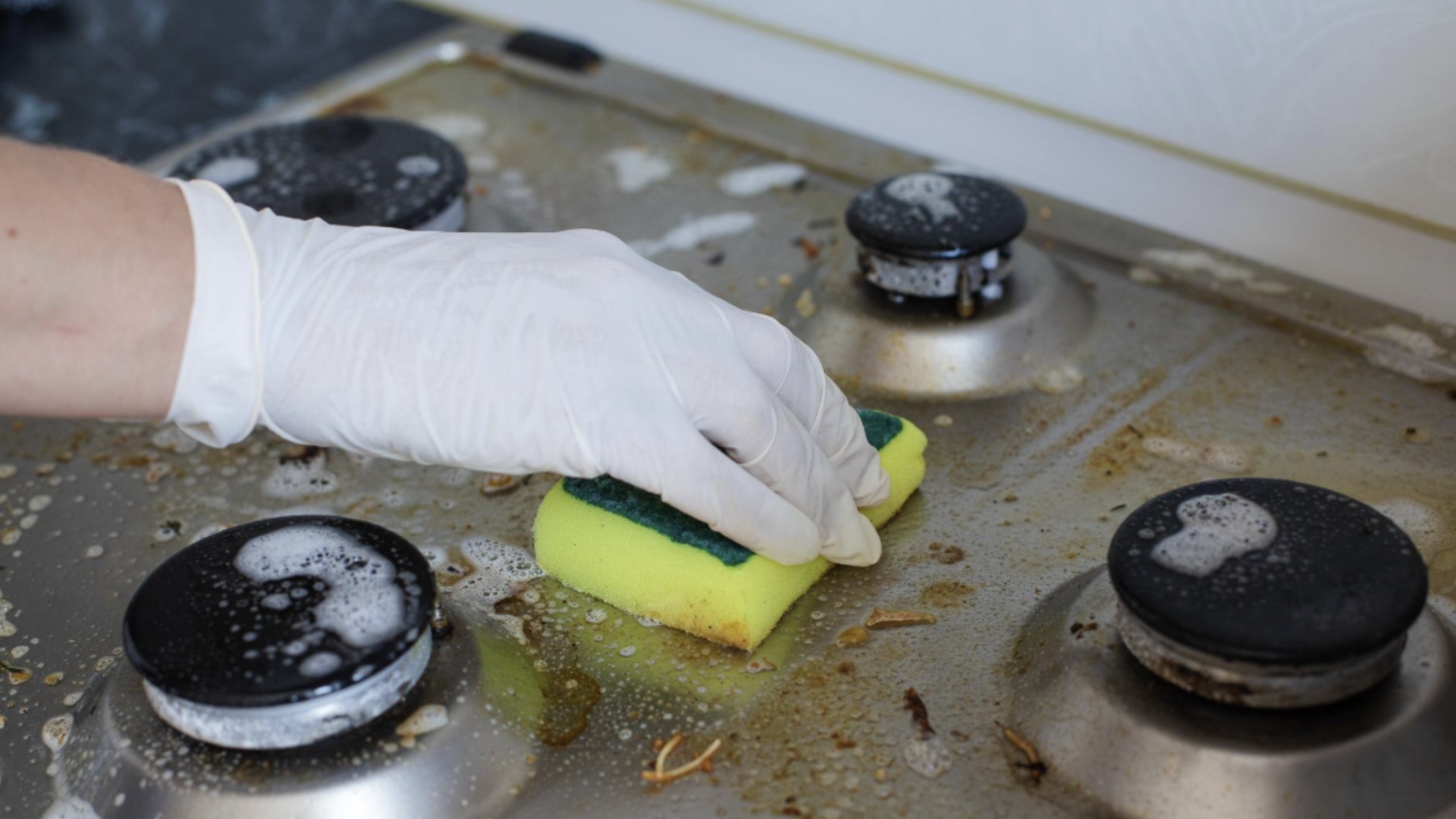
Who hasn't felt a certain frustration at seeing the same stains reappear on countertops, around the sink, or on the backsplash just days after a thorough cleaning? Far from being a mere feeling, this phenomenon has very specific causes. Understanding why some stains resist—or even return more stubborn than before—is the first step in breaking this discouraging cycle.
The mystery of recurring stains
In the kitchen, some stains seem inevitable. Grease stains on cabinet fronts, whitish deposits around the sink, brownish marks on the stovetop, rings around the coffee maker: all these phenomena have one thing in common: they don't disappear permanently, even after careful cleaning. This persistence is no accident. It's explained by the very nature of the residues involved, which don't simply settle on the surface, but become embedded in the material, creating points of adhesion that resist sponging.
Biofilm, the main culprit behind stubborn stains
A study published in May 2025 in the scientific journal Chemical Engineering Journal, conducted by Professor Hyunjoon Kong and his team at the University of Illinois, sheds particularly valuable light on this phenomenon. The researchers demonstrate that the black, gray, or pinkish stains regularly observed around kitchen sinks and grout lines are not simply dirt, but rather actual bacterial biofilms.
Composed of microscopic colonies organized and protected by a matrix of extracellular substances, these biofilms adhere strongly to surfaces. Even when faced with vigorous scrubbing or powerful disinfectants, they resist and quickly regenerate. It is therefore this highly organized biological structure, and not a lack of cleaning, that explains the recurring nature of this soiling.
Grease and limescale, other persistent enemies
Beyond biofilm, other residues play a major role in the persistence of stains in the kitchen. Cooking grease, splashed in fine droplets onto countertops, hobs, extractor hoods, or walls, dries quickly and becomes particularly sticky. The longer it remains in place, the more it adheres, forming a layer that is difficult to dissolve.
Limescale, on the other hand, comes from the hardness of tap water. Rich in minerals, this water deposits thin white layers on taps, sinks, and windows with each evaporation. These deposits thicken day after day and always give the impression that the surface is dirty, even after wiping with a sponge.
Why simple housework is not enough
The most common mistake is cleaning only the visible surface without addressing the root cause of the problem. A typical household cleaner removes the surface layer of dirt but often leaves its underlying structure intact. In the case of biofilm, for example, bacteria protected by their extracellular matrix are not affected by standard detergents.
In the case of grease, simply wiping with water is not enough to dissolve the lipid deposits that have become embedded in the pores of the material. And in the case of limescale, the lack of drying after each use immediately promotes mineral redeposition.
The right steps to break the cycle
To prevent the stains from recurring, several simple steps make a difference.
- For grease, a quick cleaning after each cooking session, with hot water and dish soap or black soap, prevents the formation of a hardened layer.
- For limescale, immediate drying of surfaces after each use and regular use of diluted white vinegar are the best weapons.
- Regarding biofilms, a thorough cleaning of the joints, the sink and damp corners, followed by rigorous drying, helps to limit the residual moisture that promotes their formation.
- It is also essential to adapt the products used to each type of surface, as some materials such as marble or natural stone cannot withstand acids.
The recurring stains in the kitchen are therefore not a sign of poor cleaning, but the result of well-identified physicochemical and biological phenomena. By understanding their origin and adopting targeted preventative and curative measures, it becomes possible to permanently break the cycle of recurring stains.