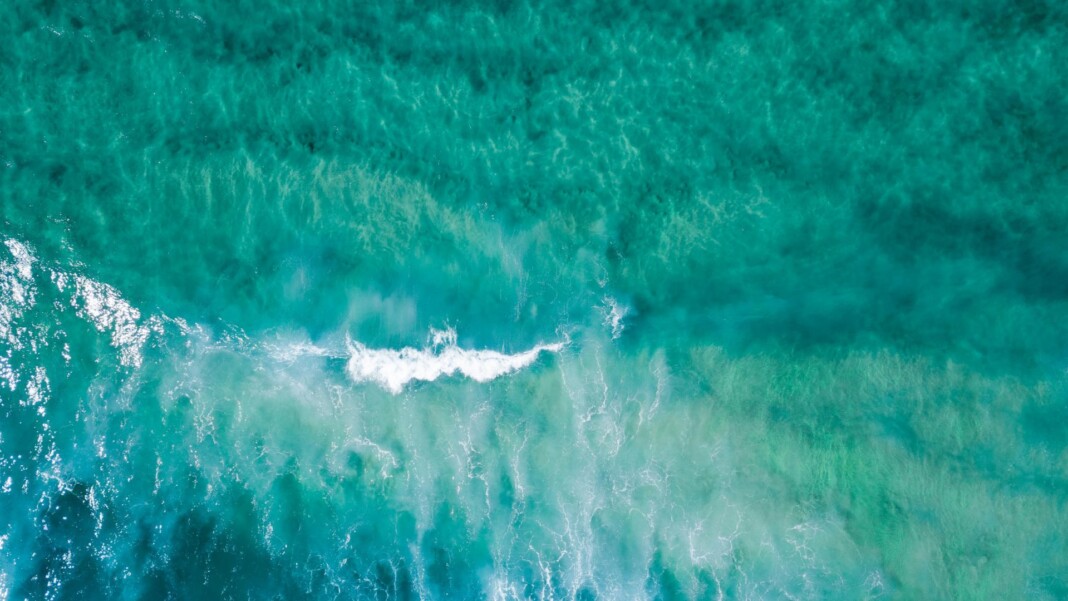
Earth has always been nicknamed the "blue planet" because of the vast expanse of oceans covering its surface. However, recent scientific observations show that this iconic color could gradually change. According to several studies based on satellite data, a large portion of the world's oceans has already begun to change hue in recent decades, becoming slightly greener.
Observations made over more than twenty years
The phenomenon was identified through the analysis of satellite images collected over a period of approximately twenty years. This data allowed researchers to study ocean color variations on a global scale. A study published in the scientific journal Nature indicates that more than 56% of the oceans experienced a measurable color change during this period. Researchers observed that some ocean areas became greener.
These changes are often difficult to perceive with the naked eye, but satellite sensors can detect slight variations in how light is reflected by water. Scientists consider these changes to be an important indicator of the transformations affecting marine ecosystems.


The role of phytoplankton in this color change
One of the main explanations put forward by researchers concerns phytoplankton, a group of marine microorganisms capable of photosynthesis. These organisms contain, among other things, chlorophyll, a pigment that absorbs certain wavelengths of light and can give the water a greener tint.
When phytoplankton concentrations increase in certain ocean areas, the water's color can change slightly. Phytoplankton plays a vital role in maintaining the balance of the oceans. It forms the base of many marine food chains and also participates in the absorption of carbon dioxide from the atmosphere.
A phenomenon possibly linked to climate change
Scientists believe these color variations could be linked to environmental changes affecting the oceans. Increased water temperature, changes in ocean circulation, and shifts in nutrient availability can all influence phytoplankton distribution.
Climate change could therefore indirectly promote the proliferation of certain marine microorganisms in some regions. However, researchers remain cautious: while observations clearly show a change in color in many ocean areas, further research is needed to fully understand the mechanisms involved.
Possible consequences for marine ecosystems
These changes could affect the balance of ocean ecosystems. Since phytoplankton forms the base of many food chains, any alteration in its distribution can influence the species that depend on it. Some populations of fish or marine organisms could thus thrive in certain areas, while others could decline.
Furthermore, phytoplankton also plays a role in certain atmospheric processes, notably by releasing compounds that contribute to cloud formation. These complex interactions between oceans, climate, and the biosphere are currently the subject of much scientific research. Satellite observations show that the color of the oceans is not static. Over the past two decades, more than half of the oceans have undergone a measurable change, with a trend toward becoming slightly greener.


Ultimately, while these variations may sometimes be imperceptible to the human eye, they constitute an important signal of the transformations underway in marine ecosystems. For scientists, monitoring these changes could help to better understand the impact of climate on the balance of the oceans.