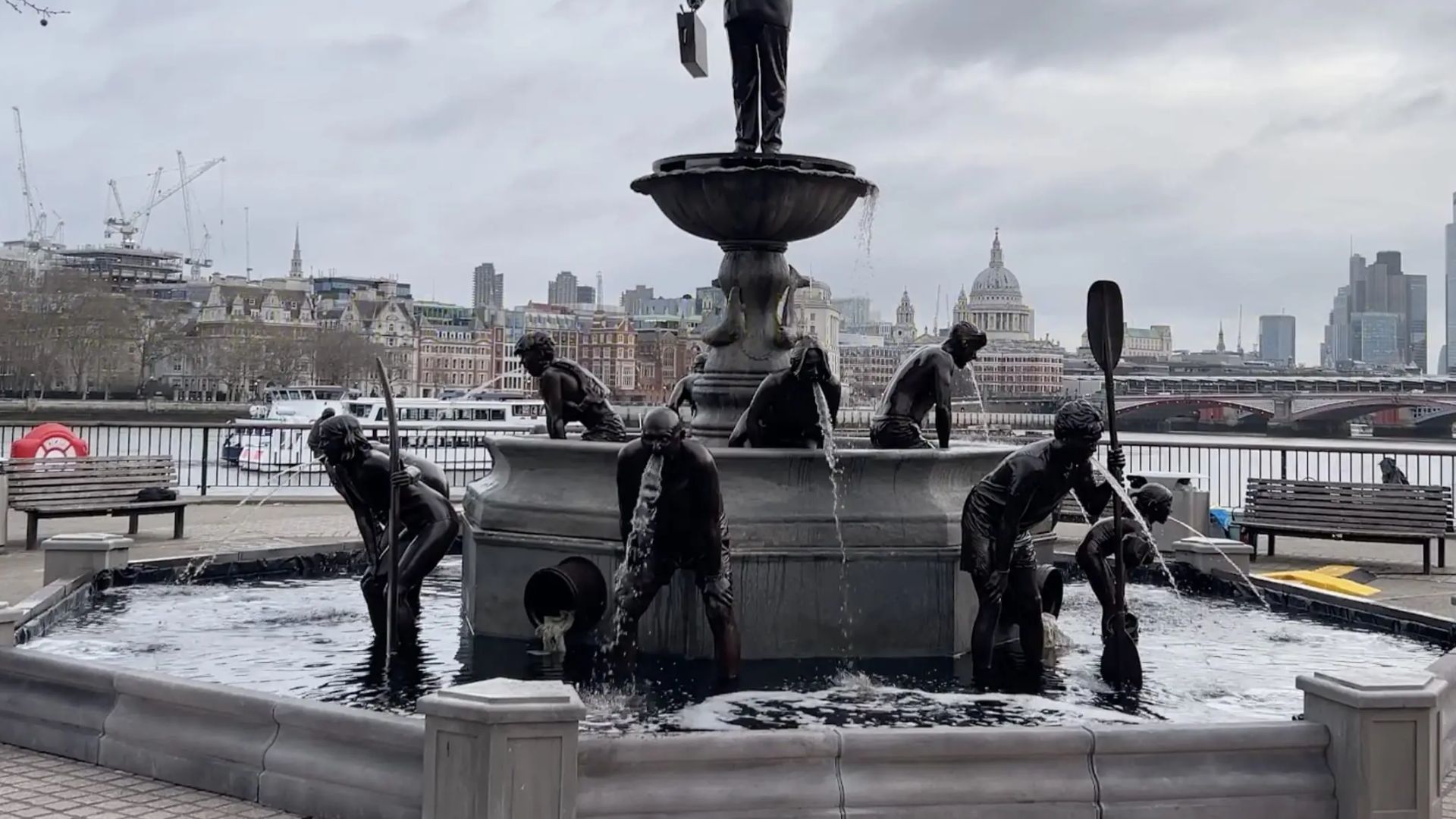
In London, an unusual fountain has recently attracted a lot of attention: statues appear to be "vomiting" brownish water. While the image is shocking, it doesn't aim to distract, but rather to draw attention to a major environmental problem, blending art, a political message, and virality.
A monumental fountain for a powerful message
Installed on the South Bank, near Observation Point, this ephemeral artwork, entitled "The Fountain of Filth," subverts the classic conventions of bronze fountains. On several levels, men, women, and children appear to be expelling dark, opaque water. This deliberately unsettling image serves a clear purpose: to denounce the problem of wastewater discharge in the United Kingdom.
The installation was unveiled to coincide with the launch of the Channel 4 documentary series "Dirty Business," which investigates the controversial practices of some private water companies. Through this visual gesture, the 4Creative studio transforms a public space into a forum for debate, inviting passersby to reflect on the impact of pollution on health and the environment.
A denunciation of the wastewater crisis
Since the privatization of the water sector in England and Wales in the 1980s, discharges of sewage into rivers and the sea have been regularly reported. Authorities permit these discharges under certain circumstances, particularly during heavy rainfall, but their frequency and volume are highly controversial.
The fountain metaphorically illustrates these practices and their consequences. Environmental activists and citizens denounce health effects such as irritations, infections, and illnesses linked to contact with contaminated water. By visually exposing this problem in the heart of a busy public space, the installation seeks to make tangible an issue often perceived as distant.
Faces that tell a story
The statues are not anonymous. Some were created from 3D scans of individuals involved in the defense of British waters, such as surfer and activist Sophie Hellyer. The sculpted bodies thus embody citizens confronted with the consequences of pollution.
At the top of the fountain, a male figure in a suit, his pockets overflowing with banknotes, symbolizes the presumed responsibility of water company executives, accused of prioritizing profits over infrastructure. This contrast between victims and perpetrators reinforces the installation's political message.
A campaign that goes beyond art
The installation includes a QR code that allows passersby to access additional content, testimonials, and the "Dirty Business" series, the result of several years of investigation. Art thus becomes a tool for communication and awareness-raising, making the message more accessible and interactive.
Images of the fountain quickly circulated on social media, fueling discussions and controversies. Some praised the artistic boldness and the work's ability to make a complex issue visible. Others deemed it too provocative, even excessive. In any case, the objective was achieved: the debate was launched.
A viral and necessary work
The fountain's success lies in its striking contrast: the classical aesthetic of a fountain juxtaposed with a deliberately shocking scene. This blend of art and social message transforms the way passersby see the fountain, provokes reactions, and serves as a reminder of the importance of wastewater pollution, a crucial but often overlooked issue.
Ultimately, if these statues are "vomiting" in the heart of London, it's not for gratuitous sensationalism. They serve as a reminder that art can be a powerful tool for raising awareness, provoking reflection, and highlighting urgent environmental and health issues. Beyond the visual shock, they remind us that water pollution is not an abstract problem: it concerns us all and deserves to be seen, heard… and discussed.