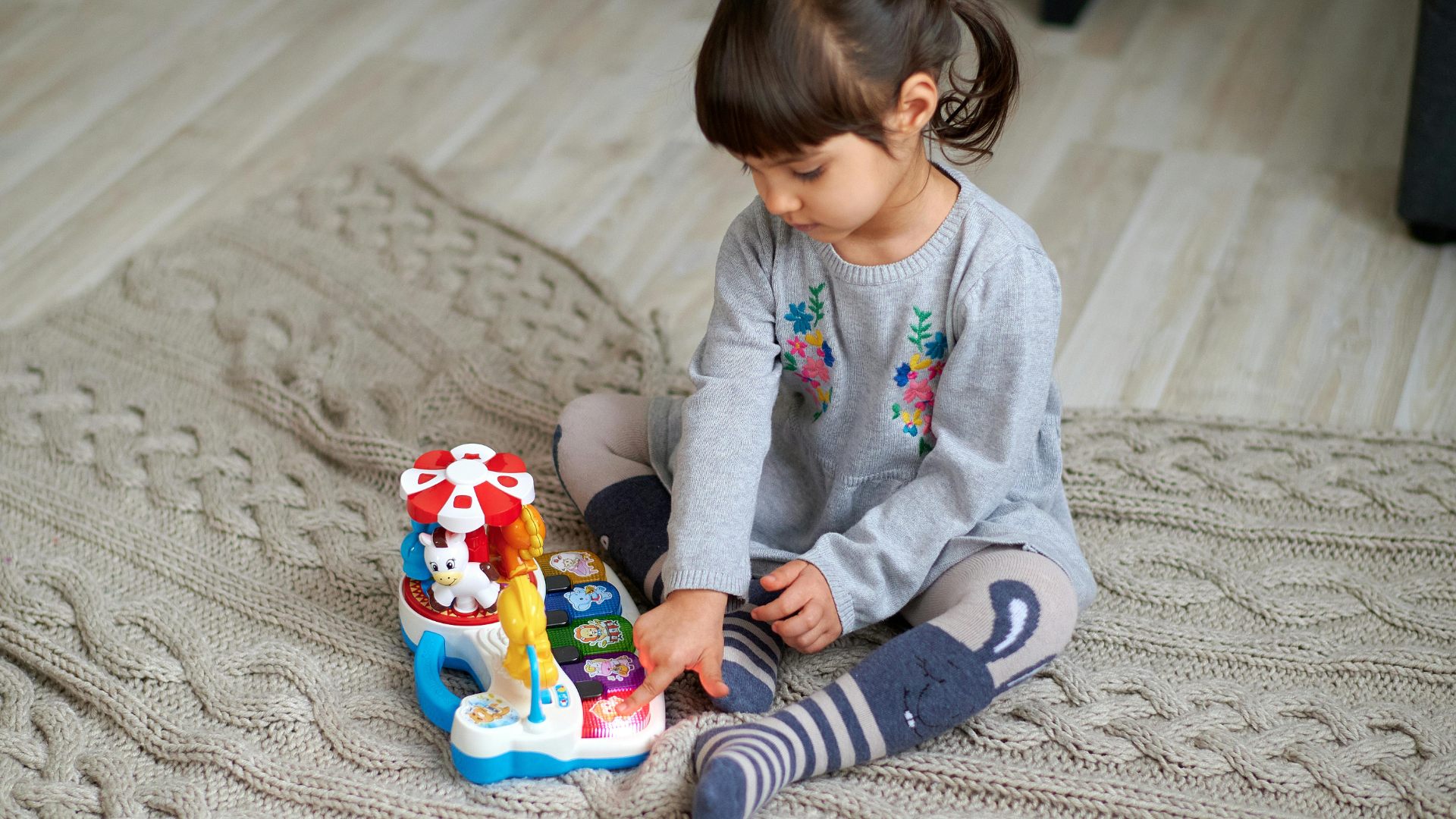
Sirens, electronic music, repetitive sound effects… modern toys certainly know how to make themselves heard. Yet, behind these sounds that amuse and stimulate, some specialists are raising the alarm. Your children's hearing, precious and delicate, deserves your full attention.
When the "fun" becomes too much
Giving a bright red fire truck with hinged doors and a hyper-realistic siren as a gift might seem like a brilliant idea. At first, the noise is funny, surprising, and adds energy to the game. However, what seems merely annoying to you could pose a real risk to little ears.
Children are exposed to a variety of sounds every day: conversations, traffic, music. Most of these sounds remain at safe levels. The problem arises when exposure to loud noises becomes repeated and prolonged. Specialists refer to this as noise-induced hearing loss. In practical terms, every time a child holds a noisy toy to their ear, they can damage the hair cells in their inner ear. These cells, essential for hearing, do not regenerate. The damage is therefore irreversible.
An invisible, but very real threat
The difficulty is that hearing loss is not always immediately noticeable. It develops gradually. And the figures speak for themselves: it is estimated that approximately one in five teenagers already has some form of noise-related hearing loss.
The consequences extend far beyond simple hearing difficulties. Even mild hearing loss can affect language comprehension, classroom learning, and social interactions. Hearing clearly also means participating, expressing oneself, and connecting with others. Hearing supports confidence and personal growth.
Decibels: what you need to know
Sound is measured in decibels (dB). As a point of reference:
- A whisper is around 30 dB.
- A normal conversation is around 60 dB.
- A lawnmower can reach 100 dB.
In Canada, regulations stipulate that a toy must not exceed 100 dB at the usual playing distance. On paper, this seems reassuring, but in real life, children—especially younger ones—explore freely. They bring toys close to their faces, hold them to their ears, and test the sounds at very close range. A toy measured at 100 dB at arm's length can reach up to 120 dB near the ear, equivalent to the noise of a jet taking off. At this level, the risk to hearing becomes serious.
Protecting little ears with kindness
Good news: you have the power to act, without depriving your child of the pleasure of playing.
- First, trust your instincts. If a toy seems excessively noisy in the store, it will likely be just as noisy at home. Your hearing comfort is already a good indicator.
- You can also use a decibel measurement app on your phone to assess the noise level. Many experts recommend reconsidering the purchase if the noise level exceeds 85 dB.
- Choose toys equipped with a volume control or an on/off switch. This allows you to adjust the sound level to the environment and your child's sensitivity.
- Keep a close eye on your child during playtime. Teach them not to hold the toy against their ear or face. This gentle and gradual approach is part of learning independence and respecting their body.
If a toy is really too noisy, you can remove the batteries. Some parents also choose to put a piece of tape over the speaker to dampen the sound. It might not be very aesthetically pleasing, but it's effective.
In short, noisy toys aren't inherently "bad." They can stimulate the imagination and nurture curiosity. The goal, therefore, isn't to ban them, but to find a balance. By promoting gentler sound environments, you protect your children's hearing while respecting their energy and joy of exploration. Their bodies—in all their richness and sensitivity—deserve this attention. Because hearing the world is also about learning to find one's place in it.