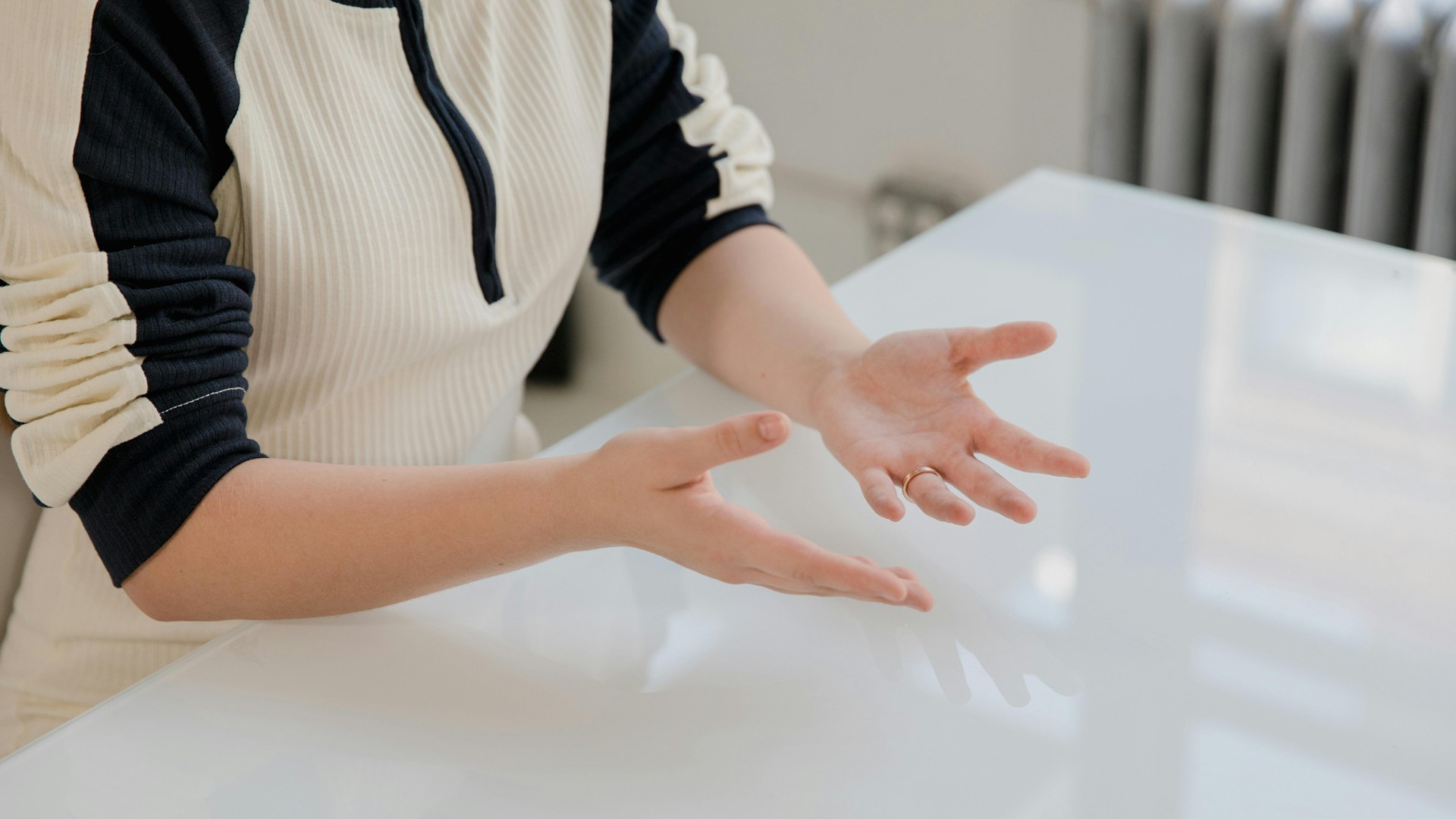
Think you've mastered your speech? Perhaps. However, your hands sometimes speak their own language. Without you even realizing it, they convey your emotions, your hesitations, or even your confidence. Nonverbal psychology and synergology take a close look at this: these micro-gestures often speak louder than your words.
Crossed arms: a protective reflex
Crossing your arms is a common gesture. Yet, it can act as a true emotional shield. In nonverbal psychology, this movement is often interpreted as a posture of closure or protection in the face of a situation perceived as uncomfortable. The dominant arm unconsciously protects your "mental territory."
If this crossing of the torso is accompanied by a slight backward lean of the torso or a backward tilt of the body, it may signal emotional detachment or a need to recenter yourself. This doesn't mean you're hostile, but it may indicate that you're analyzing, evaluating, or seeking to feel safe. Your body isn't betraying you; it's protecting you.
Touching a piece of jewelry or an object: a discreet form of self-comfort
Twirling a ring, manipulating a pen, touching a pendant… these repetitive gestures often have a calming effect. They allow you to channel internal tension or nervous energy. It's a form of self-reassurance, almost an intimate ritual. Putting your hand in front of your mouth can, depending on the context, express hesitation or a need to hold back your words. Crossing your fingers can reveal an expectation or a hope. Conversely, an open palm facing your interlocutor generally evokes openness, sincerity, and availability. Your hands then become a bridge between your inner world and the outside world.
Straightening one's clothes: seeking social balance
Smoothing a skirt, adjusting a shirt, touching your collar… these gestures may seem purely aesthetic. Yet, they often reflect a social adjustment. You are unconsciously seeking to feel "in place," to be presentable, aligned with the image you wish to project.
When facing an authority figure or in a situation you consider important, this movement may intensify. It can reveal slight tension, a desire for control, or simply the wish to make a good impression. Combined with tightly crossed legs, it can accentuate a need for protection or restraint. Again, there's nothing negative about it: your body is trying to maintain your balance and dignity.
Fingers and thumbs: the dialogue between emotion and reason
Hands held tightly together, with interlaced fingers, are particularly interesting. The dominant thumb can offer clues about your personality: a left thumb on top might suggest a more emotional, affective approach, while a dominant right thumb indicates a more analytical and rational mindset. Closed fists can indicate nervousness or suppressed tension. Hands clasped around an object can suggest attachment or a need for control. Conversely, open hands with relaxed, supple fingers suggest creativity, ease, and openness in relationships. Your hands tell the story of your inner balance.
Observing without judging: a powerful communication tool
Decoding these signals isn't about labeling or suspecting. It's about refining your listening skills. By observing gestures, you can adapt your communication, ease tension, and create an atmosphere of trust. Being aware of your own body language can also enhance your impact. Open hands encourage connection. A relaxed posture inspires confidence. Controlled gestures bolster your credibility during an interview or negotiation.
In short, your hands are not your enemies. They reflect your sensitivity, your attentiveness, your desire to do well. They sometimes speak louder than your words, but always with authenticity. Learning to observe them, in yourself as well as in others, enriches your relationships and your understanding of human dynamics.