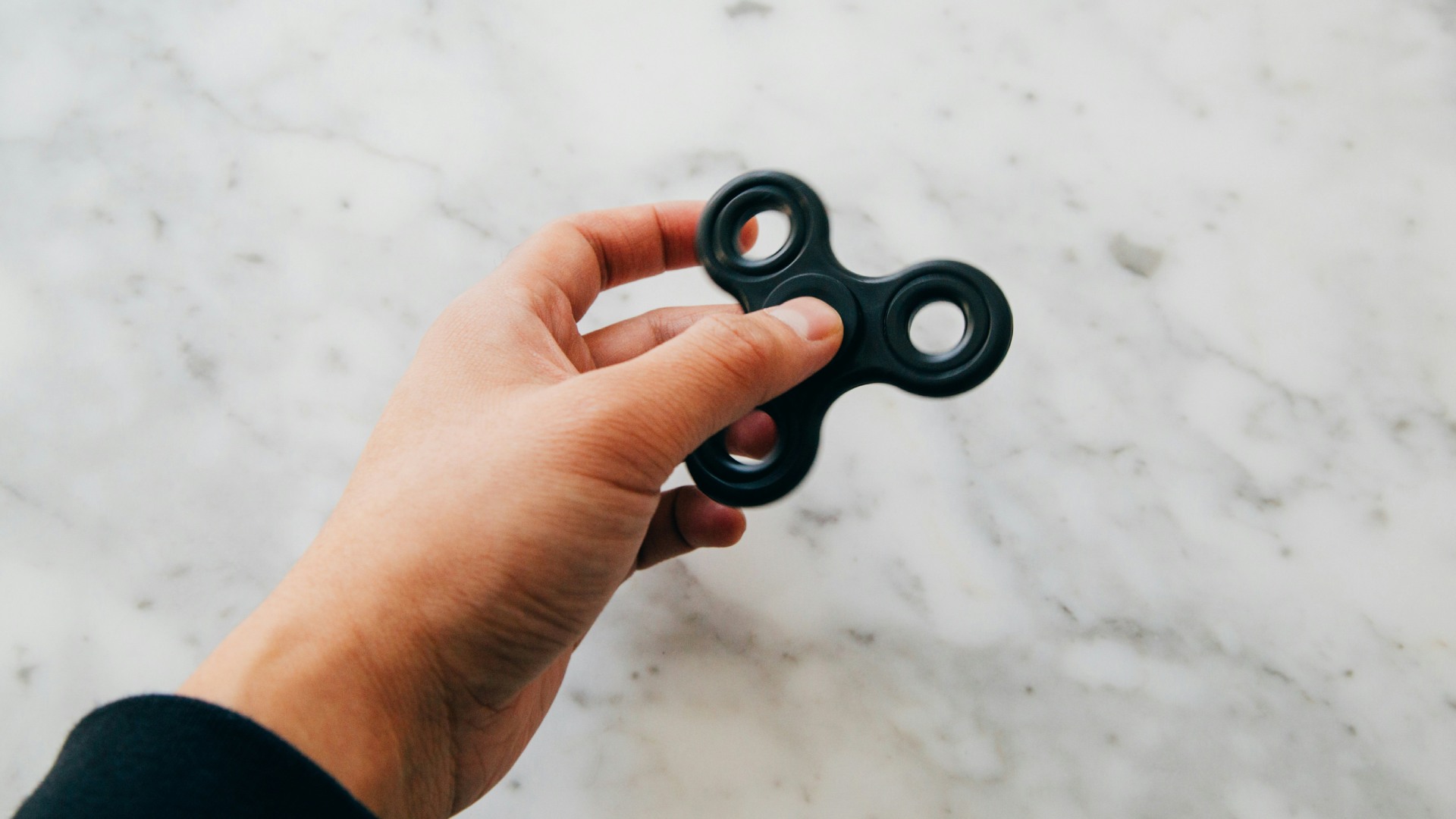
No matter the situation, you always have this compulsive need to fill the void between your fingers. You bring them to your mouth, you crack them, or you wrap them around a strand of hair. In cases of extreme urgency, you might even play cheerleader with a pencil. Your hands are hyperactive, struggling to function without distraction. And these aren't harmless tics.
Distracting your hands to better concentrate
At school, we built airplanes out of sheets of paper, clicked our pens across our desks, frantically fiddled with the caps of our pencils, and played with the zippers on our pencil cases. Sometimes we drew random lines in our notebooks or filled in the blank spaces with blue ink. Our hands were always in action.
In adulthood, these involuntary hand movements continue to fidget and dance around the body. This is evidenced by the rise of stress balls, DIY slime-making kits, fidget spinners, and spiky rings. We sometimes crumple the collar of a blouse in a meeting, doodle aimlessly on a sticky note, or pounce on a necklace chain like a cat on a ball of yarn. Often considered a sign of boredom or daydreaming, these involuntary hand gestures actually help to focus our thoughts and improve mental clarity.
"When we move and engage in activities, we alter our brain's neurochemistry in the same way that a drug can alter our brain's neurochemistry," explains Kelly Lambert, a neuroscientist at the University of Richmond, to CBS News . In other words, lively hands give an impression of control.
Keeping your hands busy to calm your mind
In the 19th century, doctors were already prescribing knitting to women suffering from anxiety. This age-old activity, incidentally, still persists in palms usually occupied by smartphones . "It may seem simplistic, but it's important to know that repetitive movements increase the production of certain neurotransmitters. And if you achieve something, like a hat or a scarf, you get a sense of satisfaction," explains the specialist.
It's no coincidence that everyone is taking up gardening , unwinding balls of yarn, taking pottery classes, and following art tutorials. In an era of sedentary jobs where hands simply move back and forth across a keyboard, creative activities that treat the fingers like instruments are making a comeback. "If you create something, if you paint, if you cook, if you assemble objects and use both hands in a more creative way, it will be more stimulating for the brain," the scientist explains.
Manual activities: the most evocative examples
To reach this conclusion, the researcher observed the same behavior in rodents. The animals, which had to dig and therefore use their paws to find food, showed better signs of mental health than what she calls the "privileged rats," who were exempt from this task. "So, when we took an animal perfectly in tune with its environment and simply gave it its rewards, without it having to exert any effort, its stress hormone levels increased sharply—it lost all its benefits," she explains. This is a situation that can easily be transposed to humans.
Whether you're wiping down a piece of furniture while doing a chore, trying to recreate a pattern found online with the back of a needle, or filling in the gaps in a color-by-number book, the end result is always the same. These activities, whether they culminate in a handcrafted creation or are purely for meditation, soothe the mind. Thus, your hand isn't just for tapping away on your phone. Used wisely, it can fulfill your desire for inner peace.
The next time your fingers fidget for no apparent reason, remember this explanation. This gesture, far from being pointless, is a natural way to care for your brain and well-being. It's not a lack of attention; it's a protective mechanism, a misunderstood meditation technique.