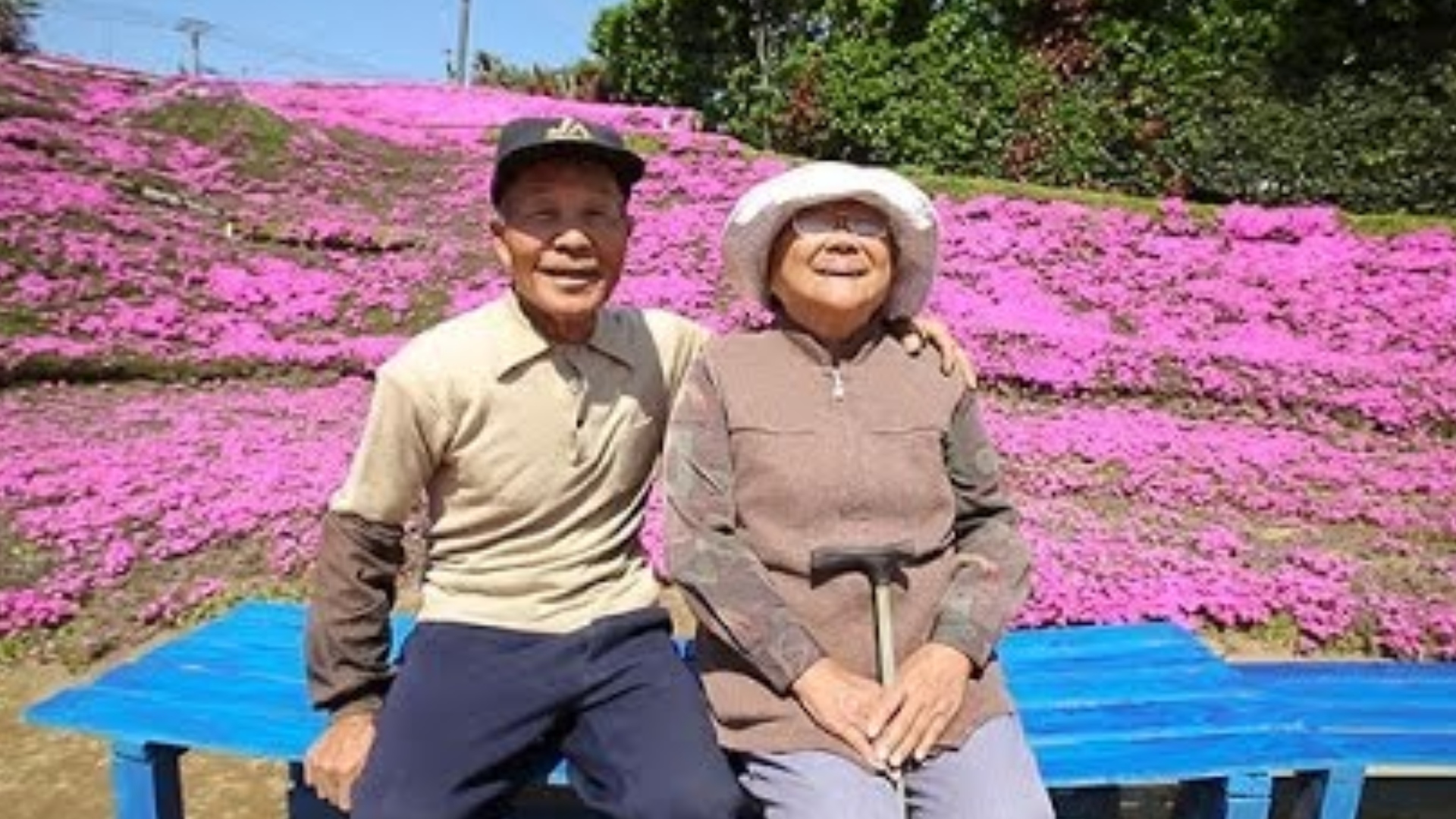
In Japan, the story of Toshiyuki Kuroki and his wife Yasuko Kuroki resonates with its simplicity and depth. After more than 30 years of marriage, their lives are turned upside down when Yasuko loses her sight due to health complications. This ordeal marks a turning point for the couple, forcing them to abandon the travel plans they had envisioned for their retirement.
A gesture of love born from a difficult ordeal
Deprived of visual cues, Yasuko is going through a period of isolation and sadness. Faced with this situation, her husband decides to find a way to bring a smile back to her face, by imagining a project that is both accessible and deeply symbolic.
For nearly two years, Toshiyuki transformed their farm into a vast garden of pink phlox, a flower known for its delicate fragrance. His idea was to create a place that would attract visitors and foster a sense of community around his wife. Gradually, this flower garden became a popular destination for many curious visitors. Drawn by the beauty of the landscape and the couple's story, visitors come every year to discover this now iconic place.
The initiative gradually allows Yasuko to emerge from her isolation. Surrounded by the scents of flowers and the presence of visitors from all over the world, she rediscovers a sense of joy and serenity.
A symbol of love and resilience
This project illustrates how a simple gesture can have a profound impact. In designing this garden, Toshiyuki Kuroki sought to transform a personal ordeal into an initiative imbued with hope. According to Le Monde , this place has now become "a symbol of enduring love," demonstrating how creativity and perseverance can help overcome difficult times.
This couple's story reminds us that caring for one another can take unexpected forms. Through this flower garden, Toshiyuki and Yasuko Kuroki demonstrate a bond built on patience, solidarity, and the desire to continue sharing moments despite obstacles.
In short, this project, born from a desire to combat loneliness, illustrates the human capacity to transform hardship into a message of hope. It proves that certain gestures, even seemingly simple ones, can profoundly change everyday life.