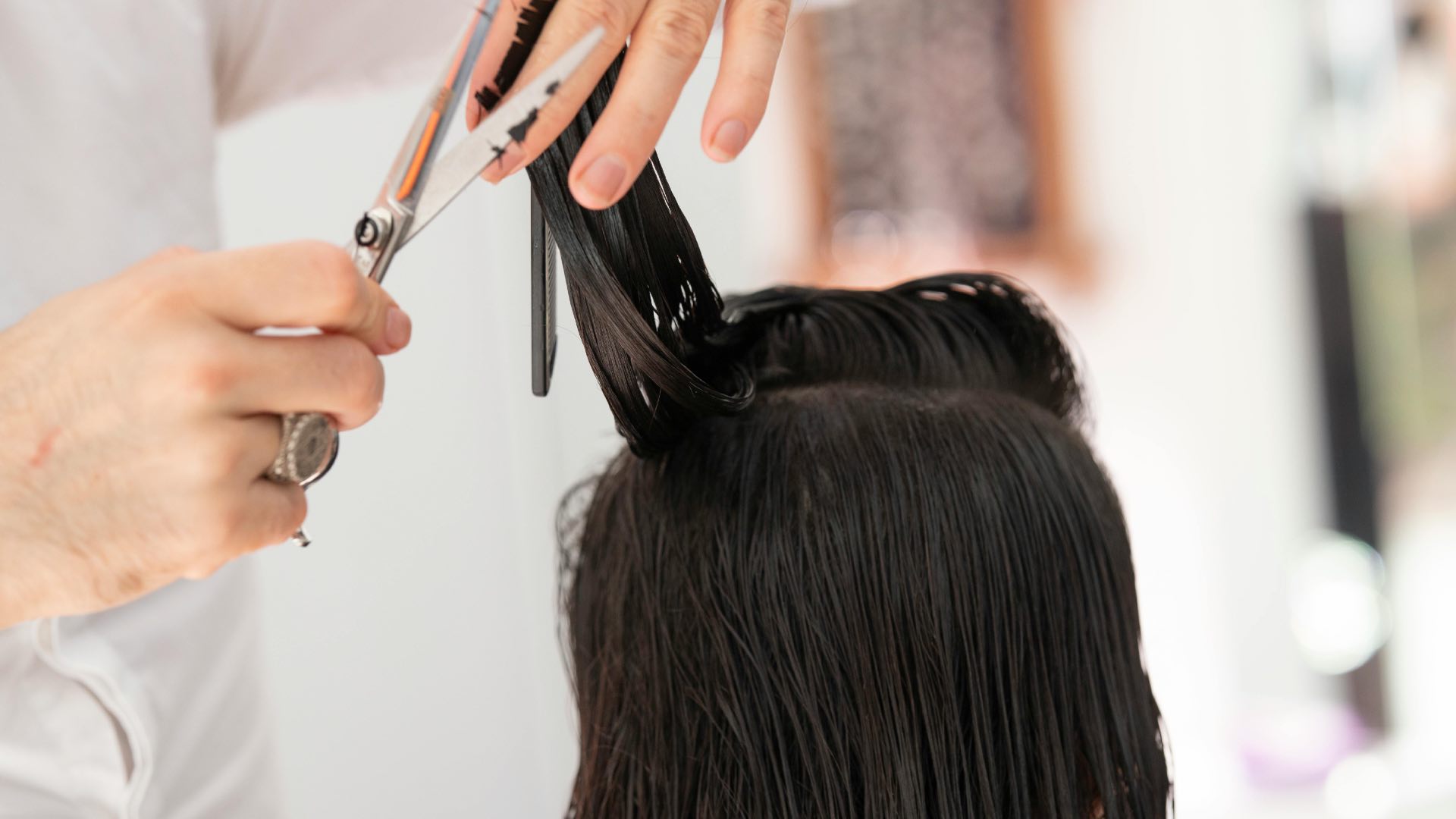
You leave the salon with impeccable hair, and yet, a few hours later, the mirror seems to be playing tricks on you. The cut you chose might not suit your natural texture. According to renowned hairdresser Christophe Nicolas Biot, certain visible signs reveal that a cut may not be right for your hair. However, above all, remember: the only person who can decide if a cut suits you is you.
1. Hair that puffs up and loses its shape
Does your hair feel like it's sticking out in all directions? That doesn't necessarily mean your hair is "unmanageable." Christophe Nicolas Biot explains that when lengths flare out haphazardly, it's often because the cut doesn't follow your hair's natural movement. The lack of structure creates this volume that's difficult to tame, even with the best styling products. A well-suited cut should, on the contrary, work with the hair, not against it, to enhance your hair every day.
2. Strands of hair that stick out despite all your efforts
You brush your hair, apply serums and treatments, and yet some strands just refuse to stay in place? The hairdresser points out a common mistake: cutting wet hair. Water temporarily stretches the hair fiber, distorting the natural shape of curls or waves. Once dry, the hair regains its authentic movement, which can give the impression of a "botched" cut. Understanding this dynamic allows you to better choose a style that complements your texture rather than clashing with it.
3. A persistent mousse-like texture
Even after using smoothing shampoos and anti-frizz treatments, does your hair still look puffy or frizzy? This often indicates that your haircut doesn't respect your hair's natural texture. Christophe Nicolas Biot emphasizes that it's not about correcting your texture, but about choosing a cut that complements it. A good cut should create a balance between shape and natural movement, allowing your hair to fully express itself without you having to constantly flatten or straighten it.
@christophenicolasbiot You have the wrong cut. ❌ If your hair is puffy, frizzy, or sticks out despite all your care, the problem might not be its nature… but its cut. The mistake often comes from cutting wet hair. Water relaxes the hair fiber, distorts the movement, and masks the true texture. Once dry, hair never falls as it should. A dry cut reveals the truth of your hair. It respects the natural movement, follows the actual volume, and structures without breakage. ✂️ At Christophe Nicolas Biot, each dry cut is done strand by strand, with scissors, on living hair. And always finished with a plant-based gloss treatment that sets the shape and seals the cuticles. Subscribe to better understand your hair and reveal its beauty without transforming it. ✨ #hair #haircare #hairstylist #haircut ♬ Original sound - Christophe Nicolas Biot
4. The constant need to smooth or flatten
If you spend your time straightening your hair or slicking back your locks to achieve the desired look, it might be a sign that the cut isn't right for you. The expert notes that many people try to "camouflage" a cut that doesn't suit their natural waves. However, your hair deserves to be appreciated just as it is. The shape imposed by an unsuitable style ends up clashing with your texture, instead of enhancing it.
The proposed solution: dry cutting… but above all, your judgment
Faced with these signs, Christophe Nicolas Biot recommends dry cutting, a technique that follows the natural movement of the hair and structures the shape without flattening the texture. This approach allows for a harmonious and easy-to-style result, while respecting the nature of your hair.
Above all, the best advice remains simple: the only person who can truly decide if a haircut suits you is you. Hair is a canvas for personal expression, and there are no universal rules. Whether you love your unruly curls, your frizzy locks, or your sleek lengths, your choice should first and foremost please you. Trends and expert opinions can guide you, but your satisfaction remains the ultimate standard. After all, your hair is yours: have fun, experiment, and embrace what makes you happy.
In short, rather than focusing on what your haircut "should" be according to standards or external opinions, simply observe what works for you. If you feel good in your hair, whether it's curly, straight, frizzy, or unruly, then it suits you perfectly.