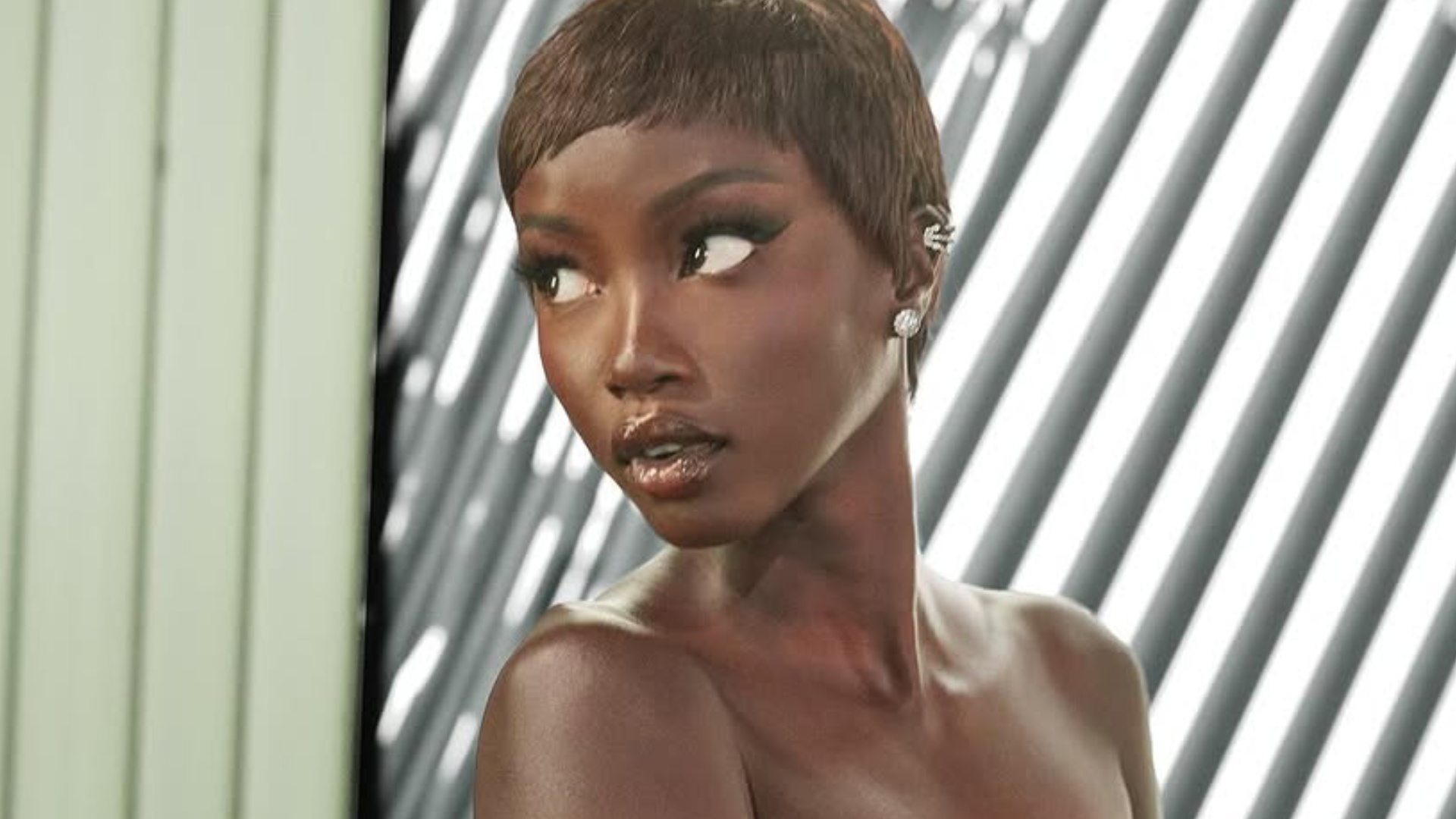
Instead of succumbing to the latest hair trends by demanding "espresso brown" or "butter blonde," more and more women are matching their hair to their skin tone. While for a long time, "tone-on-tone" was strongly discouraged in beauty, today it's commonplace in salons. And those who have tried it out in front of the mirror all cite the "healthy glow" argument.
Matching hair color to skin tone: the new trend
Not so long ago, hairdressers dyed their clients' hair champagne blonde, soft black, or plum, diligently following the latest beauty trends. Today, requests are more personal in the rotating chair. Women no longer come with a deadline in hand; they demand colors that harmonize with their complexion for a monochromatic look.
For a long time, women succumbed to the temptation of trendy hair colors without necessarily questioning the rules of color theory. But sometimes, these colors, so popular on Pinterest, can harden features, dull the complexion, and fail to deliver the desired wow factor. Now, women wanting a change are making conscious hair choices, preferring natural skin tones to the shades touted online.
Mixed-race women are thus transitioning from dark brown to caramel, and white women are dyeing their black hair sandy blonde. This creates the illusion of a "custom" color, tailored to each individual's complexion. "The shades are chosen to harmonize with the client's skin tone rather than creating a contrast. The goal is no longer to highlight overly defined strands, but to create a natural and harmonious color, perfectly suited to the person wearing it," explains stylist Rogerio Cavalcante, owner of The Second Floor salon, to the media outlet Bustle.
Famous personalities experimented with it long before the golden age of social media. This is the case with Tyra Banks and Jessica Alba, who were among the first to launch this "chameleon" aesthetic movement now associated with the "quiet luxury" style.
View this post on Instagram
View this post on Instagram
What colorists think about this trend
Hair constantly frames the face. It's a bit like wearing a garment just below your chin all day. If it's the wrong color, it clashes with your skin. If it's the right color, it creates instant harmony. That's why a simple change of a few shades can transform your overall look, without changing anything else. Color becomes a tool for self-expression, but also for enhancing your natural features.
However, it's best to seek expert advice before undertaking anything with your highlights, or you risk ruining your potential. Colorists are unanimous: in this hair styling technique, tones are crucial to avoid a helmet-like effect. Brown can be cool, warm, golden, or ashy. Blonde can be icy, beige, honey, or champagne. These subtle shades play with light. Highlights that are too cool on a warm complexion can make the skin look ashy. Highlights that are too golden on a cool complexion can accentuate redness. Finding the right balance is like choosing the right foundation: it shouldn't be noticeable, but it should make all the difference.
The golden rules for adopting this look flawlessly
It can be tempting to recreate the experiment in the comfort of your own bathroom and let your skin tone extend into your hair. However, it's not about randomly choosing a color and checking the match on the back of your hand, as you do with your full-coverage cosmetics. Hair coloring isn't that simple.
Before discussing honey blonde or chocolate brown, there's a key point to understand: your skin's undertone. It can be warm (golden, peachy, yellow), cool (pinkish, bluish), or neutral (a blend of both). A hair color can look stunning on one person… and completely wash out another, simply because it doesn't respect this invisible foundation.
In general, warm complexions are enhanced by golden, coppery, caramel, and honey tones. Cool complexions, on the other hand, radiate with ashy, cool, deep chocolate, or beige-blonde highlights. As for neutral undertones, they have the incredible advantage of being able to navigate between the two, with a bit more freedom. "Subtle variations in tone, such as micro-highlights, soft highlights, and reflective shine, are key," emphasizes Cavalcante. Thus, instead of striving for absolute uniformity, it's better to think about harmony and the depth of color.
Choosing a low-contrast color that complements your complexion is very flattering and also saves a lot of time on maintenance . It's less demanding than radical coloring. This hair trend, which is endlessly adaptable and tailored to each individual, is somewhat similar to the concept of color analysis in fashion. In short, we're no longer trying to copy our neighbors; we're respecting our own unique physical characteristics.