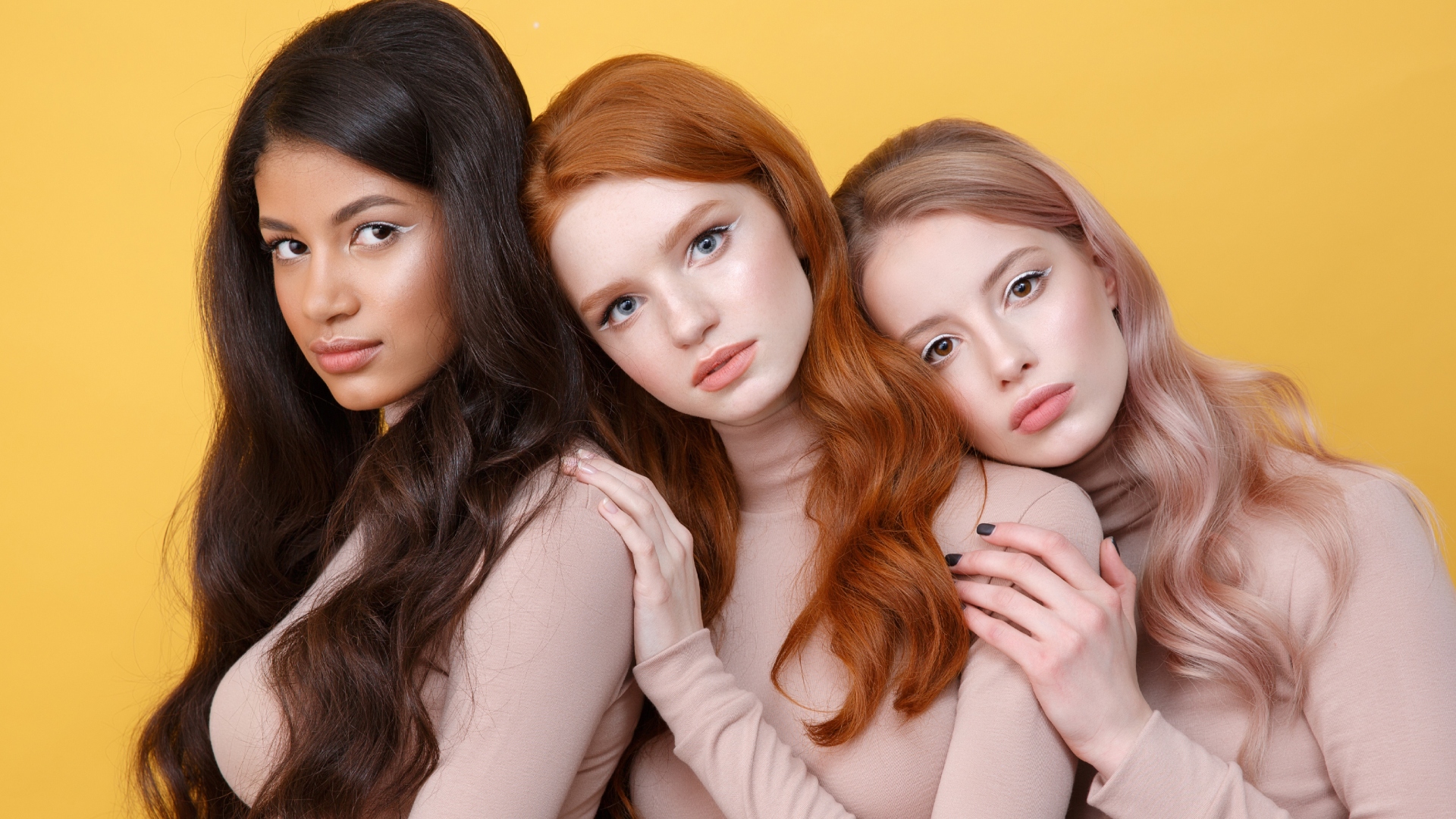
What if our hair told the story of the world's diversity? From jet black to fiery red, some hair colors are much more common than others.
Black and brown, the big winners
Unsurprisingly, dark hair colors are by far the most prevalent worldwide. According to commonly accepted estimates , black (or very dark brown) hair accounts for approximately 75 to 85% of the world's population, making it by far the most common hair color. It is found primarily in Africa, Asia, Latin America, and Southern and Eastern Europe. Next comes chestnut, or lighter brown, the second most common color, with about 11% of the population having this hair color. It is particularly prevalent in Europe and in countries with large populations of European descent.
Blonde hair is rarer than it seems.
Contrary to popular belief, natural blonde hair is quite rare: it affects only 2 to 3% of the world's population. It is concentrated mainly in Northern Europe, where some local populations have much higher rates. The impression that we see more of it is because blonde is also the most popular artificial hair color: nearly three out of four Caucasian women try it at least once in their lives. This seriously skews our perception of the true number of natural blondes.
Red hair, the rarest color
The prize for rarity goes to red hair, which affects only about 1 to 2% of the world's population. This shade is linked to a variant of a gene, MC1R, which is inherited in a recessive manner: to have red hair, one must inherit the mutated version of the gene from both parents. This is why red hair is concentrated in certain regions, particularly the British Isles—Scotland and Ireland having the highest proportions in the world.
A matter of melanin and genes
But where does this diversity come from? It all comes down to melanin, the pigment that also colors skin and eyes. Two types coexist: eumelanin, responsible for brown and black shades, and pheomelanin, which gives red and golden highlights. Their proportion determines each person's hair color. The phenomenon is eminently genetic. The largest study conducted on the subject, involving nearly 343,000 participants from the UK Biobank , identified the majority of genes involved in hair color, confirming just how hereditary this trait is.
From the ultra-dominant black to the discreet red, the world map of hair colors implicitly traces the map of human populations and their migrations. A fascinating mosaic that reminds us that behind every head of hair lies a long genetic history—and an irreducible element of chance.