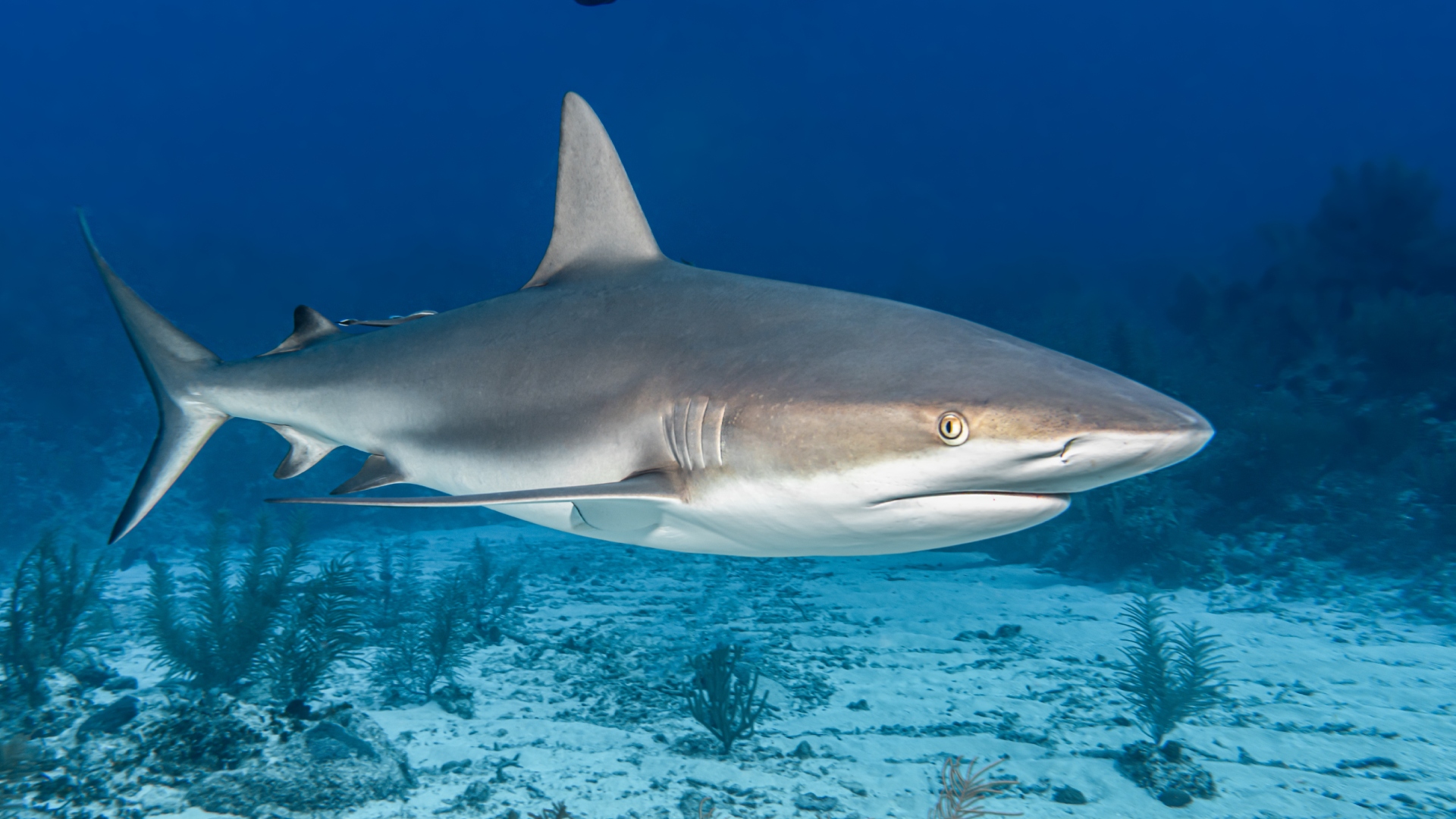
A Hawaiian couple had a harrowing experience off the coast of Maui. While kayaking, Cheslei Akima and Alika Dickerson came face to face with a tiger shark, whose size exceeded that of their kayak. They agreed to recount this encounter to local media, which serves as a reminder of the need for caution in the waters surrounding the archipelago.
An unexpected encounter off the coast of Maui
According to People magazine, the incident occurred on May 23, 2026, in the early afternoon, off the coast of Olowalu on Maui's west shore. The couple was about a mile from shore when the situation changed dramatically. "Suddenly, about three meters in front of the kayak, a fin appeared. I wondered what it was, and then it started speeding toward us," Cheslei Akima recounted. The animal, identifiable by its light gray stripes, was a tiger shark, which appeared to be longer than their nearly four-meter kayak.
An impressive confrontation
The situation quickly became alarming when the shark grabbed the kayak and began to tossing it about. "It wouldn't let go," the young woman said. To try and drive the animal away, Alika Dickerson unfortunately had to hit it several times. "The third time, it finally released its grip. It dove slightly, splashed us with its tail, and swam away," he explained, still shaken. Back on land, the couple discovered that the shark had left bite marks on the kayak.
Is the tiger shark a species to watch out for?
While shark bites on humans remain rare in Hawaii, with only 3 to 4 incidents per year, local authorities point out that the tiger shark is the species most frequently involved in such encounters. However, it is important not to demonize these animals: sharks naturally occupy the top of the coastal food chain and play a vital role in maintaining the balance of marine ecosystems.
In many cases, interactions with humans are explained by the increasing presence of human activities in their habitat. By frequenting areas where sharks are already present, humans contribute to increasing the likelihood of encounters. These bites most often result from confusion or opportunistic exploration, especially since the scarcity of their usual prey can lead the animal to test other food sources. The stimuli associated with these incidents can then be incorporated into their behavior without necessarily implying an intention directed against humans.
Ultimately, although marked by this experience, Cheslei Akima and Alika Dickerson have not given up on the ocean. However, they urge other users to exercise extreme caution: avoid murky waters, do not swim at dawn or dusk, and favor supervised beaches.