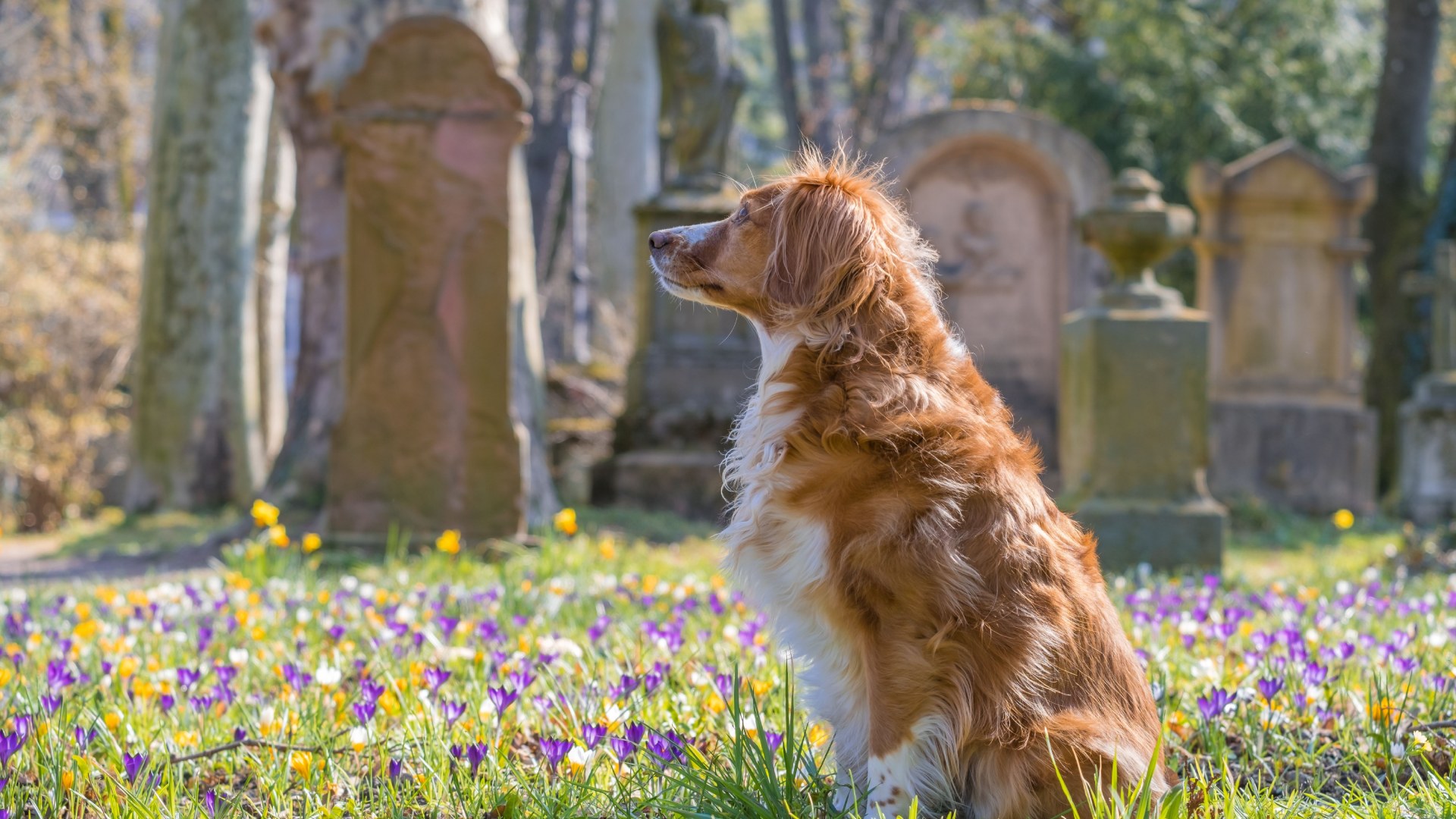
When our pets pass away, we reserve a spot for them in a corner of the garden and dig a makeshift grave, which disappears over the years. If the memory of the animal remains etched in our hearts, it deserves better than a pit or a hole whose location everyone will forget. Some cemeteries, still rare in cities, offer them a more dignified burial and a proper tribute.
Cemeteries dedicated to our most faithful companions
Almost everyone has set foot in the drab, gray paths of cemeteries. These places of contemplation, where artificial flowers are the only splashes of color, are final resting places. The graves, more or less maintained by those left behind, offer clues to the identity of their occupants. Their names are written in gold lettering or in relief, and their personalities are revealed through symbols or monograms. While humans are entitled to solemn burials and post-mortem monuments of marble, not all living beings enjoy the same privilege in the face of death.
Animals, full-fledged members of the family who fill the void in a home as much as a child, have more minimalist funerals, no coffin closing over their muzzle. Their bodies usually end up six feet underground, on the other side of the lawn, without any distinguishing marks or meeting point. No epitaph adorned with photos, no headstone engraved with their paw. Besides being a crime, burying a pet in your garden isn't exactly a fitting end for this little creature, who wiped away our tears with their fur and brightened so many monotonous days.
So that our pets can rest in peace somewhere other than among maggots, cemeteries are springing up in their honor. The content creator behind the account @graveadventuresof_nursejenni recently visited one of these cemeteries. This woman wanders the silent avenues of these necropolises, reviving the memory of unknown animals along the way. This cemetery, populated by deceased dogs, cats, and rodents, keeps alive the stories of beings with shortened lifespans.
Honoring the memory of animals as well as humans
Contrary to what some still believe, there are no "superior" species on this planet, only fellow beings. And pets, who are at once our confidants, our friends, our calming agents, our anxiety relievers, and our sources of amusement, finally have funerals worthy of their devotion. Why should humans have the luxury of a tombstone while animals must be content with a barely landscaped patch of earth or an impersonal urn?
More and more cities are finally offering this long-awaited recognition to our pets, allowing us to continue our musing conversations and celebrate our departed companions with squeaky flowers or stuffed mice. During her leisurely stroll, @graveadventuresof_nursejenni pauses at each of these miniature graves, and the emotion is palpable. On them, there are no faces, only noses, whiskers , or silky fur. Some have framed photos mounted on the stone like medallions, while others feature illustrations of their likeness. Behind each headstone lies a story, the story of an animal whose memory still lives on.
View this post on Instagram
Making it easier to grieve for our pets
These graves, more laden with treasures than those of our counterparts, are havens in grief, meeting places, an invitation never to forget. They embody the existence of our animal on this Earth and allow humans to perpetuate this bond, which is no longer physical but spiritual.
Because sometimes a picture frame prominently displayed on a piece of furniture or a toy kept as a relic of a bygone era isn't enough to connect with that departed pet whose absence is felt in every square inch of the house. Even if our pet's licks remain fresh in our memory and its scent continues to haunt us, sometimes a tangible reminder is needed to better accept this sad reality.
These places offer a space where grief can be acknowledged without being minimized. Losing a pet can be difficult to explain to those who have never experienced it. For some, it was "only" a dog, a cat, or a rabbit. For those who shared their daily lives with their pet, it was a comforting wake-up call, a presence upon returning from work, a watchful eye during difficult times, and a small routine that structured their days.
Visiting the grave allows one to maintain a ritual. One can leave flowers, speak quietly for a few minutes, or simply sit before the headstone. Nothing erases the absence, of course, but this visit gives tangible form to grief and remembrance.
And as the years go by, these small graves continue to remind us that an animal can leave an immense mark behind, even if it weighed only a few kilos. Because ultimately, some companions, despite having four legs, a wet nose, and a far too short lifespan, sometimes occupy a huge place in our history.