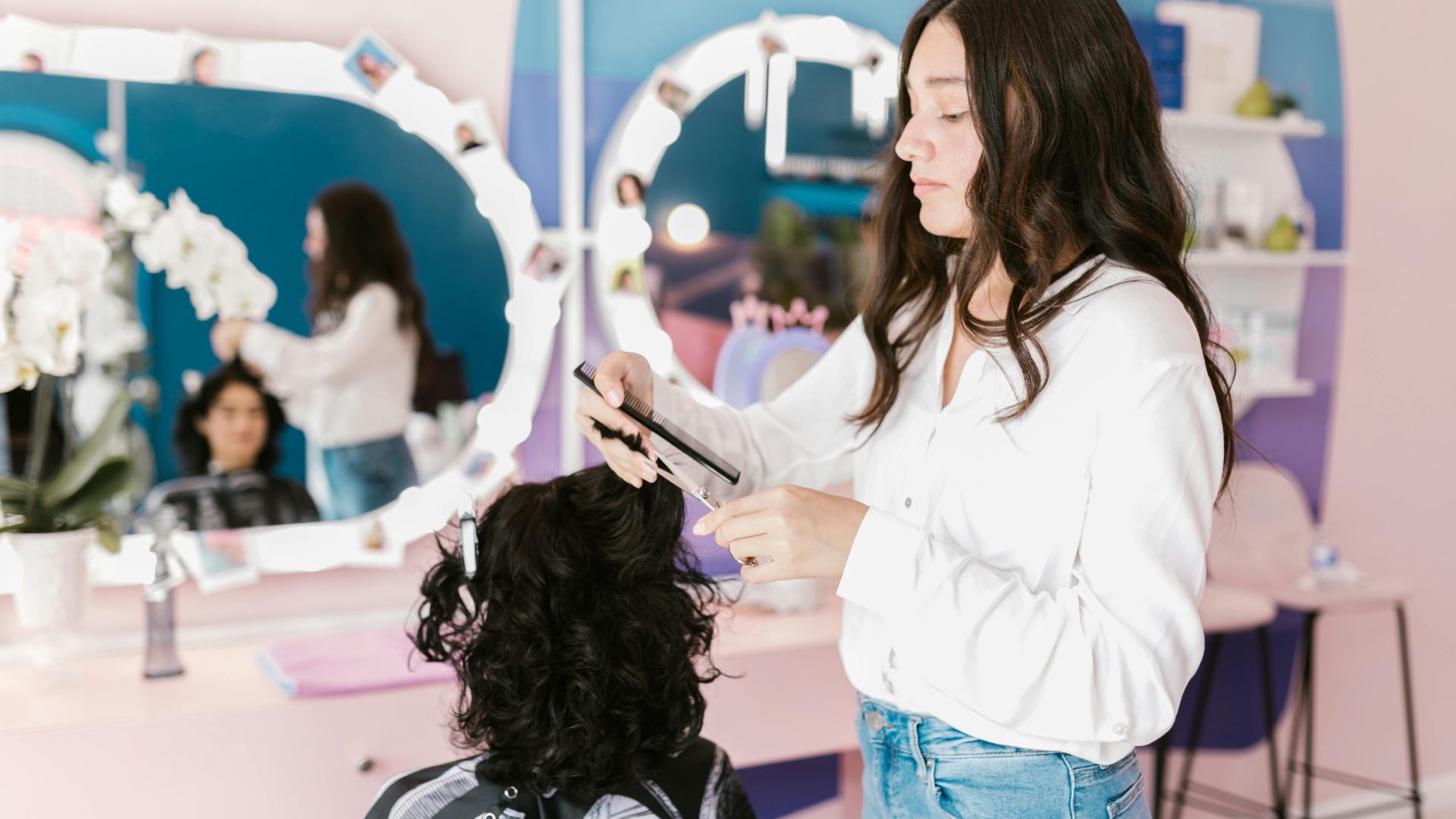
A haircut can change the overall look of a face by playing with volume, light, and movement. Some celebrity hairstylists even share their tips for "softening" features. Above all, and this is crucial: you don't need to change anything. Your face is perfectly fine just the way it is.
The lengths that gently frame
Among the recommendations often cited by professionals, medium to long lengths—falling between the shoulders and the torso—are frequently highlighted. Why? Because they create movement around the face. Unlike some very short or very sharp cuts, which can accentuate lines (like the jawline), these lengths offer a feeling of fluidity.
Slightly layered strands frame the face more softly, creating a more harmonious look. The idea isn't to transform your features, but to gently complement their natural structure.
The magical effect of the strands around the face
You may have already heard of "face-framing" highlights. Behind this somewhat technical term lies a simple idea: structuring the haircut around the face. These highlights, often shorter at the front, naturally draw the eye to certain areas like the eyes or cheekbones. They also add dimension to the hair and prevent it from looking too uniform.
The result: a more vibrant, lighter cut that follows your movements and enhances your expression. Again, the aim is not to conceal anything, but to add dynamism to the overall look.
The soft and adaptable curtain fringe
Another often recommended option is curtain bangs. Parted in the middle or slightly to the side, they frame the face while remaining airy. They have the advantage of working with different hair lengths and textures. By highlighting the eyes without weighing them down, they can add a touch of softness and style with apparent ease. It's an interesting solution if you want a change without drastically altering your hairstyle.
Volume and shine: the true allies
Beyond length, hairdressers emphasize two essential elements: volume and texture. Soft, luminous, and flowing hair naturally catches the light and brightens your face. Adding volume, enhancing waves, or simply adding a touch of texture can be enough to transform the overall effect. It's often these small details that make all the difference.
You don't need to "soften" anything.
These tips can be helpful if you're looking for inspiration, but they should never become a rigid rule. Your face doesn't need to be softened, corrected, or transformed to be beautiful. Strong features, a defined jawline, prominent cheekbones, or an angular face aren't flaws; they're unique characteristics that contribute to your identity. Hairstyles are a tool for self-expression, not an obligation to conform to some ideal. You can choose a cut for pleasure, for a change, for fun—or leave it as is.
Ultimately, the recommendations from celebrity hairstylists remind us of one thing: there's no single "right" hair length. The most important thing is to find what you like, what suits you, and what makes you feel good. Because in the end, the best style is the one you choose for yourself—not the one imposed on you.