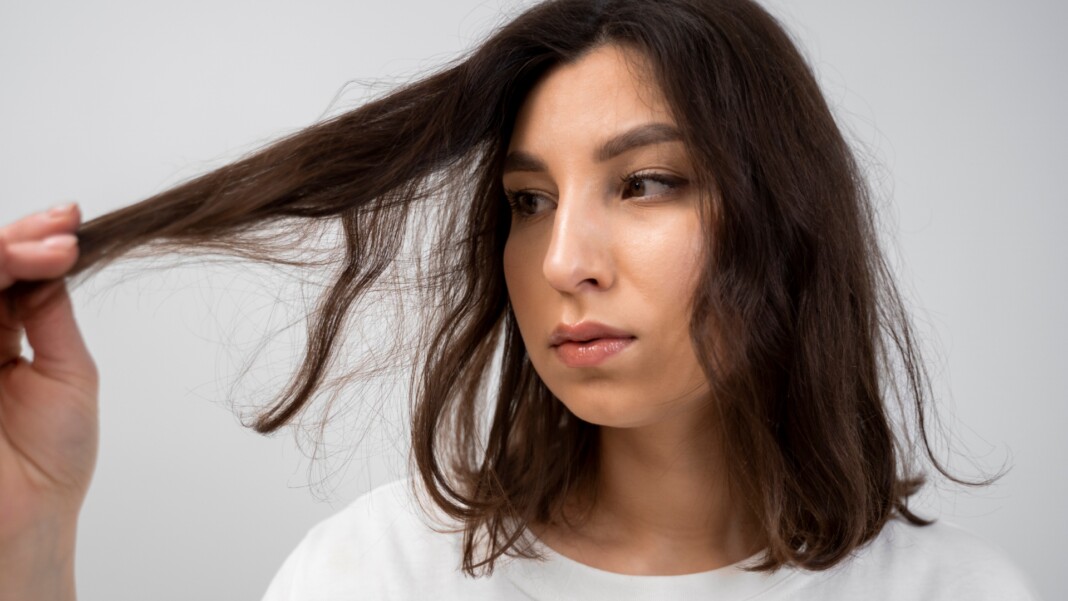
Your hair deserves gentleness and respect, whatever its type. Yet, certain everyday habits can, without you realizing it, make it appear thinner than it actually is. Good news: a few adjustments are often all it takes to reveal its full natural beauty.
Seemingly innocuous gestures that affect volume
Certain hair care habits can weigh down the hair fiber or damage its structure. As a result, hair appears flatter, less dense, and sometimes even tired. Research in trichology has shown that repetitive and unsuitable actions can accelerate hair aging and influence perceived density. In other words, it's not always the nature of your hair that's the problem, but rather how you care for it.
Conditioner: yes, but sparingly.
Conditioner is often seen as essential for hydrating and softening hair, but on fine hair, overly rich formulas can have the opposite effect. Applying too much product, especially near the roots, can weigh down your hair and flatten it against your scalp. Volume disappears, resulting in a flatter look. The trick is to limit its use to once or twice a week and apply it only to the lengths of your hair. This way, your roots can breathe better without excess product.

Washing too much, or choosing the wrong products
Washing your hair too frequently can weaken it. By constantly removing its natural oils, you deprive it of its protective barrier, which can make it drier and more brittle. Similarly, harsh shampoos can damage the cuticle, the outer layer that protects the hair fiber. The result: hair that appears thinner and more vulnerable. Opt for gentle shampoos and space out washes to two or three times a week. This helps maintain the natural balance of your scalp and keeps your hair more supple.
The tapered haircut, a false good idea
One might think that thinning out hair adds movement and lightness. In reality, on fine hair, it can reduce overall volume and accentuate a flat effect. A structured cut, with controlled layering, on the other hand, creates the illusion of density. The goal isn't to remove hair, but to distribute it intelligently. Don't hesitate to ask your hairdresser for advice on adapting the cut to your hair texture.
Drying your head upside down… not always ideal
Drying your hair upside down can help lift the roots, but the technique requires a bit of precision. Too much heat or improper drying can weigh down the lengths and cause frizz. For a more natural result, tilt your head slightly, use warm air, and focus on the roots. This will give you longer-lasting volume without damaging the hair fiber.
Hairstyles that are too tight
Tight ponytails or buns can weaken hair, especially if you use thin elastics. Repeated tension breaks the ends and pulls on the roots, which can lead to a thinning appearance over time. Opt for softer ties, such as fabric scrunchies, and looser hairstyles that are kinder to your hair.
Simple adjustments, for all hair types
Accumulating these small mistakes can make your hair appear thinner and less full. By adjusting your routine, you can quickly regain body and vitality. And most importantly, remember: having fine hair is perfectly normal. It's neither a flaw nor something to fix. Every hair texture has its own beauty, its own lightness, its own unique way of moving.
In short, these tips aren't meant to change your hair type, but to prevent unnecessarily damaging it. Whether your hair is fine, thick, curly, or straight, the key is to treat it gently and respectfully. Because ultimately, healthy hair is hair that reflects who you are.