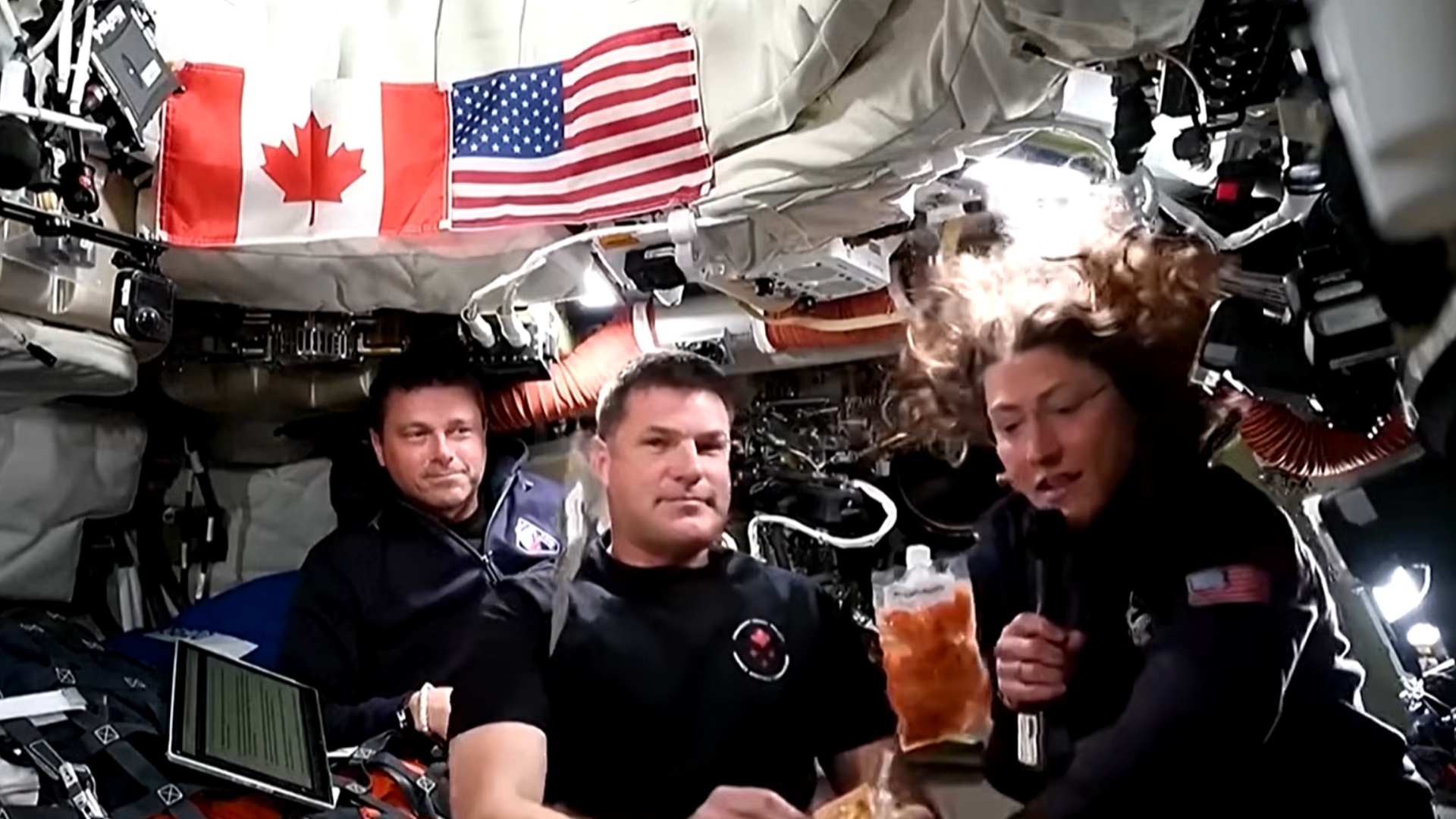
What do you eat when you travel to the Moon? Aboard the Artemis II mission, astronauts must adapt their eating habits to an environment where gravity is almost nonexistent. In the Orion capsule, it's impossible to cook or plate a meal as you would on Earth. Meals are specially designed to prevent crumbs or liquids from floating around the cabin, which could damage equipment or be inhaled by the crew.
Freeze-dried and rehydrated food before eating
During a discussion with Canadian students, relayed on YouTube by Reuters , American astronaut Christina Koch described how meals are prepared in space. On the menu: shrimp cocktail, green beans, and mac and cheese. Familiar dishes, but packaged in airtight bags that allow for safe eating in microgravity.
Much of the food consumed by astronauts is freeze-dried. This process involves removing water from food at very low temperatures to preserve its nutritional qualities while facilitating its storage. Before eating, astronauts use a drinking water dispenser integrated into the Orion capsule to rehydrate their meals.
Christina Koch cited the example of the shrimp cocktail chosen by her colleague Jeremy Hansen. Simply adding the recommended amount of water restores the shrimp to a texture similar to that of fresh shrimp. The pouches can then be eaten directly using special utensils. Some dishes can also be reheated using a compact food warmer on board. However, traditional cooking methods remain impossible, as liquids and fats do not behave the same way in microgravity.
Menus designed for the health of astronauts
The meals taken aboard the Artemis II mission are prepared by scientific teams specializing in space nutrition. The goal is to ensure a balanced intake of proteins, vitamins, and minerals to maintain the astronauts' health during the mission.
In space, the human body can undergo several changes, including a decrease in muscle mass and bone density. A suitable diet helps mitigate these effects and provides the energy needed to perform daily tasks. Menus are also designed to remain varied, as the pleasure of eating contributes to psychological well-being during long and isolated missions. According to Christina Koch, the meals offered are "quite good," despite their sometimes unusual appearance.
A key issue for future space missions
Food is a key element of space exploration. As missions become longer, particularly within the Artemis program, space agencies must develop solutions capable of guaranteeing nutritious meals while limiting the weight transported from Earth.
Research is underway to improve the quality of space food and explore the possibility of producing food directly in space. These innovations could play a crucial role in future crewed missions to the Moon or Mars.
The meals served to the Artemis astronauts demonstrate just how much life in space requires adapting even the simplest tasks. Behind the freeze-dried meals lies essential scientific work to guarantee the crew's health, energy, and comfort. Eating in space is no longer just a technical constraint; it is also a key step toward the future of manned missions to the Moon and beyond.