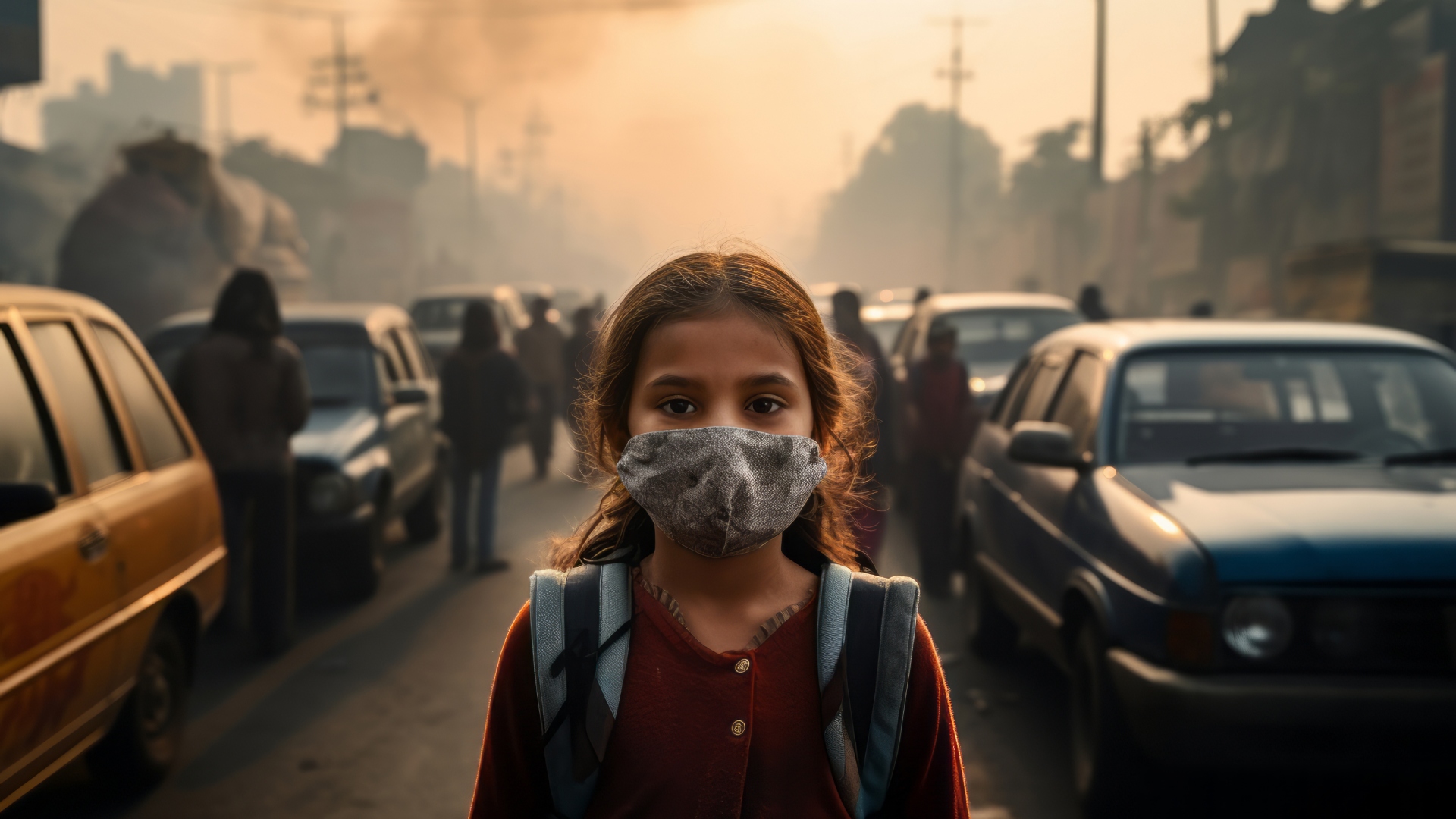
In New Delhi, every breath feels like an effort. When the air becomes heavy, harsh, and harmful to the body, some people choose to protect their breath in other ways. In a capital saturated with pollution, the more affluent are inventing new strategies to preserve their vitality… even if it means leaving.
Breathing, a vital need that has become a privilege
The human body is designed to move, oxygenate, and regenerate. Yet, in New Delhi, breathing deeply has become a daily challenge. The Indian megacity regularly ranks among the most polluted cities on the planet. Fine particles, industrial fumes, exhaust gases: the air is so thick that it assaults the lungs, tires the body, and depletes energy.
Faced with this situation, a clear divide is emerging. While a majority of residents continue to expose their bodies to a toxic environment, a wealthy minority chooses to protect themselves in other ways. For these affluent families, preserving their respiratory well-being has become as essential a priority as food or housing. Clean air is no longer just a matter of health: it has become a symbol of comfort and physical security.
The rise of a "custom-made" breathing market
In the upscale neighborhoods of the capital, a new luxury has emerged: clean air at home. Ultra-efficient purifiers , integrated filtration systems, airtight apartments designed to protect the lungs and promote restful sleep… an entire ecosystem has developed around respiratory comfort.
Entrepreneurs have seized the opportunity and are offering turnkey solutions for "better breathing at home." The cost? Sometimes exceeding the average annual income of an Indian. A striking paradox, given that air should nourish every body in the same way. This commodification of breath creates a dangerous illusion: that money can permanently insulate an individual from a collective problem. According to several experts, this individualistic approach weakens public mobilization. When some people can afford a "protective bubble," the urgency of reform disappears, and political pressure evaporates.
Leaving the city to save his body
For others, the solution no longer lies in technology, but in distance. A mobile elite, often composed of executives, entrepreneurs, or digital workers, is choosing to leave New Delhi. The media now refers to them as "smog refugees": residents who migrate in search of cleaner, more invigorating air, better for their health.
The preferred destinations? Mountainous regions, where the air circulates freely, or southern states, considered less polluted. The motivations are clear: to protect children, preserve fragile lungs, and regain lasting physical energy. This exodus highlights a glaring inequality. As researcher Poornima Prabhakaran points out, "only a tiny fraction of the population can afford to leave."
Manual laborers, street vendors, drivers, and day laborers remain exposed day after day to air that slowly wears down the body. In India, air pollution causes millions of illnesses and premature deaths each year, a stark reminder that breath is a matter of survival.
An environmental… and political crisis
When the wealthiest residents leave or become isolated, the consequences extend far beyond the individual sphere. Their departure weakens the pressure on the authorities. Fewer influential voices demand reforms, and there is less urgency to act: the fight against pollution stagnates. The city then becomes trapped in a vicious cycle, where the air quality deteriorates while those who could influence decisions drift away.
The "smog refugees" thus embody a disturbing reality: clean air has become a social marker. Some people can protect their bodies, while others suffer without any alternative. As long as breathing remains a privilege reserved for a few, environmental justice will remain out of reach. Because a healthy body always begins with something simple and universal: air that everyone should be able to breathe freely.