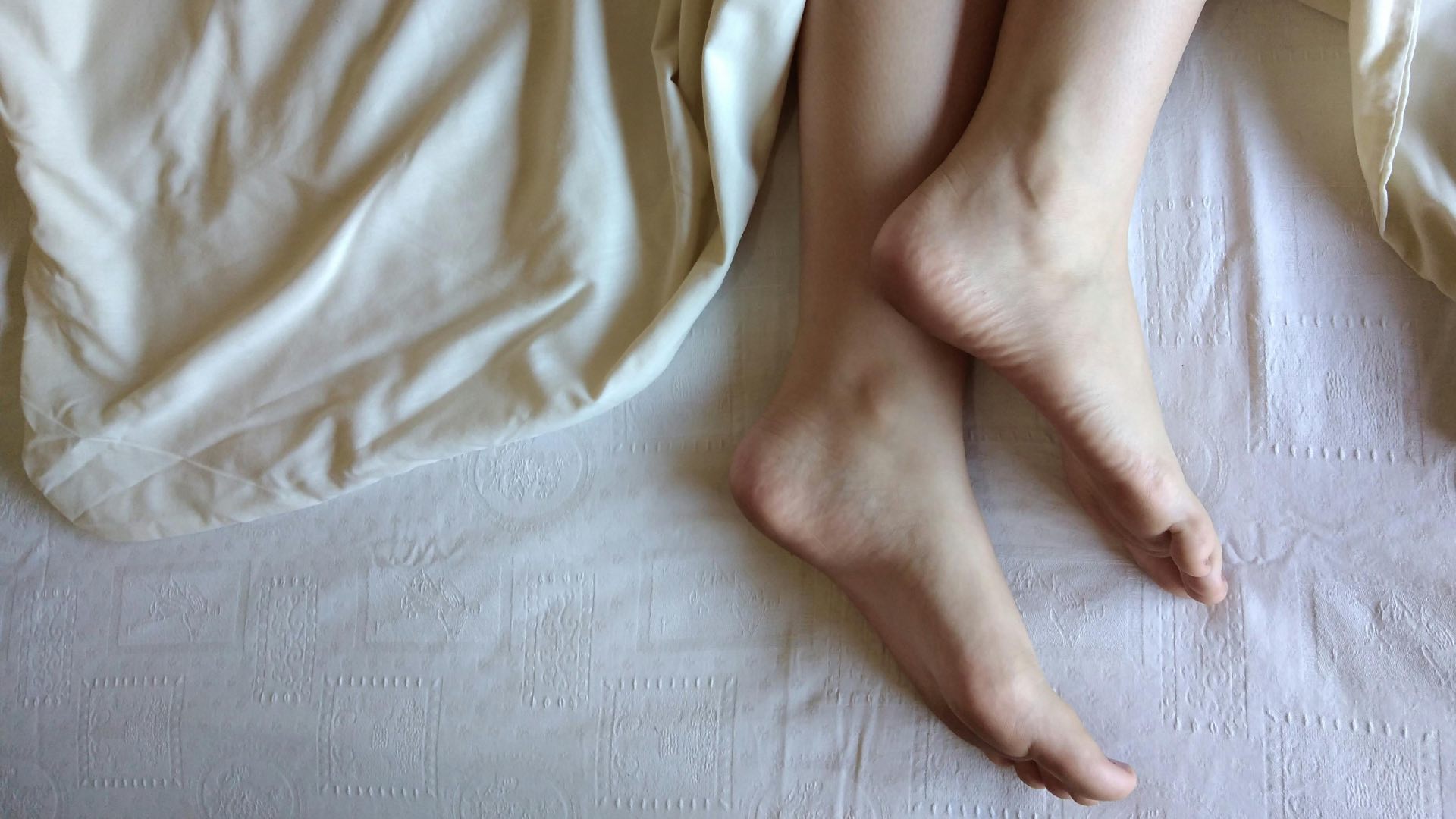
An often overlooked detail can transform your nights: body temperature needs to drop to trigger sleep. Sticking one foot out from under the covers creates this natural cooling effect and explains why this popular trick really works.
Cooling: the master signal for sleep
The body's core temperature naturally drops by 1 to 1.5°C in the evening, a phenomenon controlled by the hypothalamus, which prepares the brain for rest. This rapid decrease activates NREM (non-reactive muscle) sleep neurons and slows nerve impulses, making it easier to fall asleep. Studies confirm that people fall asleep precisely when their core temperature drops most rapidly, often around 10 p.m. or 2 p.m. for a nap.
Bare feet, a heat radiator
The feet are full of blood vessels close to the skin that dilate upon contact with cool air, efficiently releasing body heat. Even brief exposure is enough to amplify this heat loss, especially for those who sweat at night. This peripheral vasodilation lowers the temperature of the torso and brain , creating the ideal "warm extremities, cool core" balance for falling asleep quickly.
Cool room, even more feet
Between 16-19°C, the ambient temperature optimizes this mechanism: too hot (>25°C) and the body struggles to cool down, fragmenting deep sleep. Sticking a foot out then compensates for a warm environment without air conditioning or a fan. Warm nights already reduce REM sleep by 20 minutes; this simple trick counteracts the effect.
Proven effects, not just placebo
Research on 44 volunteers shows that the temperature drop always precedes the feeling of fatigue, validating the direct impact on NREM-REM cycles. The brain regenerates better at 35-36°C, flushing out toxins such as beta-amyloid linked to Alzheimer's.
Apply the tip on a daily basis
- Evening routine: warm bath 90 minutes before bedtime to initiate the temperature drop.
- Thin cover: light duvet leaving one foot free, without forced air conditioning.
- Avoid: heavy meals or screens that raise internal temperature.
In summary, this micro-adaptation exploits the physiology of sleep without gadgets: a bare foot is often enough to gain 10-15 minutes of sleep onset.