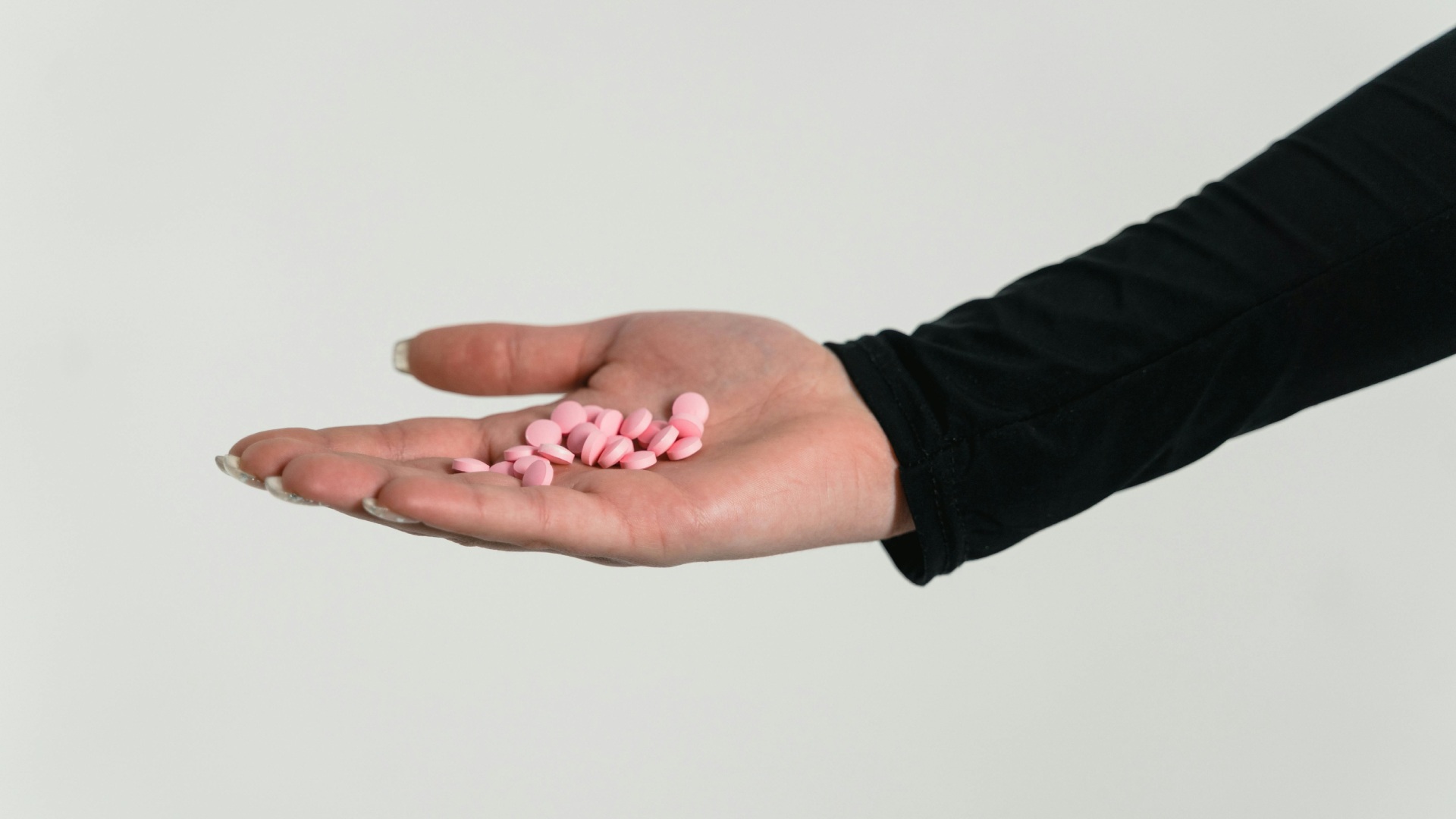
While men have been able to boost their desire and trigger a sexual response for years with the famous blue pill, women had no equivalent on the market. Now, those entering menopause and seeking to regain a "girlish libido" have their own go-to Viagra. While intimate pleasure knows no age, this laboratory-made aphrodisiac isn't necessarily universally popular.
What you need to know about this "pink pill" that everyone's talking about
It's a drug that the medical community is hailing as a "mini-revolution." Addyi, a male equivalent of Viagra , is intended for menopausal women under 65 who want to "reboot the engine" and regain control of their flagging libido. Dubbed the "little pink pill," a gendered name that already hints at its purpose, this pill, once reserved for premenopausal women, is now available to a wider audience and promises a more vibrant sex life. This initiative was made possible thanks to the Food and Drug Administration, the American agency responsible for public health.
It's no longer a mystery: the effects of menopause are well-documented. Menopause isn't just a few hot flashes and the cessation of menstruation. At this pivotal time, which marks the end of one era and the beginning of a new one, women's bodies sometimes go into "standby mode." They adjust their parameters, reprogram themselves, and are no longer as responsive as before. What once made them shiver, shiver, and feel like boiling now leaves them indifferent. Added to this biological reality are vaginal dryness, decreased energy, mood swings, and intimate pain. According to a report by the dating app Adam & Eve, 43% of women experience a decrease in libido during menopause.
This "pink pill," supposedly more effective than ginger elixirs and maca decoctions, is said to help women with low libido maintain their desire and "compensate" for alleged bodily malfunctions. However, it's not a magic wand. Unlike Viagra, which mechanically straightens a man's penis, Addyi affects neurotransmitters, including serotonin, the "feel-good" hormone.
An additional requirement or a response to a genuine need?
While a decreased libido isn't a tragedy in itself, much less an anomaly to be corrected, for some women it represents genuine mental suffering. Intimacy specialists refer to this as hypoactive sexual desire disorder (HSDD). The desire to connect with a loved one is certainly present, but the body doesn't respond and remains unresponsive to all caresses, even the most irresistible. This is where Addyi proves particularly useful: because it addresses a feeling of unease, not a norm, nor performance pressure. This pill, resembling an intimate fuel, could help 1 in 10 women affected by this disorder, according to the International Society for Sexual Medicine.
Beyond the purely medical aspect, health specialists also emphasize the symbolic dimension of this pill in the pages of SELF . According to them, Addyi challenges the common misconception that women's sex lives abruptly end at menopause, as if desire had an expiration date.
Its late arrival on the market, compared to Viagra, which has been available by prescription since 1998, reflects the widespread stigma surrounding female pleasure. "Offering this option is a crucial recognition that pleasure is important for mature women," says Dr. Rahman, "both for their quality of life and their overall health." However, this pill must not become a "run-of-the-mill" drug, prescribed indiscriminately to maintain an active sex life or pursue an ideal of youth.
A medication to be taken with caution.
Every experience is unique. No two women experience menopause in the same way. Some barely notice it, while others feel like strangers in their own bodies. Beyond arousing suspicion, this medication, which rivals Viagra, remains a concentrated chemical. Moreover, it's impossible to find it over the counter. In the United States, the only country that authorizes it, a prescription is required to obtain it.
Those most affected are also hesitant to swallow a pill that directly targets their brain and manipulates their hormones. According to specialists, it's not a miracle cure meant to bewitch the body or cheat on pleasure; it's a medication that requires a personalized approach. While many women already take the contraceptive pill for years and suffer its side effects, Addyi risks prolonging this bad habit.
The crux of the matter is this: making the pill an option, never a disguised obligation. Because true progress lies not only in the existence of a medication, but in the freedom given to women to decide, without social or medical pressure, what they wish to rediscover, explore, or leave behind.