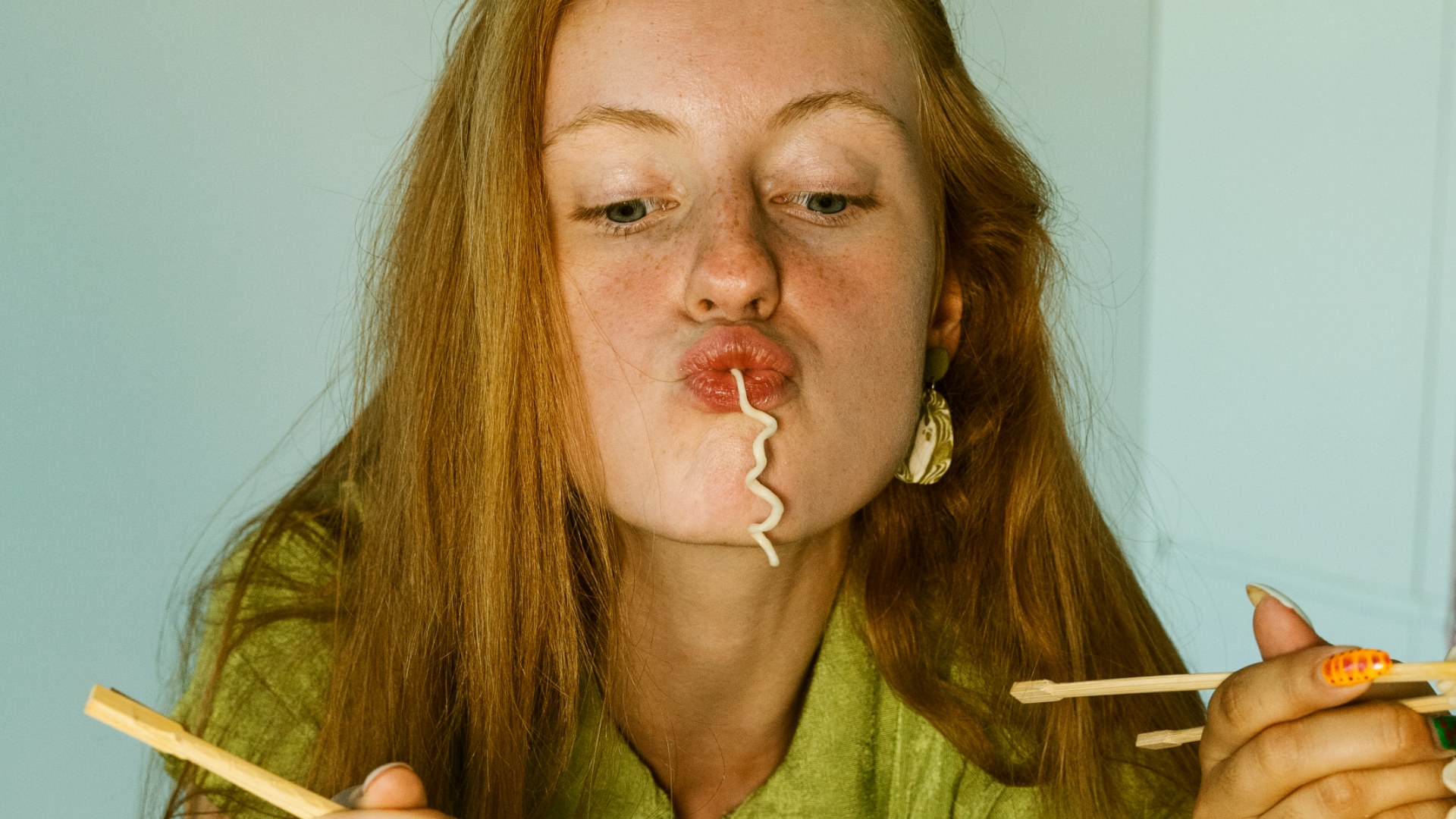
When food escapes from the plate and tumbles to the floor, it ends up either in our mouths or in the vacuum cleaner. Who's right and who's wrong? Is this stray piece of food, this off-piste adventure, unfit for consumption or can it still be eaten without risk? A doctor weighs in.
The 5-second rule, a false belief
You're in the middle of a meal when your potato croquette escapes from your plate and lands on the freshly scrubbed floor. While hygiene fanatics and hypochondriacs wouldn't risk it and would simply discard the stray morsel as food waste, you don't waste a single bite. You bring it to your mouth and reassure yourself, thinking, "It's not a big deal, it'll build up your antibodies." After all, our ancestors used the same knife for everything and didn't wash their hands before a feast.
You rely on the "five-second rule," taught to you by your parents, and you pick up that stray piece of food immediately before the germs can take root. But whether the food has been on the ground for three seconds or ten minutes makes no difference. It's a bit of an old wives' tale. Dr. Jimmy Mohamed was very clear on RTL's morning show . You should never eat food that has been in contact with the ground, even for a short time. The ground may look perfectly clean, but it contains thousands of microbes invisible to the naked eye, but definitely felt by the body. Escherichia coli, salmonella, staphylococcus… all these bacteria are teeming beneath your feet.
Eating food that's fallen on the floor can easily lead to a nasty case of gastroenteritis. Prevention is better than cure, so avoid tempting fate by acting as a garbage disposal. The most followed doctor on the internet is adamant: "Food that falls on the floor should go in the trash." And not in your stomach.
The condition of the soil increases the risk of contamination
Obviously, when food falls on the greasy, sticky floor of a fast-food restaurant, you're not going to touch it. However, when it lands on a floor you've painstakingly cleaned, you give it a chance and make a small gesture towards reducing food waste. And that's a bit more "tolerated" in this situation. A place where you walk around in slippers is cleaner than a place trampled by dirty shoes, that much is obvious.
The type of food is also important. The more "moist" it is, the more easily it attracts bacteria. So, a piece of cooked chicken or a strawberry is more likely to cause problems than a dry cake or a cracker. However, there's no such thing as zero risk. You won't necessarily be hogging the bathroom the next day, but it's still a possibility. This small dietary choice, which would surely alarm our dear Monk, will also have a greater or lesser impact depending on your immune system .
Blowing on the food is a useless reflex.
When food falls on the floor, you have this almost unconscious little habit: you blow on it as if your breath had antiseptic properties. A habit inherited from your parents, no doubt. However, this reflex, which you think is beneficial, is counterproductive. It only makes your food worse.
A milliliter of saliva can contain up to 750 million bacteria, so blowing on your food adds another layer. Parents, by blowing on their child's tortellini, indirectly transmit their germs. Instead, you can rinse the food with clean water, as recommended by Dr. Jimmy Mohamed. However, this technique has its limitations. It's not a good idea to "wash" a slice of toast or a piece of beef bourguignon.
In short, eating food that's fallen on the floor isn't a fatal mistake, but it is a bad habit. And there's no point in calling your dog or cat to clean up your table mishaps. That would be incredibly harsh on their digestive system.