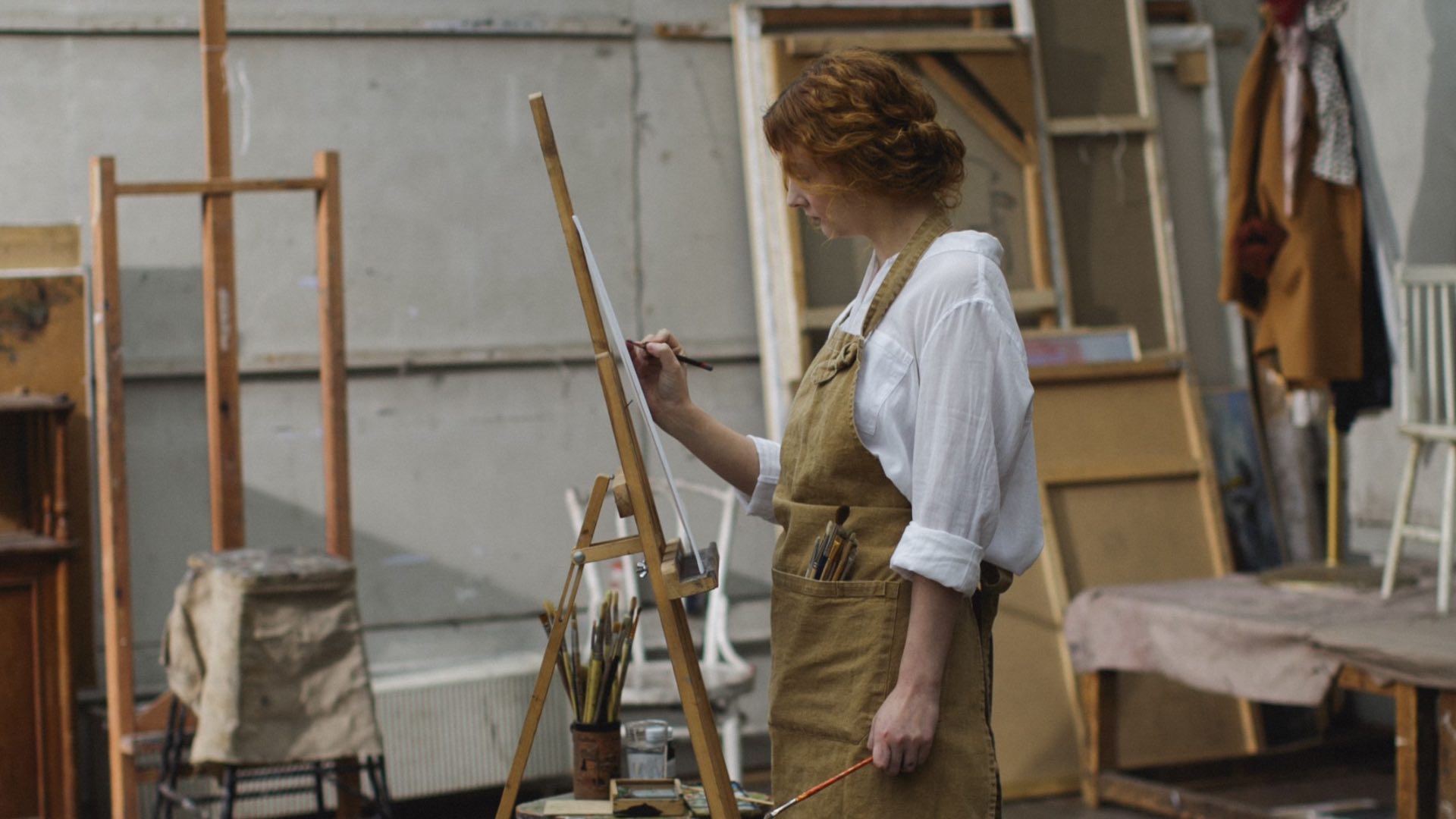
For centuries, women created, composed, wrote, and innovated without always receiving the recognition they deserved. Their talents were sometimes minimized, their signatures erased or replaced by those of men more readily accepted by their time. Today, historians are re-examining these narratives to give these pioneers the place they deserve.
Judith Leyster, the star that history had forgotten
In the 17th century, the Dutch painter Judith Leyster made her mark in a largely male-dominated world. The first woman admitted to the Haarlem painters' guild, she created vibrant scenes populated by musicians and everyday people. Yet, after her death, her name fell into oblivion. For more than two centuries, her paintings were attributed to her husband or to the renowned Frans Hals. It wasn't until the late 19th century that a historian rediscovered her monogram, hidden beneath a forged signature. Gradually, Judith Leyster is finally regaining her rightful place in art history.
View this post on Instagram
When a painting changes its author... and its perspective
The case of Marie-Denise Villers is equally revealing. At the beginning of the 20th century, an elegant portrait exhibited at the Metropolitan Museum of Art in New York was presented as a work by Jacques-Louis David. This prestigious attribution contributed to its renown. However, extensive research conducted decades later overturned this certainty: the painting was in fact signed by Marie-Denise Villers. This reassessment raises a fascinating question: how many talented female artists remain invisible behind male names?
Artemisia Gentileschi, a recognition that is always evolving
Even today, the work of identification continues. Several works long considered anonymous have recently been attributed to Artemisia Gentileschi, a major figure in Italian Baroque painting. Long defined solely by her lineage with her father, she is now recognized for the power of her work and her singular style. These discoveries remind us that art history is not static: it evolves as research progresses.
Sheet music performed under another name
The erasure of women was not limited to painting studios. The composer Fanny Mendelssohn, author of hundreds of works, had several of her lieder published under her brother Felix's name. The anecdote is striking: during a conversation with Queen Victoria, Felix was forced to admit that a piece particularly admired by the sovereign was not by him, but by his sister. Fanny would only publish under her own name at the very end of her life.
From novelists to scientists, the same pattern
In literature, Charlotte, Emily, and Anne Brontë chose male pseudonyms for their published works. Mary Ann Evans became "George Eliot," while the anonymous publication of Frankenstein fueled speculation for a long time, attributing the novel to "Percy Shelley" rather than Mary Shelley. The sciences were not immune to this phenomenon. Rosalind Franklin played a crucial role in understanding the structure of DNA, while Lise Meitner contributed to the discovery of nuclear fission without receiving the same recognition as some of her male colleagues.
These reattributions go beyond simply correcting an archival error. They allow us to better understand the richness of women's contributions in all fields of creation and knowledge. Restoring the names of Judith Leyster, Marie-Denise Villers, Artemisia Gentileschi, and Fanny Mendelssohn enriches our collective memory. Cultural history does not benefit from erasing voices; it flourishes when it reflects the full diversity of the talents that have shaped it.