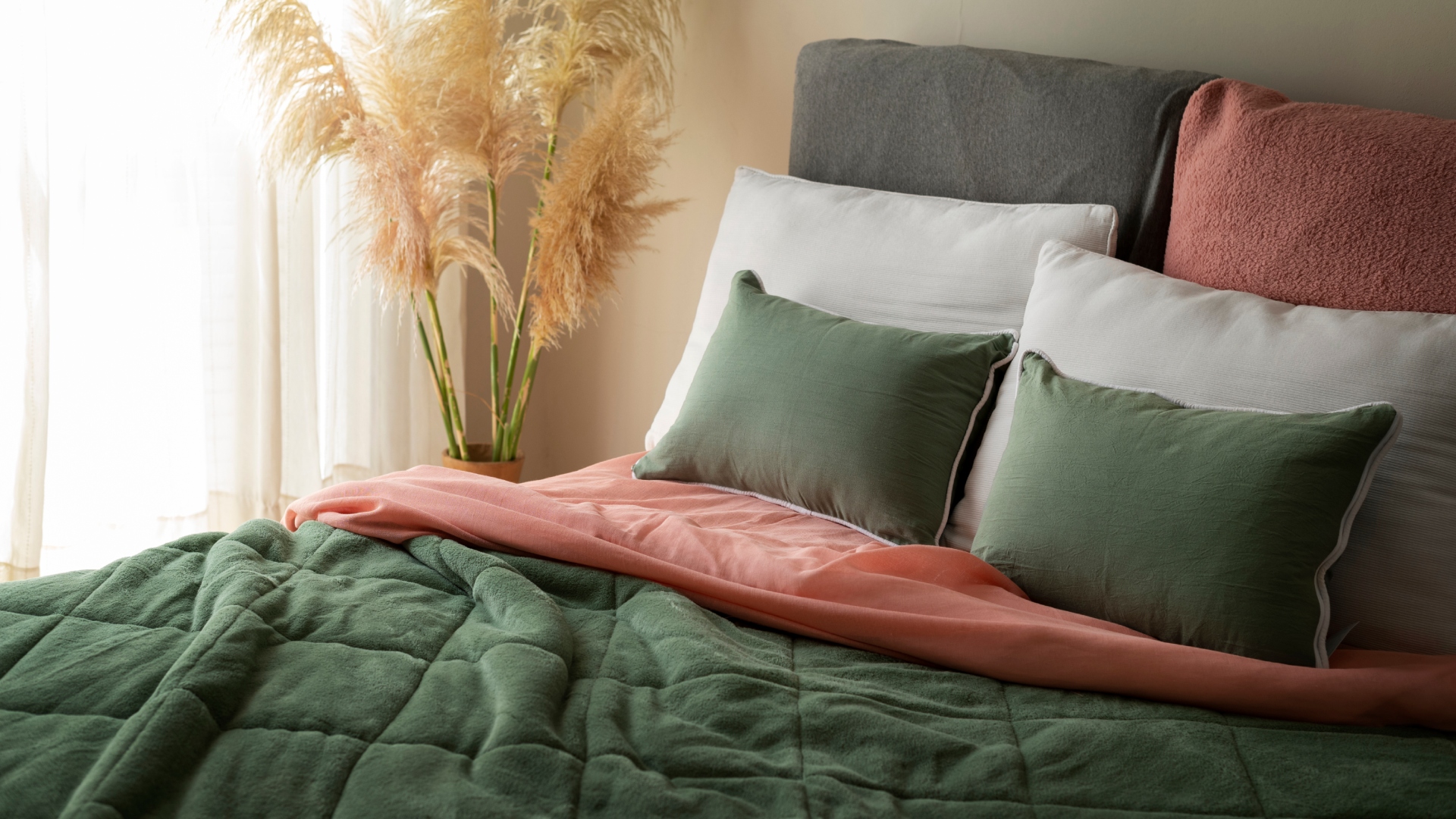
The color of your sheets won't magically transform a restless night into a dreamy sleep. However, it can contribute to the atmosphere of your bedroom and how you feel in it. So, will you prefer a soothing tone-on-tone scheme or a bolder shade? Here's how to choose according to your preferences, without taking color psychology too literally.
Soft colors for a bedroom that invites calm
Certain shades naturally evoke a more restful image. This is particularly true of cool, soft colors like grayish blue , sage green, or light lavender. Blue is especially often associated with calm and relaxation. Research on color perception in interiors shows that bedrooms with blue walls are frequently linked to a feeling of serenity, even more so than green or purple spaces.
On your bed, this could translate to sheets in misty blue, eucalyptus green, or pearl gray. These shades easily create a soft and enveloping atmosphere, ideal if you like to find a sense of tranquility at bedtime. However, be careful not to attribute all the power to color! For true nighttime comfort, the material of your bed linen is just as important. Fibers suited to your room's temperature, a fabric that feels pleasant against the skin, and good heat regulation can all contribute to more comfortable nights.
What if you dared to use warm colors?
Do you love warm interiors and vibrant colors? Good news: there's no reason to deprive yourself. Warm and intense colors, like bright red, electric orange, or vibrant yellow, are generally perceived as more stimulating. They can therefore give a room a different energy, sometimes less conducive to relaxation, depending on individual sensitivities.
The solution? Play with softer, more nuanced shades. Terracotta, powder pink, ochre, or burgundy add character without necessarily turning the room into a visual firework display. For example, you can keep a white or ecru duvet cover and add a few burgundy pillowcases or a terracotta throw. The result: a bright base, a few warm touches, and a bedroom that truly reflects your personality.
The best color is still the one you like.
This is probably the most important point: color psychology doesn't operate as a universal rule. A shade considered relaxing might leave you completely indifferent. Conversely, a bright color might evoke feelings of joy, comfort, or familiarity.
In other words, your personal history, your tastes, natural light, and your overall decor also play a role. Simply ask yourself: what feeling do you get when you enter your bedroom? Calm, energy, a cozy atmosphere, freshness, a good mood? Your answer is already an excellent indicator.
So, which color should I choose?
Yes, the color of your sheets can contribute to the atmosphere in your bedroom and, indirectly, to your mood at bedtime. However, keep things in perspective: there's no such thing as the "perfect color for sleeping." If bright pink puts you in a good mood, yellow makes you smile, or red transforms your room into a cozy haven, then go for it.
After all, your home is first and foremost yours. And when it comes to decorating, the best rule is still the one that makes you feel good at home.