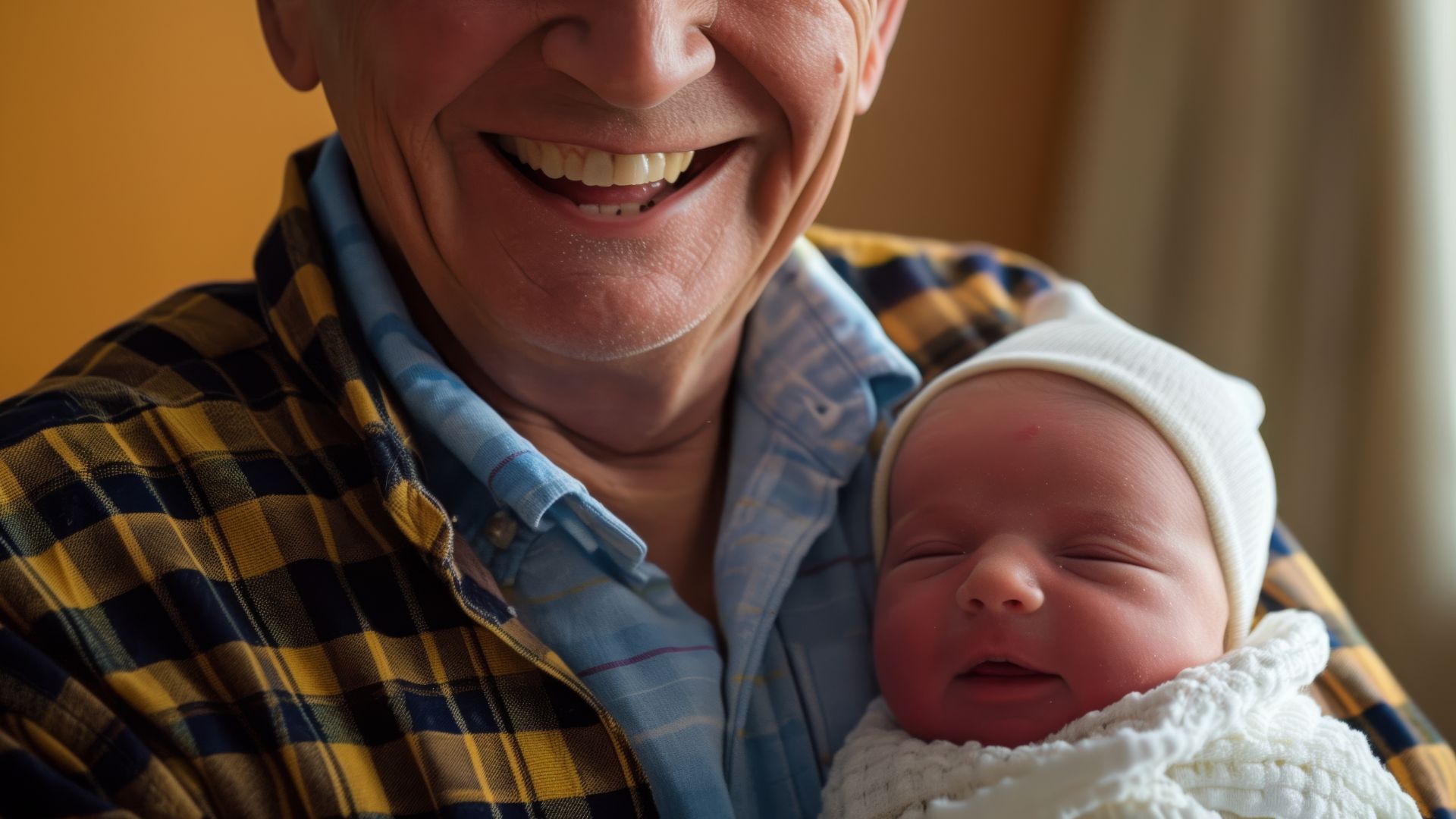
Pierre Sablé, a Catalan living in the Pyrénées-Orientales, has become a father for the seventh time at the age of 91. With his partner Aïcha, 39, he welcomed little Louisa Maria, the youngest of a family that includes an eldest daughter who is 60. This "unusual" fatherhood, revealed by the newspaper L'Indépendant , surprised those around him, but is embraced with serenity by the man himself.
The birth of Louisa Maria and the generation gap
Louisa Maria is the seventh child of Pierre Sablé (a medalist in the New York, Los Angeles, and Rome marathons in the over-80 category), all born to different mothers. His previous daughters are Carole (60), Julie (50), Pauline (35), Céleste (30), and Jeanne (24); a son sadly passed away.
Pierre jokes about his age: "I'm not that old, I'm 91!" He even teases Robert De Niro, who became a father at 80: "You're beaten, excuse me, old man." He also explains that he's very present in his daughter's life every day: "I'm always with her, it's great."
View this post on Instagram
Reactions from those around him and Pierre's responses
His friends pointed out that even if Louisa lived to 100, she would only be 10 years old when she died. Pierre dismisses these remarks: "At this very moment, hundreds of millions of people are dying, or having accidents, or [children] are being abandoned by their parents. She won't be abandoned; we're going to prepare her." He also puts the more vehement criticisms into perspective: "People will say it's exceptional. Maybe. It's not my problem if it's exceptional. I'm living!" Aïcha, who longed for a child after a first marriage that was childless, describes him as "a very good father, a very good husband, a very good life partner" and says she is happy.
Family and media context
The couple met at a ski resort. A farmer and then an accomplished athlete, Pierre Sablé champions an active and optimistic lifestyle, unconcerned by judgment. Their story went viral on social media, picked up by Sud Radio and other media outlets, sparking lively debates about late fatherhood, potential inheritances, and family cycles.
On X (formerly Twitter) and Facebook, some users were particularly critical: "At that age, you shouldn't be having children anymore, it's irresponsible," or "This baby is going to lose its father too soon, it's selfish." Others insinuated financial motives, mentioning "marriages of convenience" and "inheritance schemes."
Conversely, many comments were kind and admiring: "As long as he is loving and healthy, age shouldn't be an obstacle," "Everyone has the right to build their family at their own pace," or even "It's a beautiful lesson in freedom and courage in the face of social norms." Between harsh judgments and messages of support, this story primarily illustrates how atypical life paths continue to challenge social representations of family, age, and parenthood.
Ultimately, Pierre Sablé's story illustrates a so-called late fatherhood that evokes strong reactions. Between admiration and questions, his journey has sparked contrasting responses. He and his partner, Aïcha, however, affirm that they are experiencing this birth with serenity, confident that they can offer Louisa Maria a stable and attentive emotional environment.