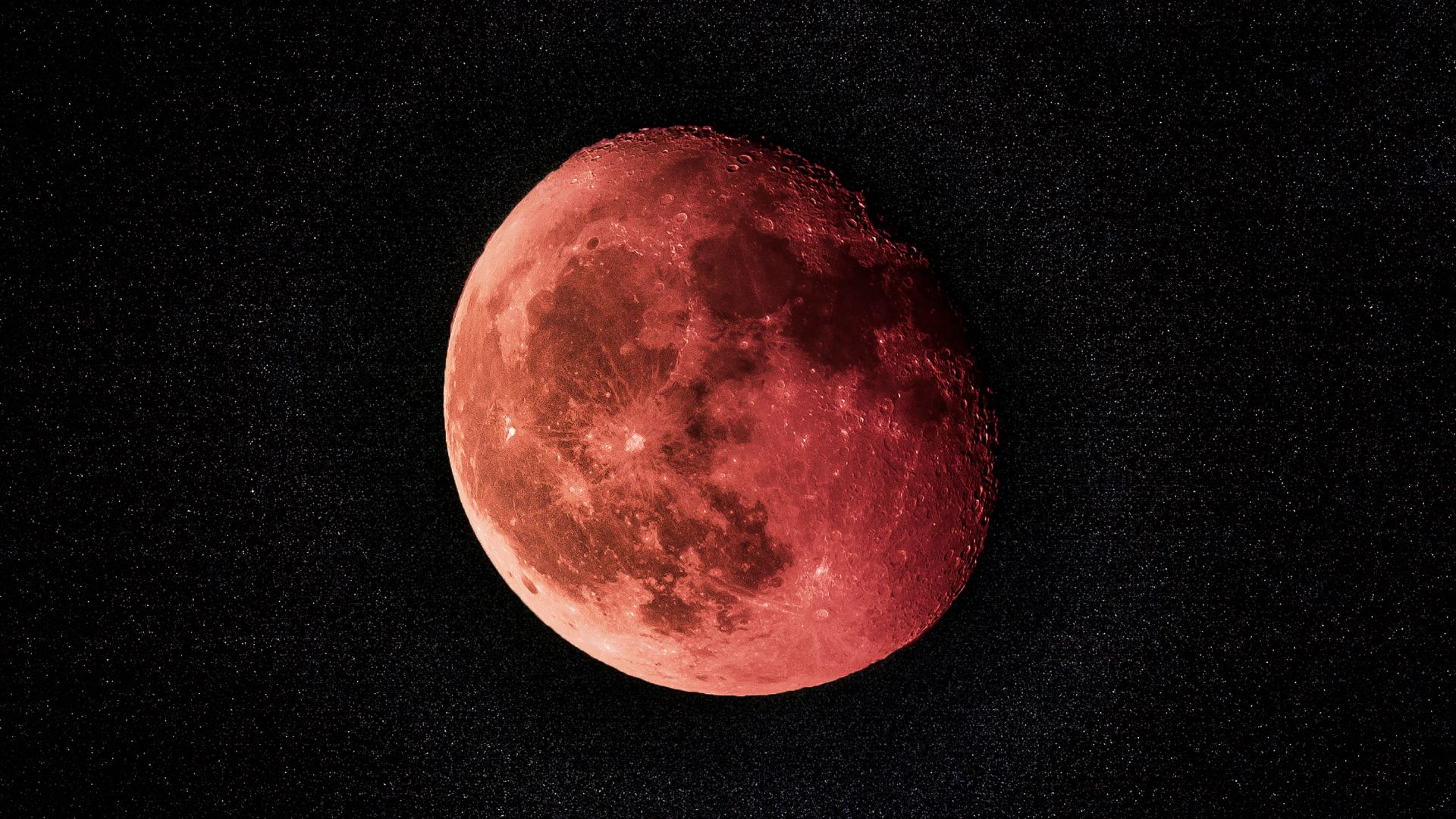
The moon has always fascinated people and fueled numerous beliefs, particularly those surrounding the menstrual cycle. With their nearly identical durations, it's tempting to imagine a link between the two. But what does scientific research actually say? The answers are more nuanced than they might seem.
A belief that has endured through the centuries
The idea that the Moon can influence menstruation is not new. In many cultures, the celestial body is associated with fertility, bodily cycles, and femininity. This theory is based in particular on a simple observation: the lunar cycle lasts approximately 29.5 days, while the menstrual cycle averages 28 days.
In addition to this, there is another comparison often mentioned: if the Moon affects the tides, why wouldn't it have an effect on our bodies? A hypothesis that has long been considered a myth due to a lack of solid scientific evidence.
A study reignites the debate
In 2021, a team of German researchers led by chronobiologist Charlotte Helfrich-Förster provided new insights. The scientists studied data from 22 women who had tracked their menstrual cycles for an average of fifteen years.
Their analysis reveals that a synchronization phenomenon can sometimes occur. In some participants whose cycles lasted more than 27 days, menstruation seemed to temporarily align with the moon's light and gravity cycles. However, this correlation was neither constant nor universal. It appeared periodically and then disappeared, without following an identical pattern from one person to another.
A link that seems to fade over time
Researchers also observed that this synchronization becomes less frequent with age. Another factor could also play a role: our modern lifestyle. Exposure to artificial light, whether from streetlights or screens, could disrupt biological rhythms that were once more influenced by natural cycles. The periods when synchronization seemed most pronounced coincided with the long winter nights, when moonlight is more prevalent.
Conclusions to be interpreted with caution
While these results are intriguing, they don't allow us to conclude that the moon systematically influences menstruation. The study is based on a limited number of participants, and observations vary considerably from person to person. The authors themselves emphasize that research involving a larger sample will be necessary to better understand these mechanisms and confirm, or refute, the existence of a genuine link.
A fascinating lead, but not a certainty
To date, science has not provided definitive proof of the Moon's influence on the menstrual cycle. Some observations suggest that occasional synchronization may occur in some people, but it remains intermittent and far from widespread.
This question (can the Moon really influence menstruation?) serves as a reminder that the human body is complex and that many factors, such as the environment, light, and biological rhythms, can interact in subtle ways. This is yet another reason to approach these results with curiosity… without turning a promising hypothesis into a certainty.