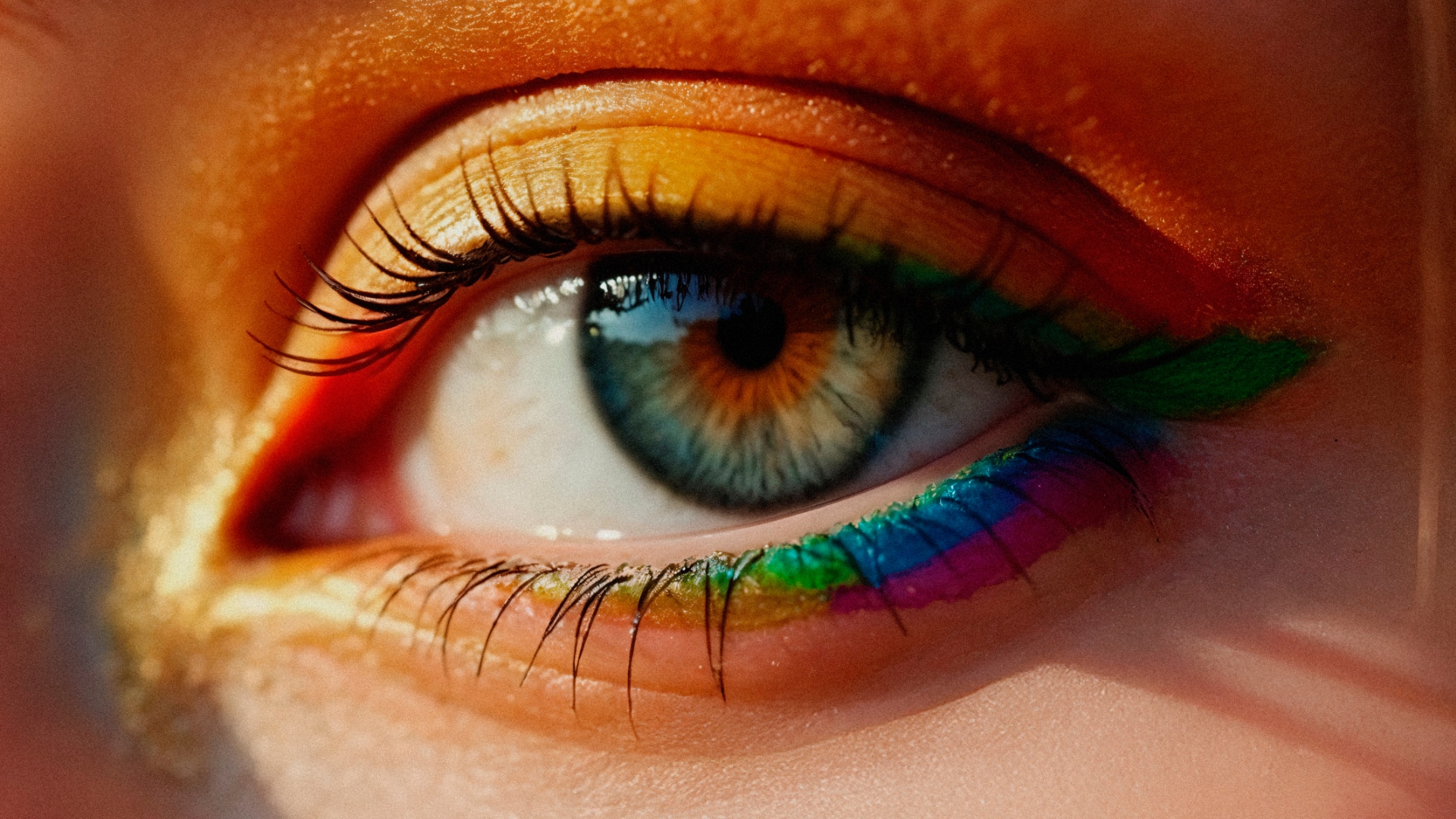
For most of us, the letter "A" has no color. For some people, it is invariably red, "B" blue, "5" green… This phenomenon, called grapheme-color synesthesia, has intrigued researchers for over two centuries. Far from being a disorder, it is a natural variation in perception, both rare, stable, and surprisingly consistent.
A perception that blends letters, numbers and colors
Synesthesia refers to an involuntary blending of the senses or cognitive functions: one stimulus spontaneously triggers another. In its so-called "grapheme-color" form, letters and numbers are associated with specific hues. This is one of the most widespread and studied forms, particularly because the workings of the visual system are now well documented. For the individual affected, these associations are not a matter of conscious imagination: they arise spontaneously.
An involuntary and remarkably stable trait
Three characteristics define this phenomenon: it is involuntary, automatic, and constant over time. A synesthete who perceives the number "7" as orange will continue to perceive it that way years later. While the correspondences vary from one individual to another, certain patterns appear on a large scale: statistically, the letter "A" is often associated with red. Many synesthetes say they only realized later in life that their experience was not shared by everyone.
What happens in the brain?
The causes are not yet fully understood. According to Clinical Trial , the most widely accepted hypothesis suggests "cross-activation" between neighboring brain areas, particularly the region that processes letters and numbers and the one that processes colors. Other models propose increased connectivity between sensory areas, or a deficit in inhibition. Synesthesia also has a hereditary component, as it tends to occur within the same family. Specialists emphasize one point: it is a healthy variation, not a pathology.
How many people are affected?
According to PLOS ONE , estimates vary depending on the methodology. Synesthesia, in all its forms, is estimated to affect more than 4% of the population, according to a landmark study. The grapheme-color form, on the other hand, is estimated to affect approximately 1 to 2% of people. The trait typically develops gradually during childhood.
Interestingly, some studies have shown that some of the associations can be influenced by the environment: one study found that several synesthetes had correspondences based on a very common colorful alphabet toy.
The reason grapheme-color synesthesia is so fascinating is that it illustrates the diversity of ways in which the human brain constructs reality. Far from being a handicap, it sometimes comes with advantages, particularly for memory, according to some research. Above all, it reminds us that the same page of text can be experienced in radically different ways from one person to another: proof that our perception of the world is anything but universal.