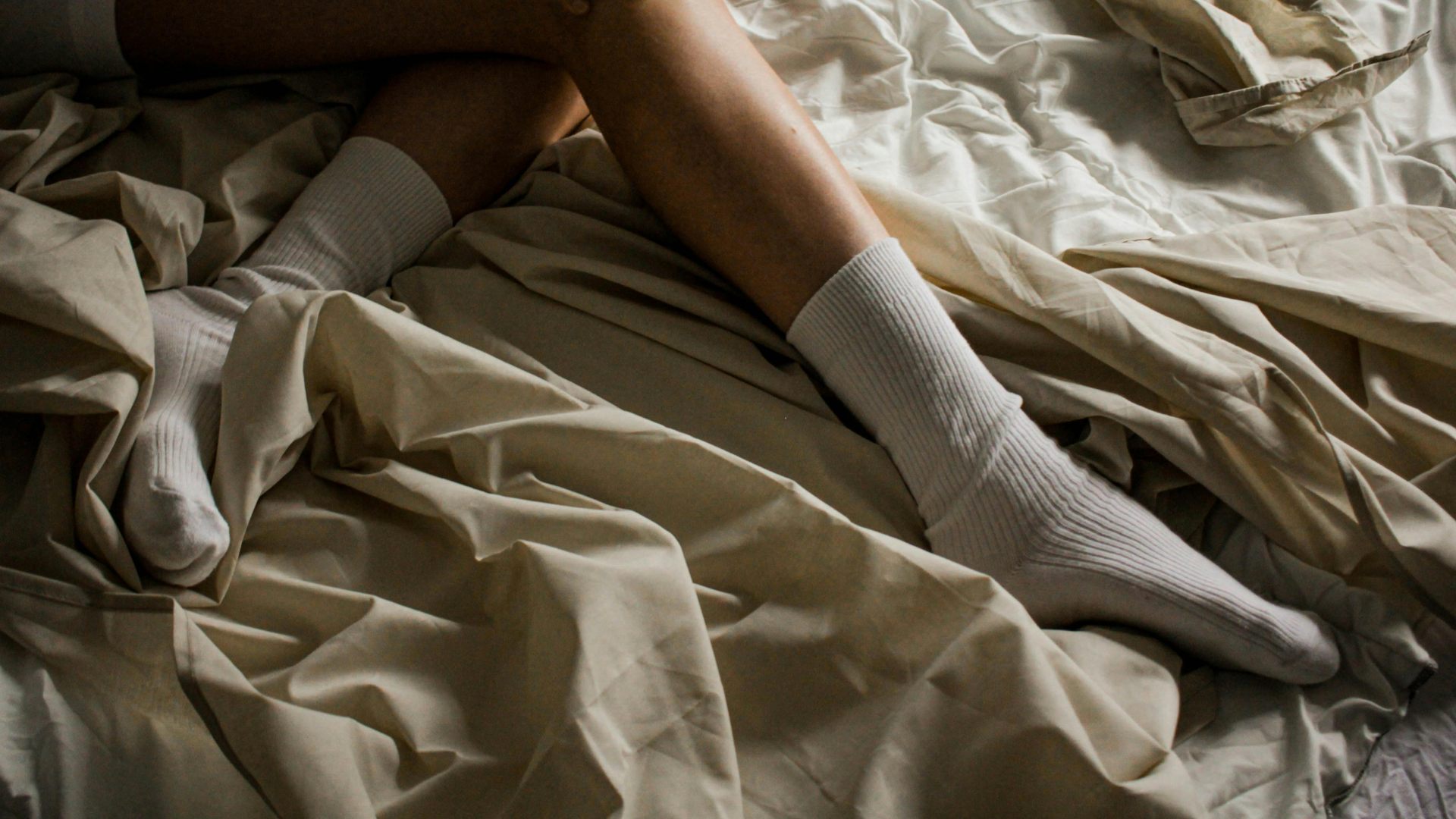
Wearing socks at night might seem trivial, even unfashionable, but several studies and sleep specialists suggest that this simple act can actually promote sleep and slightly improve the quality of rest. By influencing body temperature regulation, socks in bed become a valuable little thermoregulation tool for sleep.
Why socks promote sleep
Putting on socks before bed warms your feet, causing vasodilation of the blood vessels under the skin. Warm blood rushes to the surface, heat dissipates, and the body's internal temperature drops slightly, which is one of the key biological signals the brain associates with sleep.
In 2018, a small study conducted at Seoul National University on six young men showed that those who slept with socks fell asleep on average 7.5 minutes earlier, woke up less often during the night, and slept about 32 minutes longer than those who slept barefoot. The authors concluded that regulating foot temperature during the night can help improve certain aspects of sleep quality.
What sleep specialists say
Experts like Professor Indira Gurubhagavatula, spokesperson for the American Academy of Sleep Medicine, explain that the mechanism involves not only the feet but the entire circulatory system. By warming the extremities, vasodilation also occurs elsewhere in the body, which facilitates heat dissipation and lowers core temperature, a condition conducive to falling asleep.
Other specialists, such as Dr. Raymann, point out that the brain interprets this drop in core temperature as a green light to initiate the sleep process. In practice, this often translates into a feeling of drowsiness that sets in more quickly once one's feet are finally warm.
Choosing the right socks for the night
For this practice to be beneficial, the choice of socks is important: it's advisable to opt for a clean pair made of breathable natural materials such as cotton or merino wool to limit perspiration and irritation. The socks should be wide enough so as not to compress the ankle or calf, as tight socks can restrict blood circulation and cause numbness.
Experts remind us that, except in specific cases, it is not necessary to wear compression stockings to sleep: when lying down, venous return naturally improves, and overly compressive socks are likely to be uncomfortable. If you are prone to athlete's foot, circulatory problems, or diabetes, it is best to consult your doctor before regularly adopting this nighttime habit.
A useful tip, but not a miracle cure
Doctors emphasize that sleeping in socks is not a treatment for sleep disorders such as chronic insomnia or sleep apnea, which require specific care. Rather, it's a simple way to optimize conditions conducive to sleep: warm feet, a slightly lower internal temperature, and an increased feeling of comfort.
For those worried about getting too hot in the middle of the night, one solution is to keep socks on only at bedtime, long enough to trigger the skin vasodilation necessary for falling asleep, and then remove them once you've drifted off. This way you can enjoy the benefits... without feeling suffocated under the covers.