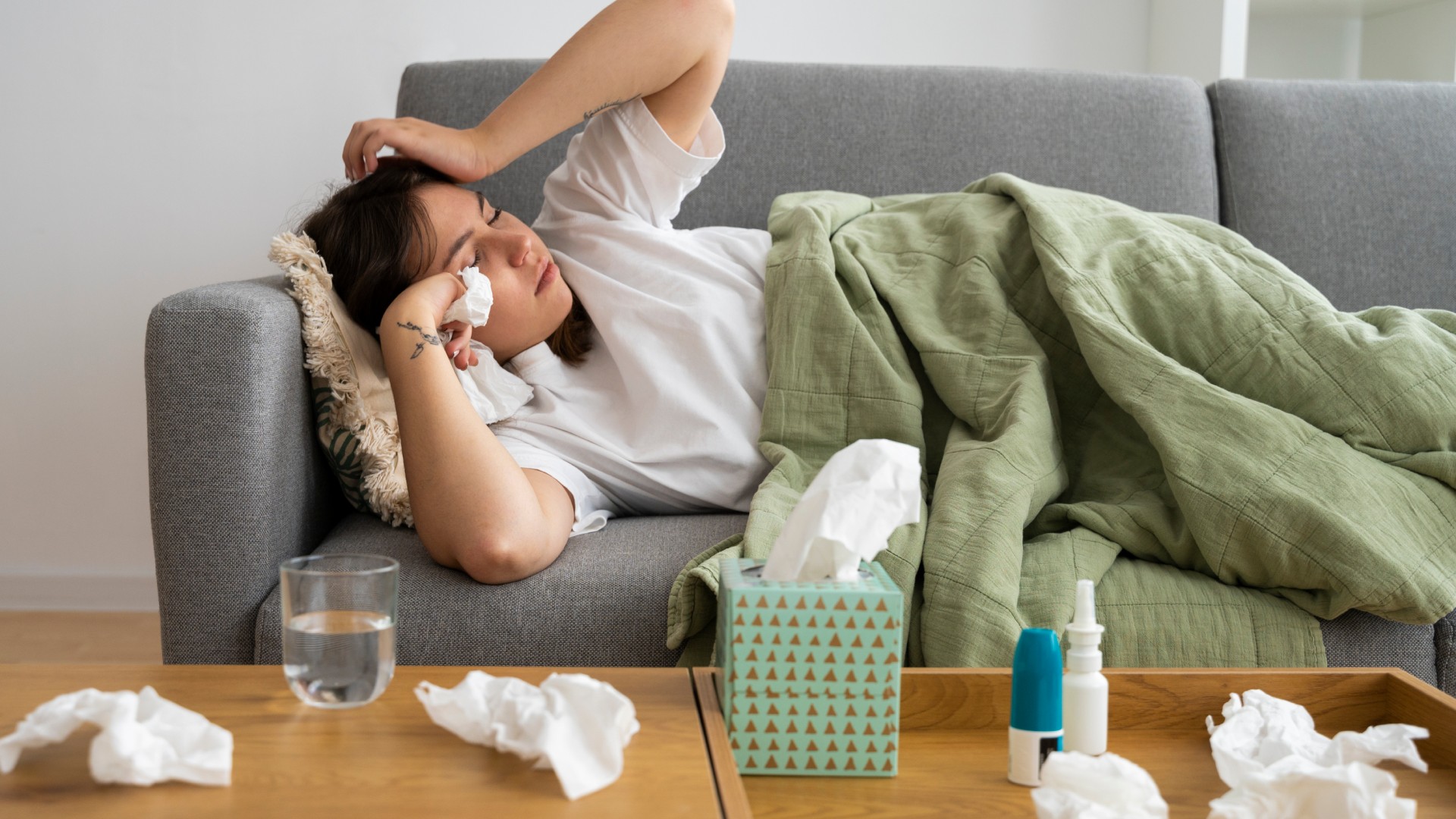
You spent a third of winter with your nose buried in tissues, sniffing ravintsara oil, and coughing your whole body. Now that you're feeling better, you're dreading a relapse and have developed the same obsessive habits as Monk. You see germs everywhere and fear reliving that debilitating cold over and over again. It might be a form of hypochondria.
Health anxiety, a common fear
Germs haven't given you much of a break this year. You've just come through a grueling flu season, punctuated by chills, fevers, and pervasive symptoms. You spent the winter running your nose, coughing until you were unconscious, battling these internal parasites. Despite ten layers of clothing, a scarf, repeated courses of immune-boosting medication , and optimal hygiene precautions, you succumbed to the seasonal viruses.
It's just bad luck. But now that you're feeling better, you can't stop thinking the worst. You're afraid of reliving those lethargic moments, your head in the inhaler and the Vicks Vaporub dripping down your throat. So much so that you secretly dream that sterile suits and latex gloves will be all the rage.
This year, the flu is unforgiving. It's not just a passing chill that disappears as quickly as it came. It's a virulent cold that confines us to bed and makes us feel like vegetables. No wonder you're feeling a bit paranoid. Healthcare professionals refer to this as health anxiety, a derivative of hypochondria. You're not quite at the phobic stage, but you panic as soon as your throat tickles or fatigue overwhelms you.
The unmistakable symptoms
Have you ever found yourself feeling your throat, searching for swollen lymph nodes, or examining yourself in the mirror, imagining phantom symptoms? This is certainly a sign of health anxiety. You check yourself several times a day and consult the internet for answers. If your most prized bracelet is a blood pressure monitor and you reach for the thermometer at the first sign of a hot flash, then you're likely suffering from this modern-day affliction.
“It varies from person to person and depends on the condition that worries the person most, and that worry can change,” explains Dr. Spelman , psychologist and clinical director of the Private Therapy Clinic. How can you tell if your apprehension is unreasonable? Here are some common signs in people living with health anxiety:
- Obsessed with body signs: paying excessive attention to small sensations such as slight discomfort, a changing mole, or even a slightly faster heartbeat than usual.
- Compulsive search for answers: consulting Google to understand a symptom, reading medical articles endlessly, or scrutinizing every little variation in your health.
- Repeated checks: measuring your pulse, checking your temperature or monitoring your blood pressure more often than necessary.
- Constant need for reassurance: calling relatives, consulting doctors or seeking health certificates to soothe your mind.
- Persistent fears despite reassuring results: even after a medical examination showing that everything is fine, the worry persists.
This increases health anxiety
As the specialist explains, this health anxiety, which has now become part of medical jargon, intensified at the height of the Covid-19 crisis. And since that era of surgical masks, hand sanitizer, and social distancing, it has become almost chronic. However, the anxiety-inducing news stories that dramatize every illness, constantly remind us of the rise in cancer cases, and give us the illusion of being doomed with every headline, only exacerbate this mental turmoil. Even when they don't directly concern your personal situation, they tend to raise internal tension.
Having all the world's medical resources at your fingertips can seem reassuring… until you encounter the worst-case scenario. A search for symptoms can quickly lead to alarming hypotheses, especially for those prone to anticipating the worst. However, seeing your doctor every other day hoping they'll cure ailments that only exist in your head isn't the best approach. Dr. Spelman recommends a more comprehensive approach: cognitive behavioral therapy (CBT). It doesn't cure the invisible, but it detoxifies you from negative thoughts and weans you off harmful beliefs.
If you panic over every little cough as if it were going to be fatal, that's health anxiety. And with a few good strategies, you can break this vicious cycle. Obviously, the idea isn't to let yourself waste away or to sever ties with your doctor, but rather to reason with your fears.