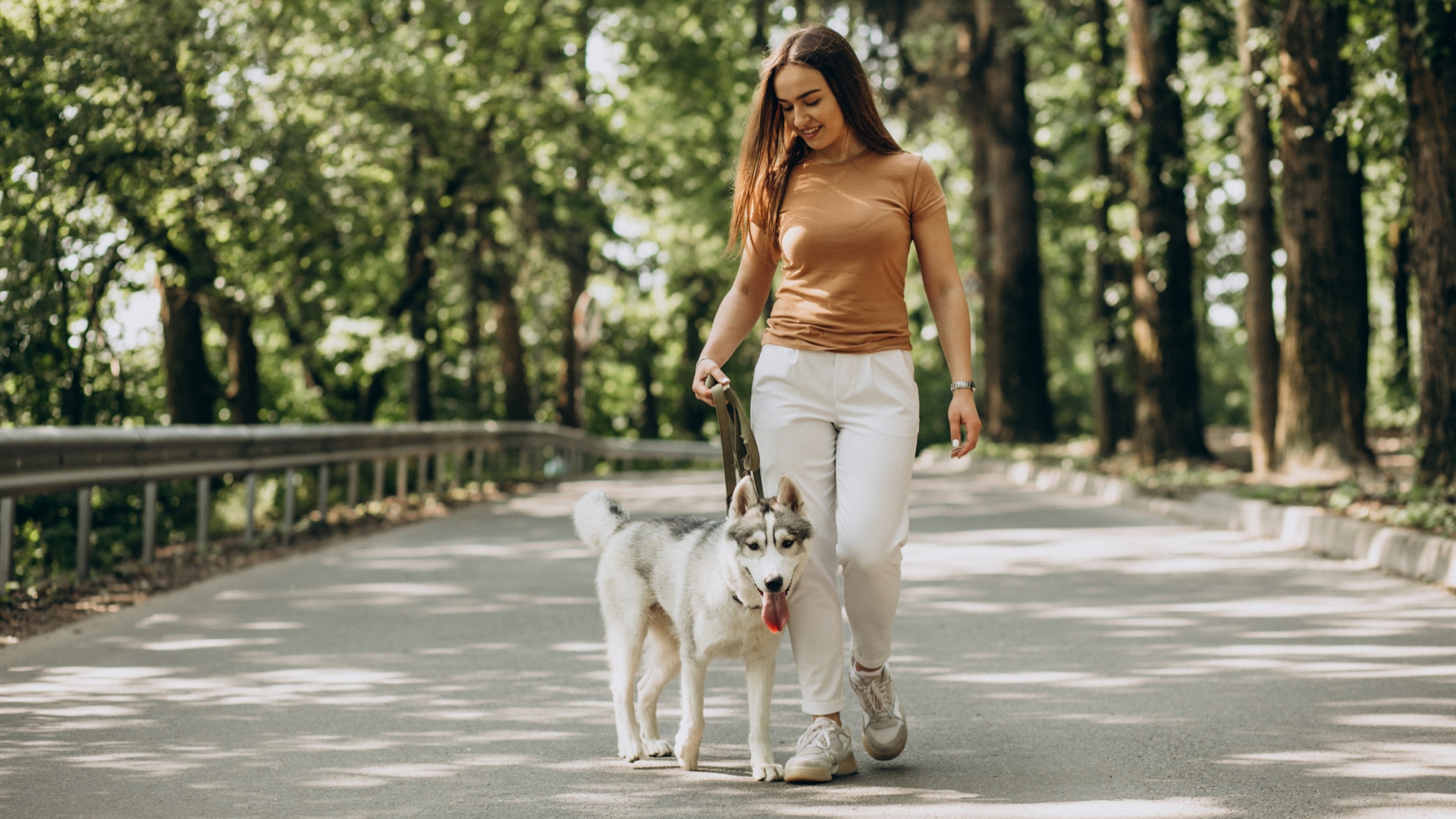
When temperatures rise, walks remain important for your dog's well-being. However, during a heatwave, certain habits can quickly become risky. One mistake, in particular, deserves your full attention: taking your companion out on scorching ground during the hottest hours of the day.
Tar can become a real trap
We often think about the air temperature… but much less about the ground temperature. Yet, under a blazing sun, asphalt, tarmac, or even sand can become scorching hot. Since your dog walks directly on its paw pads, a few minutes are sometimes enough to cause painful burns. Red, irritated, cracked, or even blistered paw pads are all signs that the ground was far too hot. A walk that should have been pleasant can then turn into a truly unpleasant memory.
A very simple tip before you leave
Before heading out, you can do a quick test. Place the back of your hand or your foot on the asphalt for 5 to 7 minutes: if you feel the urge to remove it immediately because it's too hot, your dog will feel the same way… by walking on it. In this case, it's best to change your route, opting for grass, dirt paths, or shaded areas, or even postpone the walk until a cooler time.
We do what we can during this heatwave.
Of course, it all depends on your surroundings. If you live near a park, a field, or a large grassy area, that's ideal. Your dog can enjoy a more pleasant walk without having to walk on asphalt, especially early in the morning when it's still cool.
However, in the heart of the city, where concrete is everywhere, one often has to contend with constraints. A dog needs to go outside to relieve itself, and depending on its breed, age, or temperament, it will require several outings throughout the day. The goal is then to adapt these walks.
- Opt for mornings and evenings whenever possible.
- If an outing is unavoidable during the day, choose a route that is as shaded as possible.
- You can carry your dog for a few moments to a grassy area if it is small, use a stroller for some so-called fragile animals, or even make it wear protective booties if the situation requires it.
- A cooling vest can also provide some comfort.
- Finally, limit your outing to the bare minimum: a short walk for natural needs is better than a long session of play or running when it is 30 to 40 °C.
Heatstroke, a risk that should never be underestimated
Dogs are much less efficient at dissipating heat than we are. They primarily cool down by panting, a system that quickly becomes ineffective in hot weather. Excessive panting, drooling, unusual fatigue, difficulty walking, or any abnormal behavior should immediately alert you. In these cases, stop the walk, move your dog to a cool place, offer them water, and contact a veterinarian promptly if their condition does not improve.
Some dogs are even more sensitive
Not all dogs react the same way to heat. Older dogs, overweight dogs, or those suffering from certain illnesses are more vulnerable. Brachycephalic breeds, recognizable by their very short muzzles and flat faces, also require special attention. French and English Bulldogs, Pugs, Shih Tzus, Boxers, Cavalier King Charles Spaniels, and Dogue de Bordeaux can experience respiratory difficulties as soon as temperatures exceed 15 to 20°C (59 to 68°F). For these breeds, walks should be even more carefully planned.
In summary: in summer, choosing the coolest hours, avoiding hot ground and above all respecting your dog's rhythm will allow him to fully enjoy his outings, even when the mercury soars.