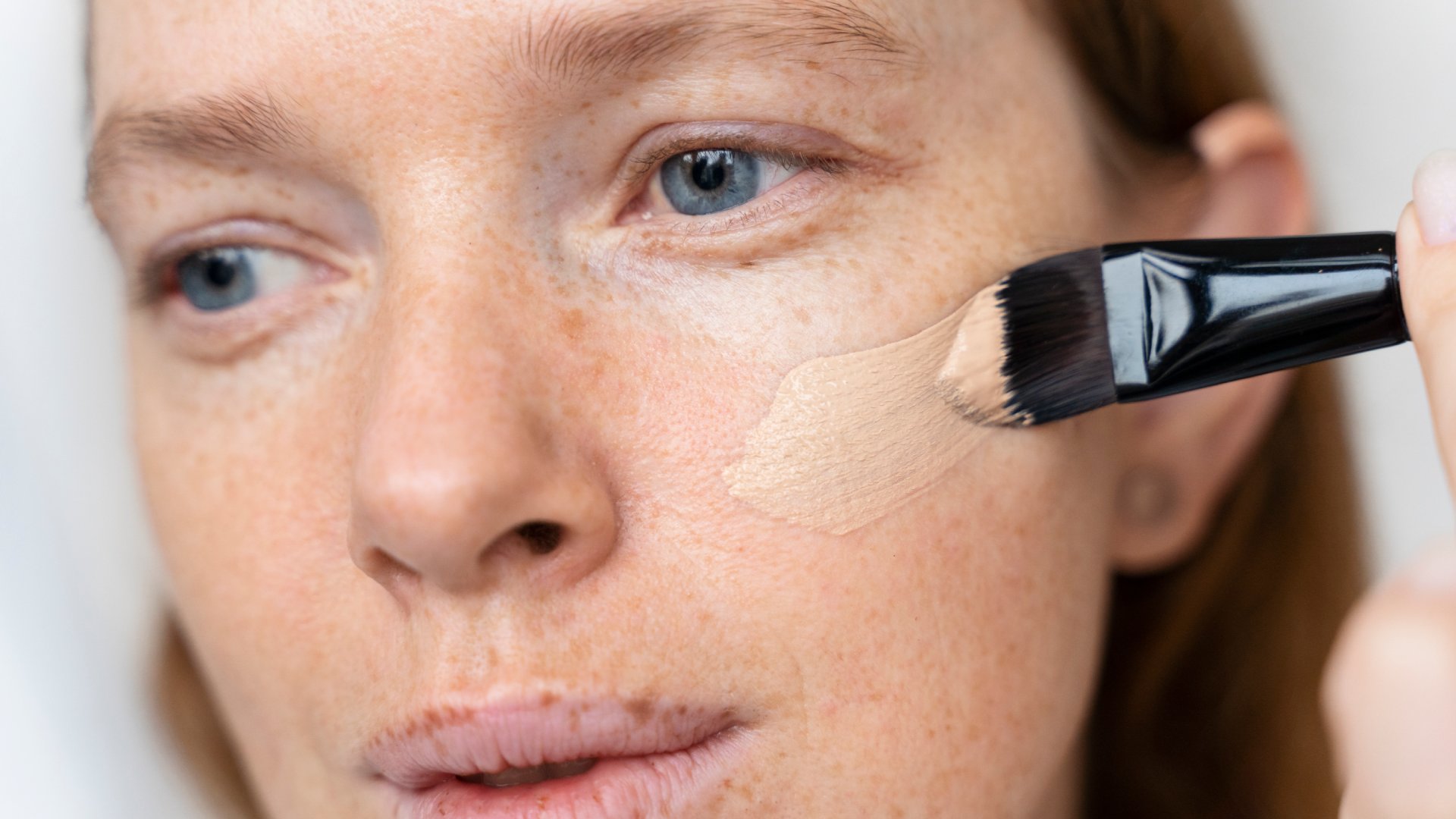
Foundation isn't mandatory. Whether you want a flawless complexion or prefer to let your skin breathe, there are no hard and fast rules. However, if you do like wearing foundation, choosing a formula suited to your skin type will primarily ensure greater comfort and a more natural look.
Foundation: a choice, never an obligation
First and foremost, let's reiterate an obvious point that deserves to be emphasized: you don't need foundation to be beautiful. Pores, redness, dark spots, and blemishes are simply part of your skin.
In summer, it's often the perfect time to let your skin breathe more if you feel like it. And if you prefer to continue wearing makeup, that's perfectly fine too. The important thing is to do it for yourself, not to conform to some pressure that would have us believe a face should always be "perfectly smooth" or made up.
Dry skin: focus on comfort
If your skin tends to feel tight or lacks elasticity, opt for foundations with fluid or creamy textures. Hydrating formulas and luminous or satin finishes add radiance while avoiding accentuating dry patches. Conversely, very matte or powdery textures can accentuate any discomfort. It's therefore better to choose products that work with your skin rather than stiffen it.
Oily skin: formulas that limit shine
When skin produces more sebum, mattifying foundations are generally the most comfortable to wear. Oil-free or long-lasting formulas help maintain a more even complexion throughout the day, without an overly shiny effect. To optimize the result, a mattifying primer can also be applied before makeup. The goal isn't to conceal your skin, but to find a texture that remains comfortable from morning to night.
Combination skin: finding the right balance
Combination skin often combines a shinier T-zone with more comfortable, even slightly dry, cheeks. In this case, a foundation with a natural or satin finish is often a good compromise. Some people also prefer to adapt their routine according to the different areas of the face, using a mattifying primer only where needed. This customized approach respects the needs of each part of the face.
Sensitive skin: time for gentleness
If your skin is easily reactive, it's best to opt for the simplest formulas possible. Fragrance-free, hypoallergenic foundations, or those enriched with soothing ingredients, minimize the risk of discomfort. You can also choose a BB cream or CC cream if you're looking for a lighter finish while still subtly evening out your complexion.
The right shade makes all the difference
Even with a perfectly matched texture, the wrong shade can quickly lead to an unnatural result. The best approach is to test the product on your jawline in natural daylight. The color should blend seamlessly with your neck. Also, consider your skin's undertone—warm, cool, or neutral—for an even more natural finish.
The "most beautiful complexion" is the one in which you feel good.
Choosing a foundation that suits your skin can make all the difference if you enjoy wearing makeup. However, keep in mind that it's never an essential step. Your skin doesn't need to be transformed to be beautiful, and beauty standards that dictate a "perfect" complexion are not universally applicable.
With or without foundation, with a little redness, freckles, or completely bare skin, the most important thing is to feel good in your own skin. After all, the best makeup is the one you choose... or the one you decide not to wear.