In the animal world, women are taking their place and asserting themselves. Feminist icons abound in nature, and they don't wear capes but have fur, feathers, or scales. Beyond protecting their offspring, these females who populate nature are challenging gender roles and are far more evolved than we realize. Let's get out our notebooks and take notes.
When animals teach us lessons about equality
Wildlife documentaries don't just focus on lions' libido or capture spectacular giraffe fights. While most films in the wild show mothers doting on their young and females camped in their dens, this is only a brief glimpse into animal life. The book " The Feminist Animal ," co-authored by 13 specialists, single-handedly fills in all the gaps of the past and reveals the full extent of female power in the natural world.
Before Jane Goodall and other pioneering women scientists got involved, males embodied the "stronger sex." They fought to win hearts and lands, and hunted to feed their families. In short, they had all the merits. Females, on the other hand, were passive: simply there to care for the young and ensure the continuation of the family line. Long portrayed as mere extras, they are not, however, solely dedicated to motherhood. They have other skills on their resume.
In the vibrant animal world, male seahorses carry life, mares understand sisterhood better than some humans, and clownfish change their reproductive organs. Among emperor penguins, females go fishing to gather provisions while the males incubate the eggs. According to this well-documented information, animals are more open-minded and advanced than humans. Here's a short list of these feminine animals that prove male dominance is not a "universal law of nature."
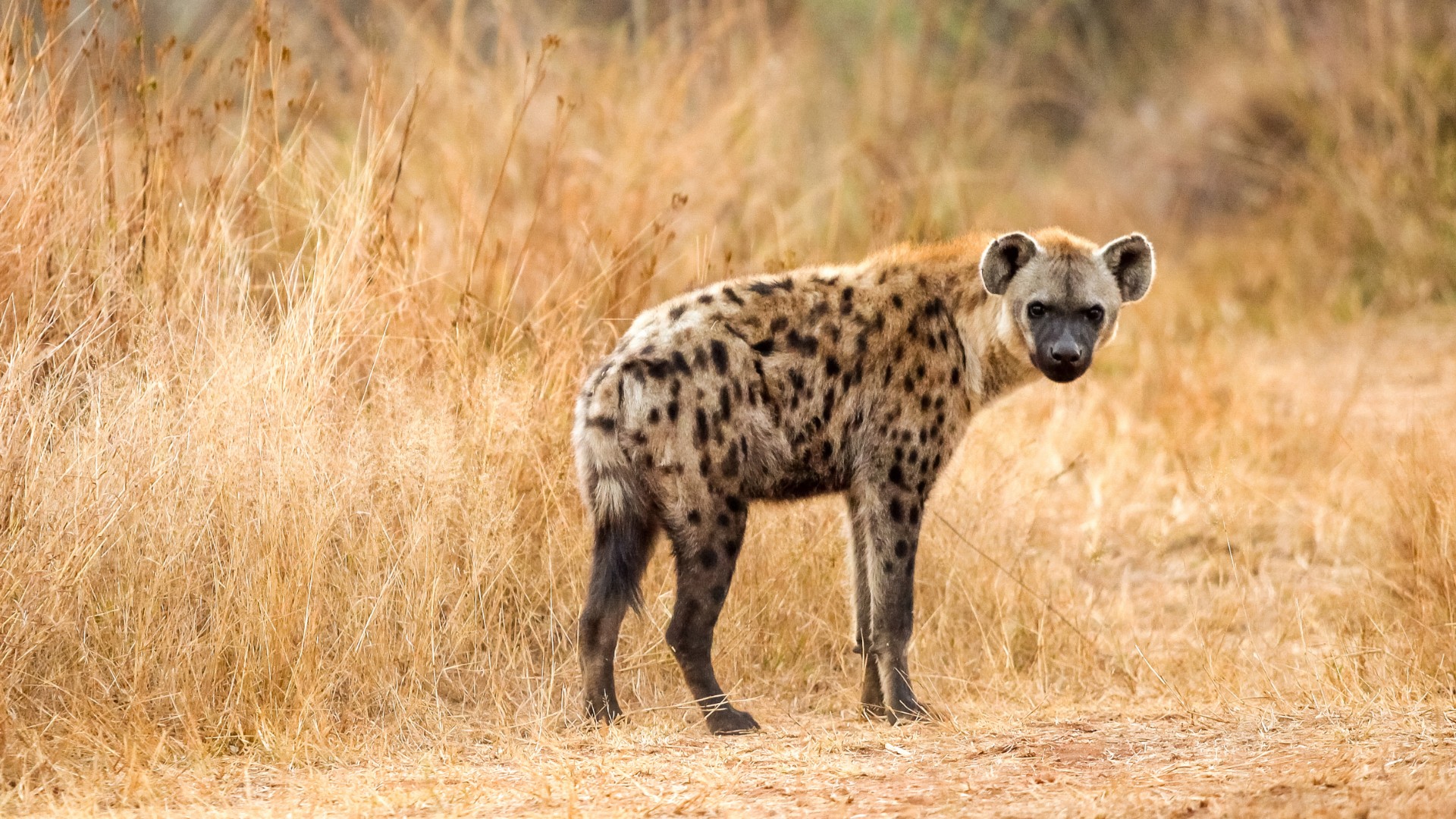
Hyenas: Unashamed Matriarchs
While the praying mantis devours its mates whole, taking care to leave no trace of their crime, there are also more pacifist, feminist animals. Often caricatured in films as cunning and simple-minded creatures, they are in reality one of the most powerful examples of a matriarchal society.
Among spotted hyenas, the females are dominant. They are larger, stronger, and rule the clan hierarchy. Even the most imposing males are subordinate to them. Resources, food priorities, collective decisions: everything goes through them. Another surprising fact: the female spotted hyena possesses a "pseudo-penis," and nobody bats an eye. A good anecdote to pull out to impress at a social gathering.
Elephants: Power through experience
Another inspiring example: African elephant herds. Here too, the structure is matriarchal. The leader of the group is generally the oldest female. Her role? To remember watering holes during periods of drought, recognize dangers, and guide the herd's movements.
While in some species power belongs to the victor of a fight, elephants are more thoughtful. Their authority rests not on physical strength, but on experience and collective memory. It is a calm, strategic, protective power. A leadership based on transmission and wisdom. A beautiful metaphor to remind us that leading does not mean crushing, but guiding.
Male red foxes: dedicated fathers
Red foxes are somewhat pioneers of paternity leave. While we need laws and reforms to implement it, for these canids, it's almost instinctive. After giving birth, the male red fox takes special care of his mate and offspring. He doesn't just bring food back to the den; he's truly involved in raising the cubs: he plays with them and teaches them the important lessons of life. He's a model father who lightens (a little) of his mate's mental load.
Male seahorses: those that carry life
A pregnant man? On a human scale, this would unfortunately be highly controversial. Yet, among seahorses, it's the norm. The male carries the eggs and undergoes the ordeal of childbirth. The female, for her part, finds a male to whom she can entrust her eggs, and then she returns to frolic in the depths of the sea. Enough to send shivers down the spines of die-hard men's rights activists.
Bees: one queen… and thousands of worker bees
In a honeybee hive, the famous "queen" is a source of intrigue. Yet, her role is not that of an authoritarian monarch. She ensures reproduction, while the worker bees, all females, keep the hive running: construction, protection, and food production. Power is distributed, functional, and collective. Survival depends on a highly efficient organization where the females occupy almost all the key positions.
Ultimately, observing wildlife and plants isn't just a "zen pastime." It's a profound learning experience about feminism, equality, and gender identity. If we were to be reincarnated as animals, we already have our favorite...