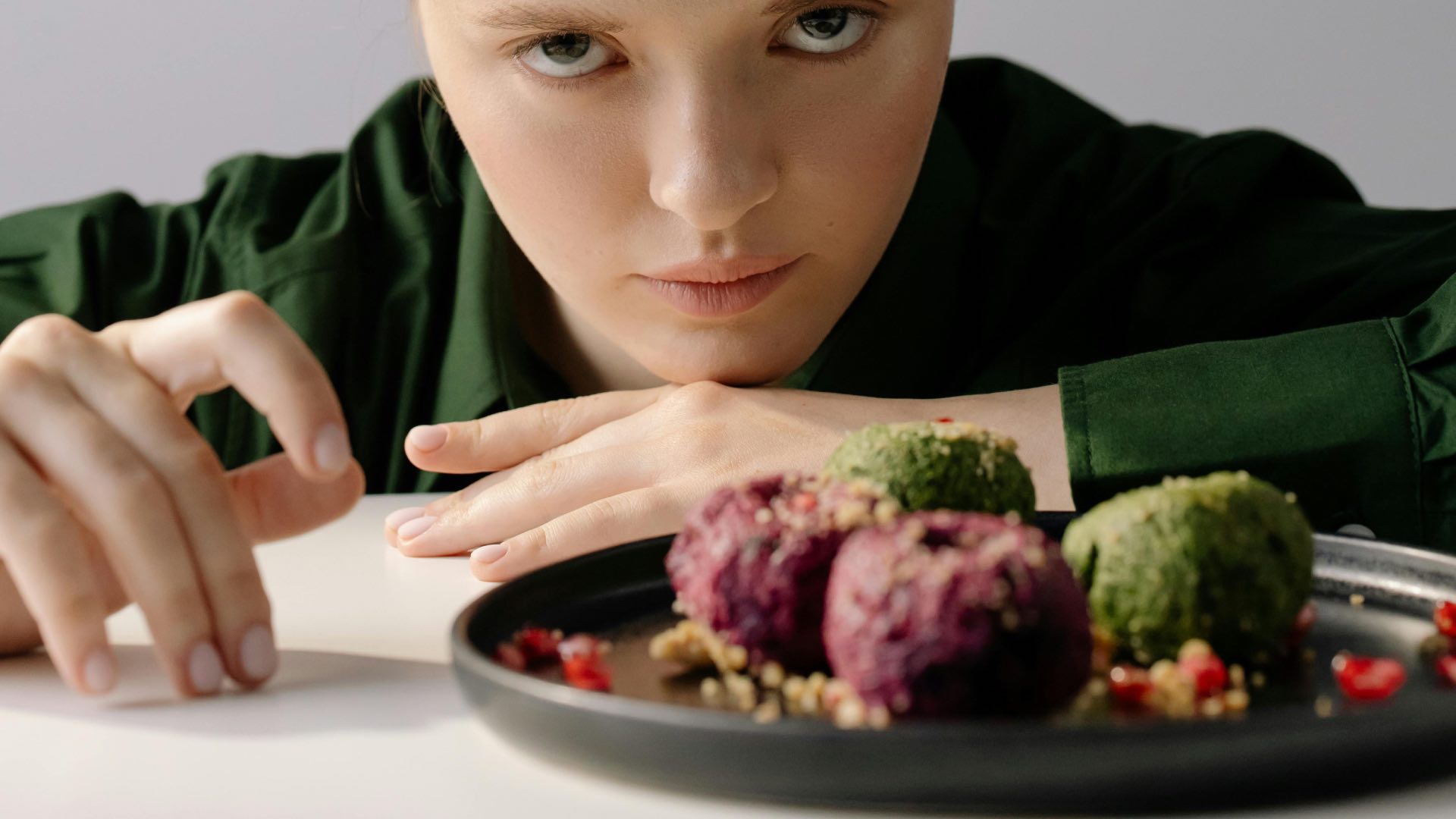
Eating "clean," choosing the "right" foods, avoiding any "suspicious" ingredient… so-called healthy eating has become an almost indispensable ideal. When this quest for perfection takes over completely, however, it can slide into something more serious: a subtle, often invisible eating disorder called orthorexia.
Orthorexia, when "healthy eating" becomes an obsession
Orthorexia refers to an excessive obsession with a diet deemed "perfect." The word comes from the Greek words ortho (straight) and orexis (appetite). Physician Steven Bratman proposed the first definition in the late 1990s, describing a set of characteristic behaviors.
Among them: spending several hours a day thinking about food, prioritizing the "purity" of food over pleasure, or feeling intense guilt as soon as a deviation occurs. It's not the quantity of food that's the issue, but the rigidity surrounding its quality. And this is precisely what makes this disorder difficult to detect: everything seems, on the surface, very "healthy."
A phenomenon that is far from marginal
Scientific data is beginning to reveal a surprising finding: this disorder appears to be far more widespread than previously thought. A meta-analysis of over 30,000 people in 18 countries estimates that more than a quarter of participants exhibit signs of orthorexia.
Certain populations appear more exposed: health students, elite athletes, or people very active on social media. Paradoxically, those who have the best grasp of nutritional knowledge sometimes seem the most vulnerable, because information can fuel demands… to excess.
Why women are more affected
Studies also show a higher prevalence among women, particularly in academic or medical settings. Research conducted with over 1,500 French women distinguishes two forms of relationship to so-called "healthy" food.
On one hand, there's a balanced approach, focused on well-being. On the other, there's a so-called "nervous" form, marked by anxiety, fear of gaining weight, and a very strict need for control. It's this second form that falls under the umbrella of an eating disorder (ED). In this case, food no longer simply responds to bodily or health needs, but to strong internal pressure, often linked to body image and self-control.
Social media, an amplifying mirror
It's impossible to ignore the role of social media. Between #healthyfood, #eatclean, and #wellness content, the perfect diet is omnipresent, aesthetically pleasing, and highly valued. This constant stream of "good examples" can become a slippery slope for some people. Without necessarily realizing it, they may start comparing, restricting, and controlling their diets even more. Recent research shows that repeated exposure to this content can reinforce orthorexic behaviors in people already sensitive to these issues.
When the border becomes blurred
The major difficulty with orthorexia lies in its gray area. At what point does a so-called healthy diet become a problem? In its non-pathological form, it is based on motivations of health and balance. In its neurotic form, it is driven by fear, anxiety, and an obsession with control. The change is often gradual, almost imperceptible. From the outside, everything may seem exemplary. From the inside, it can become a source of constant pressure.
Very real consequences
When the disorder takes hold, the effects can be tangible. Physically, the elimination of certain foods can lead to deficiencies or unintentional weight loss. Psychologically, anxiety surrounding food can become all-consuming. Social life can also be impacted: difficulty eating out, progressive isolation, and stress related to impromptu meals. Food, instead of connecting people, can then drive them apart.
Ultimately, eating healthily remains a positive and legitimate intention. However, when it becomes rigid, anxiety-inducing, and all-consuming, it can lose its balance. The goal is not to abandon "eating well," but to maintain a flexible and peaceful relationship with food—a diet that nourishes the body without confining the mind.