For a long time, mainstream cinema primarily filmed women through a lens centered on male desire. The "female gaze" emerged to give voice to this feeling... and to offer another way of telling stories. More intimate, more nuanced, more embodied.
First, understand the "male gaze"
To grasp the concept, we must go back to 1975. That year, the British theorist Laura Mulvey published a seminal essay in which she described the "male gaze": a cinematic gaze that often places the viewer in a voyeuristic position in relation to the female body.
In practice, women frequently appear as objects to be contemplated rather than as fully experienced characters. For decades, this way of filming became so widespread that it seemed almost invisible.
What exactly is the "female gaze"?
The "female gaze" isn't simply about reversing roles. It's not about filming men the way women have sometimes been filmed. The idea is more subtle: adopting the point of view of a female character and allowing the audience to experience her perspective. Critic Iris Brey , who popularized the concept in France, explains that it's "a gaze that embraces a woman's inner world: her emotions, her desires, her doubts, her perception of the world."
Good news: this perspective isn't reserved for female directors. Male filmmakers can also achieve it, provided that the directing truly places the viewer in the lived experience of the female character.
Another way of filming
American playwright Joey Soloway summarized the "female gaze" around three dimensions.
- First, a camera of emotions, where feelings count as much, or even more, than pure action.
- Then, a return of the gaze: the female character is no longer just observed, she looks, chooses, responds, fully exists.
- Finally, a more political dimension, which questions power relations and usual representations.
In summary, we are no longer simply filming a body: we are filming a person in all their complexity.
How to recognize it?
Several clues can help identify the "female gaze" on screen:
- The story is told from the perspective of a female character;
- Her emotions and inner journey occupy a central place;
- her body is not reduced to a visual decoration;
- Female desire exists and matters;
- traditional power structures are being questioned;
- The viewer is invited to feel rather than consume the image.
Therefore, it is not a fixed formula, but a framework for interpretation.
Films and series that have left their mark
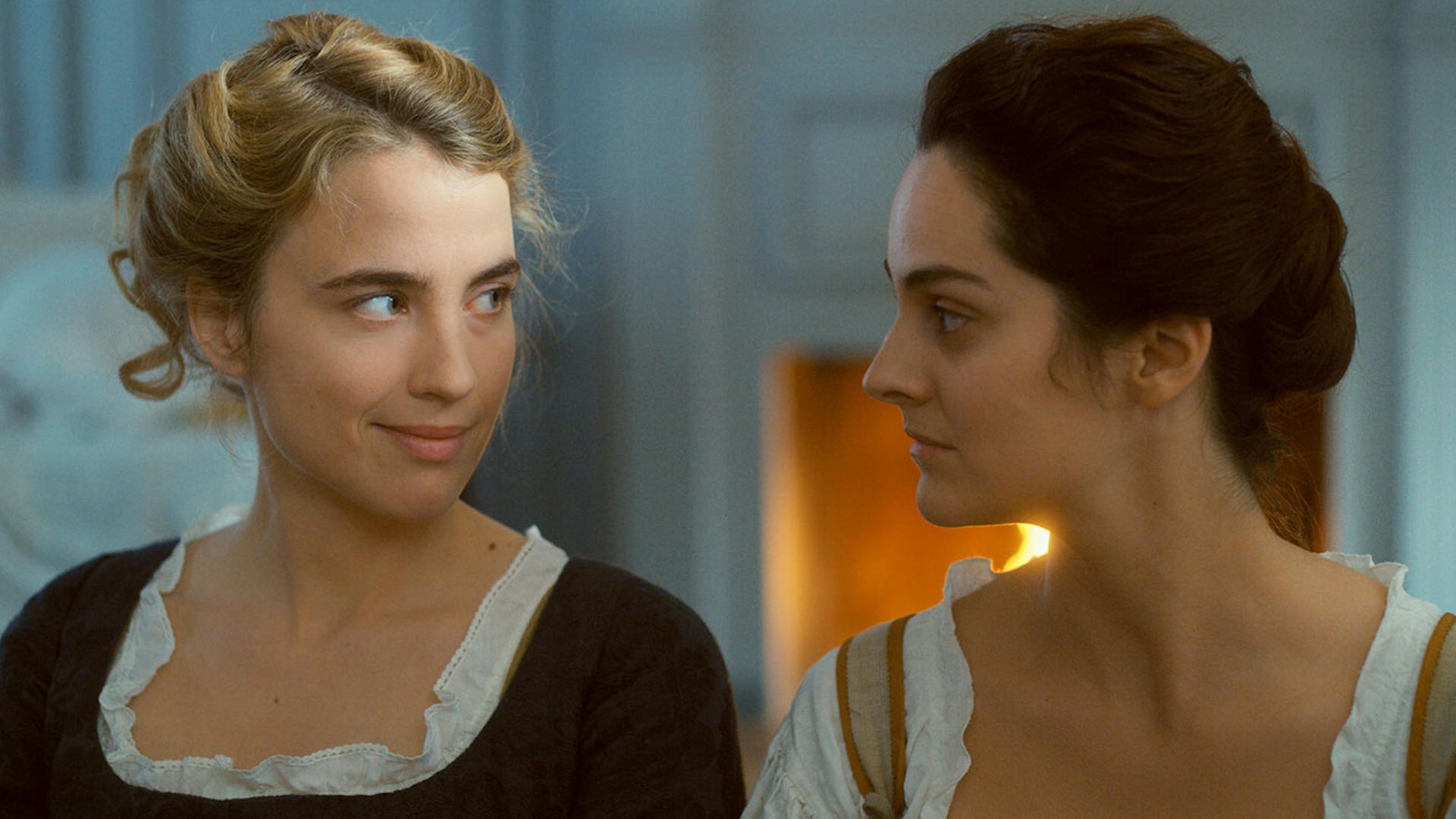
Among the frequently cited works, Céline Sciamma's "Portrait of a Lady on Fire" regularly emerges as a reference. The film portrays desire, mutual gaze, and intimacy with great subtlety. Another striking example is Jane Campion's "The Piano," often praised for its depiction of female desire and the inner strength of its heroine.
On the television front, "The Handmaid's Tale" also fueled discussions, as did certain more contemporary productions that give more space to female perspectives. Even among blockbusters, films like "Wonder Woman" have been noted for presenting a powerful heroine without reducing her body to a mere visual object.
Why the topic remains relevant
While the concept is progressing, the industry remains unequal . Women are still less represented in directing and often have smaller budgets than their male counterparts. In other words: perspectives are changing on screen, but progress behind the scenes is even slower.
The "female gaze" also sparks debate. Some researchers point out that speaking of a single "female gaze" can erase the diversity of lived experiences: social origins, cultures, sexual orientations, and multiple identities. This is why some now prefer to speak of feminist gazes, which are more open and inclusive.
In short, the "female gaze" is neither a passing fad nor a mere counterpoint. It's a way of restoring to women their depth, their desires, their emotional intelligence, and their place as subjects. And with each film that chooses this path, our way of looking at the world expands a little more.