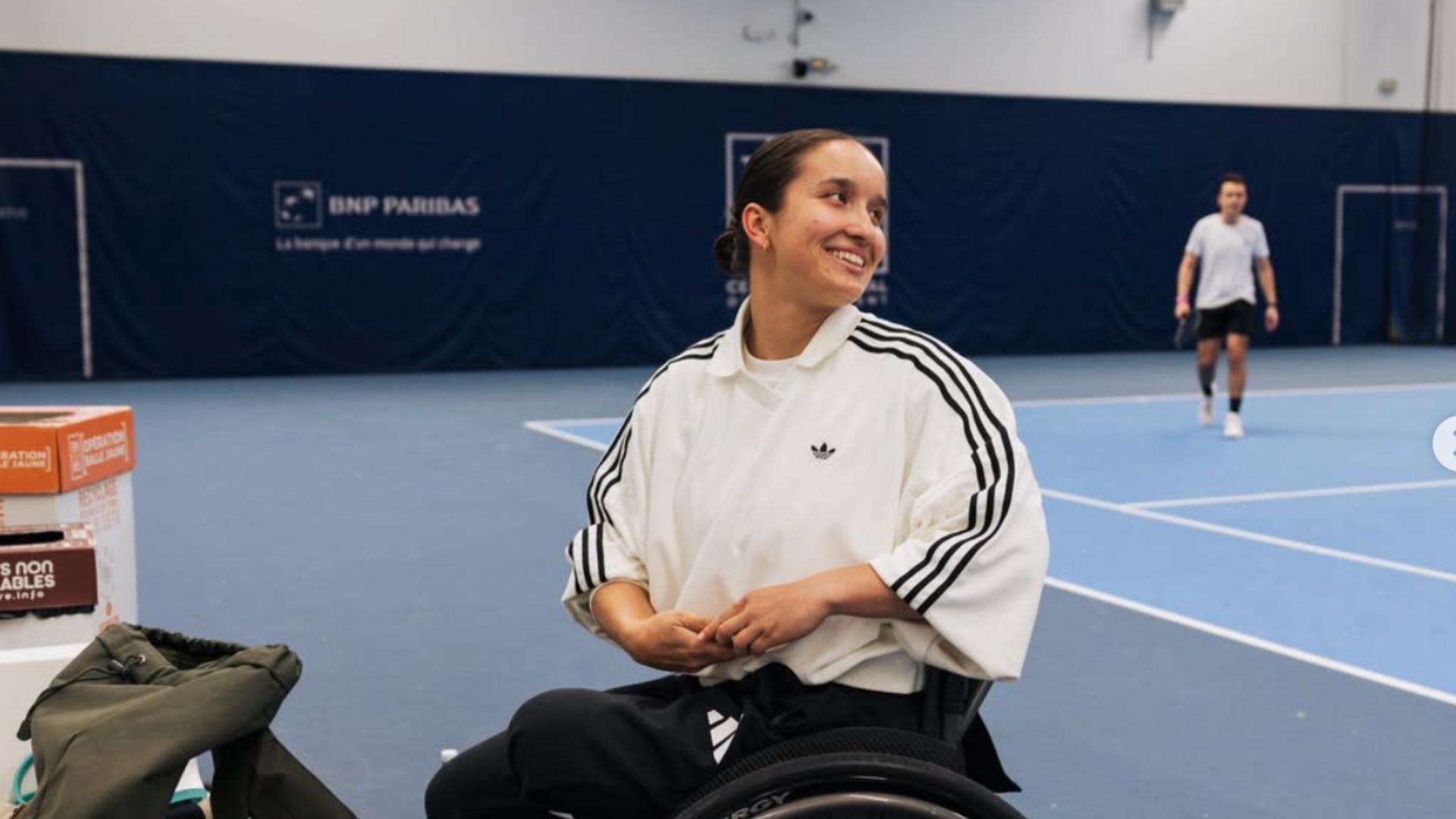
In just a few years, Ksénia Chasteau has become one of the leading figures in French wheelchair tennis. From her early successes in the junior ranks to a historic final at Roland-Garros this year (2026), she has consistently delivered outstanding performances with an admirable determination.
From Siberia to the courts of Marseille
Born in Irkutsk, Siberia, Ksénia Chasteau was adopted at a very young age by a French family along with her biological brother. She grew up in Marseille and discovered tennis as a child. Her talent quickly attracted attention: trained at the Tennis Club La Rose and then at the Cercle Sportif Municipal de Marseille, she progressed rapidly and reached an excellent level even before entering the most prestigious competitions. Her parents chose to keep her original first name, a detail to which she is particularly attached, as it is an integral part of her history and identity.
A turning point that reshaped his career
In 2021, just weeks before her 15th birthday, a motorcycle accident turned her life upside down. As a result of her injuries, Ksénia Chasteau had her left leg amputated, as did her father, who was also injured in the accident. This ordeal marked the beginning of a new chapter. Rather than giving up on the sport she had always loved, Ksénia discovered wheelchair tennis. Barely out of her rehabilitation center, she was directed towards this sport by the French Tennis Federation. Just eight months later, she was back on the courts. Thanks to her solid technical training, she adapted quickly and achieved results soon followed.
View this post on Instagram
A meteoric rise
Ksénia Chasteau's rise is as surprising for its speed as for its consistency. Just a year and a half after starting wheelchair tennis, she had already won the French Junior Championship. 2023 marked another milestone: she became world number one in juniors and won the US Open in her category. This confirmed her immense potential. In 2024, she made history by winning the very first junior wheelchair tennis tournament held at Roland-Garros. She also won the doubles title after a thrilling final, demonstrating her composure in crucial moments.
A promising start in the senior ranks
A few months later, Ksénia participated in her first Paralympic Games in Paris. She reached the round of 16 and put up a good fight against the eventual Paralympic champion, Yui Kamiji of Japan. Her move to the senior circuit then confirmed her immense potential. In 2025, she became the first Frenchwoman to reach the Wimbledon semi-finals in wheelchair tennis.
Then, in 2026, she reached another major milestone by playing in her first Grand Slam final at Roland-Garros. After eliminating the world number 2 in the semi-finals, she lost to the legendary Dutch player Diede de Groot, an absolute icon of the sport. A defeat that in no way diminishes the significance of this historic performance.
View this post on Instagram
A champion rewarded
At the beginning of 2025, the International Tennis Federation (ITF) named her the best junior player of 2024. This distinction recognized an exceptional season, marked by several major titles and a remarkable entry into the senior ranks. Today, Ksénia continues her progress while remaining grounded, aware that each tournament represents a new step in her development.
The Los Angeles Games in their sights
At just 20 years old, Ksénia Chasteau already boasts an impressive track record. Her next major goal is now set: the 2028 Los Angeles Paralympic Games. Alongside her tennis career, she is also pursuing studies in psychology, which she sees as a source of personal fulfillment rather than simply a post-career project. As an ambassador for the Fête le Mur association, she is also committed to making tennis accessible to everyone.
Between ambition, hard work, and consistency, Ksénia Chasteau continues to push boundaries and establish herself as one of the most promising talents in French wheelchair tennis. Her trajectory suggests that her greatest victories are yet to come.