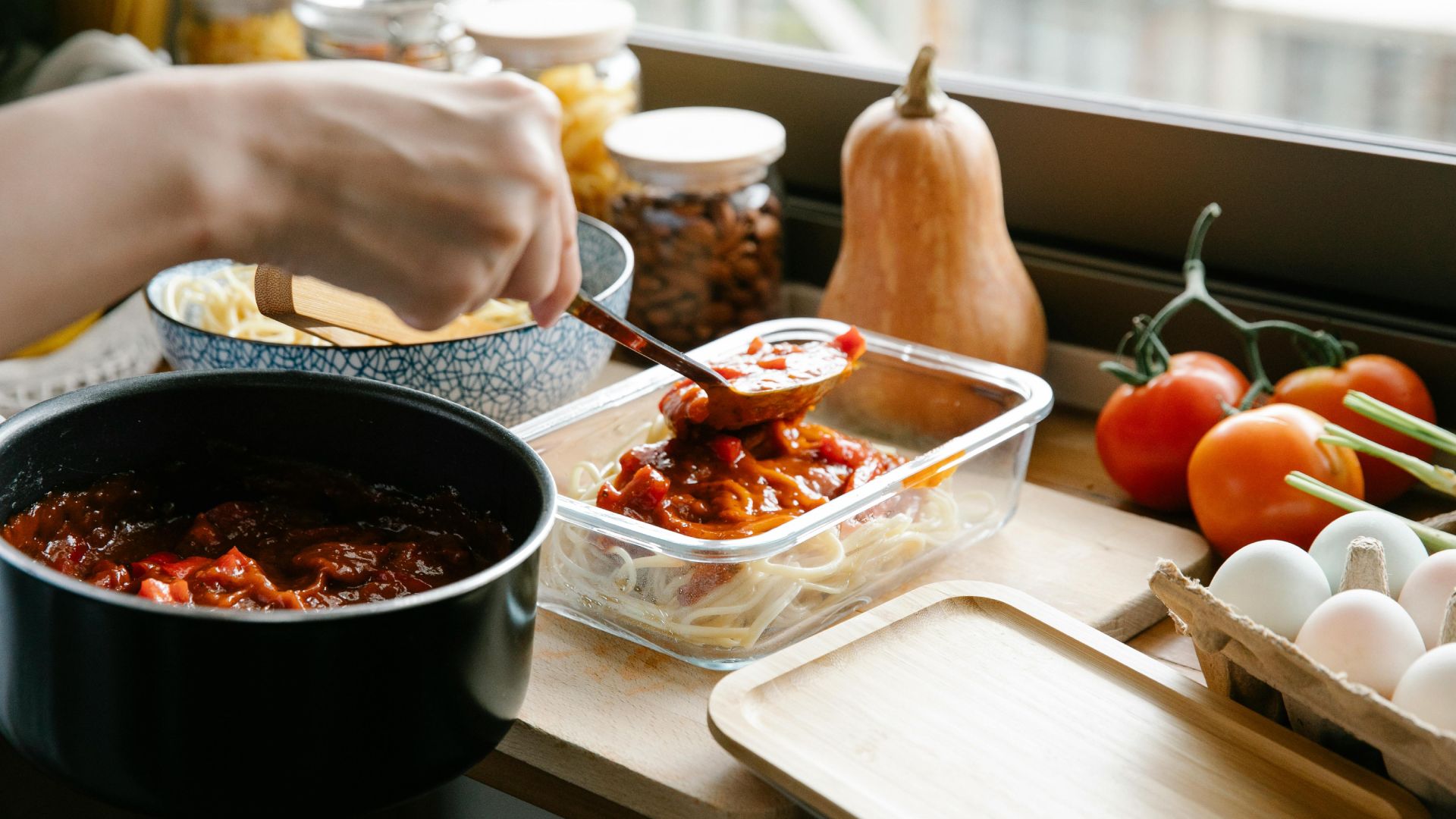
"What's for dinner?" This question, which is often met with silence or an annoyed sigh, is sometimes a real enigma. Some people improvise in the aisles, grabbing food at random, while others already know their entire weekly menu and even have meticulously labeled food containers in their refrigerator. Believe it or not, these "organization freaks," often mocked, are right to plan their meals in advance.
Plan your meals in advance to relieve stress
After a long day at work, you get home and all you want to do is sit down and enjoy a good, comforting meal. Except, of course, your fridge is practically empty. Between the two yogurts that are almost past their expiration date and the soggy fries from yesterday, you know in advance that it's not going to be gourmet fare. You barely have enough left to make an omelet. So you head to the corner store and wander the aisles, hoping to find some inspiration among the displays. And more often than not, you go for the easiest option: ready-made meals that you just have to heat up. You know the drill by heart. It's your everyday reality.
Generally, there are two types of people: those who shop at the last minute for the same evening and those who have their weekly menu prominently displayed on the fridge and a pantry stocked for a lean period. The popularity of batch cooking is no accident, nor is it a passing fad. Preparing meals in advance requires a certain amount of discipline, but it helps reduce stress.
Sure, you spend your Sunday in the kitchen, but you make up for those few "lost" hours elsewhere during the week. It's a win-win situation: you save your energy at the end of the day. Instead of scrolling through Instagram looking for a quick recipe or flipping through cookbooks searching for a dish that's a change from the same old pasta, you invest your free time in other, more engaging activities.
One way to prevent decision fatigue
Throughout your day, you have to make decisions, some more important than others. In the morning, you have to choose between a light, airy dress or a more formal outfit; at work, you face complex dilemmas, and just minutes before you leave, your employer asks , "What strategy should we launch for this client?" And this little game of arbitration continues at the supermarket, your brain already feeling fried. You stand for ages in front of the sauces, unable to decide which one goes best with a fish en papillote.
Faced with this endless choice, you end up losing your mind and your reason. Without guidelines or pre-made lists, you overthink and deplete your reserves when you could be optimizing your inner energy. This is what a scientific study published in December 2025 in the journal Nutrients highlights.
Simply put, when you already know what's on your plate, you remove one question from the mental equation. No more compulsively opening cupboards hoping a meal will miraculously appear, or negotiating with your exhausted brain in the face of an avalanche of conflicting options.
Greater availability for loved ones
Last-minute impromptu meals sometimes have an invisible cost: they eat away at social time. Between impromptu shopping trips, hesitations over ingredients, and cooking in a rush, evenings fly by.
When dinner is already planned, or even partially prepared, the atmosphere subtly shifts. You spend less time solving the logistical puzzle and more time truly enjoying your evening. You can chat with your partner without compulsively watching a pot, listen to your child's endless but fascinating account of their school day, or simply enjoy a quiet moment without that nagging feeling of still having "something to take care of."
Planning your meals obviously won't transform your daily life into a polished family commercial, but it can create more space for human interaction. And in today's fast-paced world where everyone is constantly rushing, this newfound availability matters more than you might think.
Better control over one's diet
Preparing your meals in advance also means enjoying balanced and delicious homemade dishes. Instead of resorting to a tasteless frozen pizza, home-delivered fast food, or boxed Japanese noodles full of preservatives, you have the pleasure of savoring dishes prepared with care and mindfulness.
Planning your meals allows you to regain some control over your diet without falling into a rigid or guilt-inducing mindset. You choose your ingredients more thoughtfully, you create more varied meals, and you avoid that dreaded scenario where an impromptu dinner boils down to bread, cheese, and three crisps found at the bottom of a bag.
This doesn't mean you have to turn your Sunday into a military-style cooking marathon or banish all spontaneity. Meal planning can also be flexible: a few basics prepared in advance, a list of simple recipes, a well-stocked freezer. The idea isn't to aim for nutritional perfection, but to make evenings run more smoothly.